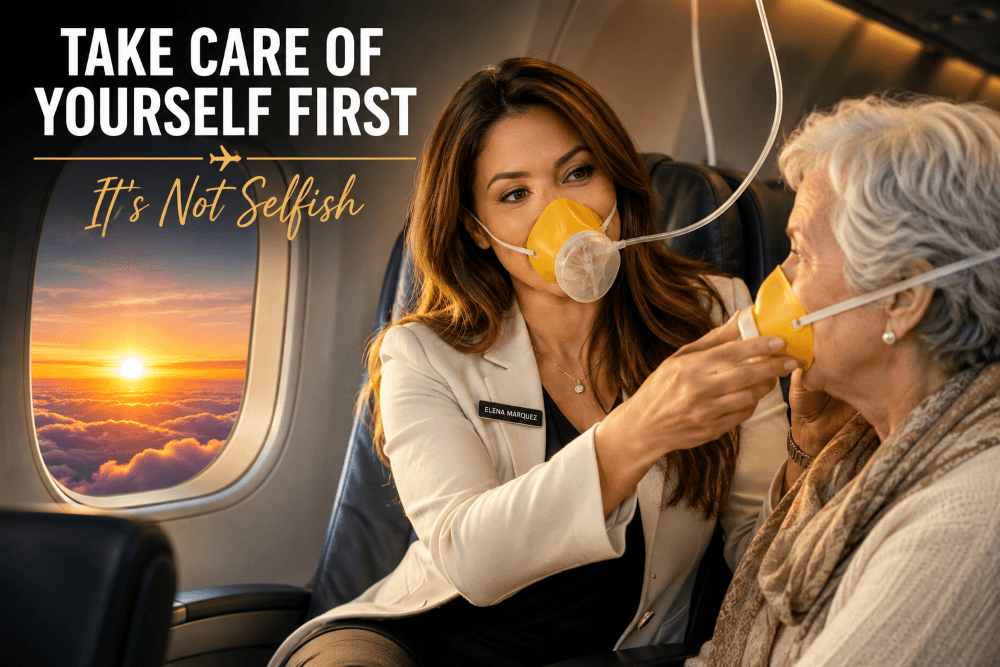
One of the most important lessons I have learned in life is this: take care of yourself before helping others.
At first glance, that advice sounds selfish. After all, we’re taught from childhood to think of others first, to be generous, and to sacrifice for those in need.
But what if taking care of yourself is actually the most generous thing you can do?
The truth is that you cannot give what you do not have. Whether we’re talking about money, health, time, or emotional strength, the people who help others the most are often those who first built a solid foundation for themselves.
Take Care of Yourself Before Helping Others: The Oxygen Mask Principle
If you’ve ever flown on an airplane, you’ve heard the safety instructions.
In the event of an emergency, passengers are told to put on their own oxygen mask before helping children or anyone else.
Why?
Because if you lose consciousness while trying to help someone else, you’ve created two victims instead of one.
Life works the same way.
If your finances are a mess, your health is deteriorating, or you’re emotionally exhausted, your ability to help others becomes limited.
Taking care of yourself isn’t about putting yourself above others.
It’s about making sure you’ll be capable of helping others tomorrow, next year, and decades from now.
The Greatest Person You’ll Ever Help Is Your Future Self
When we think about generosity, we usually think about other people.
Our parents.
Our children.
Our friends.
Our favorite charities.
But there’s one person we often forget.
The person you’ll become 20 or 30 years from now.
Imagine yourself at 85 years old.
Will you have enough money to enjoy your retirement?
Will you have the freedom to choose where you live?
Will you remain financially independent?
Or will you become dependent on your children, relatives, or government assistance because you failed to prepare? Unfortunatelly this is the case with many Canadians and Americans. They spend on vacations, expensive iphones, on alcohol and drungs, and then when retirement comes, they have nothing.
Your future self deserves your generosity too.
Every dollar you save today is a gift to the person you’ll become tomorrow.
Financial Independence Creates the Freedom to Be Generous
One of the biggest mistakes people make is believing they must choose between helping themselves and helping others.
In reality, the opposite is usually true.
People who build financial security are often able to help more people over a lifetime than those who neglect their own financial future.
That doesn’t mean you should never donate to charity.
It means your generosity should be sustainable.
Before making large financial sacrifices for others, ask yourself:
- Am I saving for retirement?
- Do I have an emergency fund?
- Am I living within my means?
- Will this decision hurt my future financial security?
Generosity built on a strong financial foundation lasts much longer than generosity built on guilt or impulse.
My Own Journey
This isn’t just a philosophy I’ve read about.
It’s the story of my own life.
When I arrived in Canada from Colombia, I came with almost nothing.
Like many immigrants, I had dreams, determination, and a willingness to work hard, but very few financial resources.
It would have been easy to focus on helping everyone around me before establishing myself.
But I realized that the best way to create a better future—for myself and for the people I loved—was to first become financially stable.
I worked.
I saved.
I invested.
I learned about personal finance.
I lived below my means.
Year after year, I slowly built financial independence.
It didn’t happen overnight.
It took twenty-five years.
Today, that decision has changed my life.
Because I first built a strong financial foundation, I can now help friends who supported me during difficult times.
I can assist family members back home in Colombia.
I can contribute to causes I believe in.
None of that would have been possible if I had remained financially insecure.
Ironically, the best way I found to help others was by first helping myself.
Good Health Is an Investment, Not a Luxury
Money isn’t the only resource you need to protect.
Your health is just as important.
If you neglect your body, ignore medical advice, or refuse to exercise, eventually someone else may have to care for you.
The healthier you remain, the more years you’ll have to enjoy life with your family and contribute to your community.
Taking care of yourself isn’t selfish.
It’s responsible.
In my 60s, I bike 40 minutes every day, I dance at least one hour every day, I lift weights every day and I make sure to have a healthy diet. My goal is to live until 100 years old in good shape.
Strong People Build Strong Communities
The same principle applies beyond individuals.
Strong families create stronger neighborhoods.
Financially responsible citizens contribute to healthier economies.
Successful entrepreneurs create jobs.
Financially independent retirees place fewer demands on public resources.
Communities thrive when individuals take responsibility for their own well-being.
Helping yourself and helping others are not competing goals.
They’re complementary ones.
The Same Lesson Applies to Nations
I also believe this principle applies to countries.
A nation with a strong economy, sound public finances, and resilient institutions is in a much better position to provide humanitarian aid, welcome newcomers, support allies, and respond to crises.
Countries that neglect their own economic health eventually find themselves with fewer resources to help anyone.
Just as individuals should build a strong foundation before taking on greater responsibilities, nations also benefit from maintaining the strength that makes generosity possible.
Reasonable people may disagree about specific public policies.
But the underlying principle remains the same: lasting generosity requires lasting strength.
In addition, it has been proven that when you give money to anothe country, many time you are hurting that county and the ability of self subsistance. Poverty is a big business that benefit mostly the organzers and only a small percentage goes to the party its intended to halp.
Helping Yourself Is an Act of Responsibility
Some people hear the phrase “take care of yourself first” and think it encourages selfishness.
I see it differently.
Taking care of yourself first means:
- Living below your means.
- Saving and investing consistently.
- Looking after your health.
- Continuing to learn.
- Building emotional resilience.
- Preparing for retirement.
- Becoming someone who can help others without sacrificing your own future.
The goal isn’t to become wealthy for the sake of wealth.
The goal is to become strong enough that your generosity can continue for the rest of your life.
Final Thoughts
Looking back over the past twenty-five years, I don’t regret focusing on building my own financial security.
Quite the opposite.
Because I took care of myself first, I am now able to take better care of others.
I can support friends who once supported me.
I can help members of my family in Colombia.
I can give from a position of strength instead of obligation.
That’s why I believe taking care of yourself before helping others isn’t selfish.
It’s one of the most generous decisions you can make.
Frequently Asked Questions
Is it selfish to take care of yourself before helping others?
No. Taking care of yourself allows you to remain healthy, financially secure, and emotionally resilient so you can help others over the long term.
Should I save for retirement before donating to charity?
In most cases, yes. Building adequate retirement savings helps ensure you won’t become financially dependent on others later in life. Once you have a solid financial foundation, your generosity is more likely to be sustainable.
How does financial independence help others?
Financial independence gives you the freedom to support family members, contribute to charitable causes, volunteer your time, and help your community without putting your own future at risk.
What does “put on your own oxygen mask first” mean?
It’s a metaphor for life. Just as airline passengers are instructed to secure their own oxygen mask before assisting others, building your own health, financial security, and resilience enables you to help others more effectively.
Other Personal Development Posts