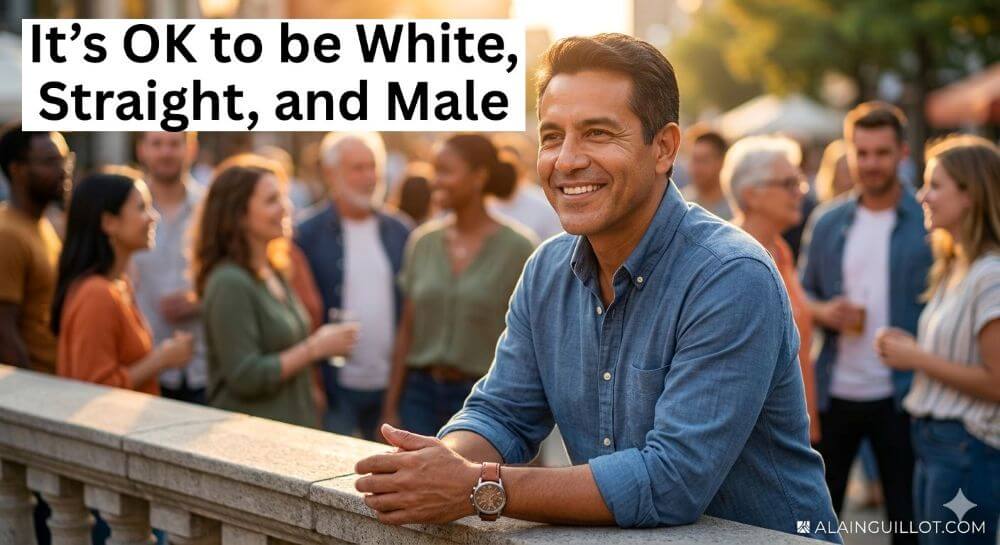
In a world that feels increasingly polarized, many individuals are feeling a strange pressure to apologize for who they are. Whether it is your race, your gender, or your sexual orientation, the current cultural climate often makes people feel like they must downplay their identity to avoid criticism. However, the truth is simple: Embrace your identity—it is okay to be a heterosexual man or woman, and it is okay to be white, just as it is okay to be from any other background or orientation.
Understanding the Importance to Embrace Your Identity
Self-respect is not a zero-sum game. Being proud of your own heritage or lifestyle does not mean you harbor ill will toward others. As a Latino man, I am deeply proud of my culture and my masculinity.
Being heterosexual is a core part of my identity, and I celebrate that. Supporting the freedom of others to live as they choose—whether they are gay, trans, or non-binary—should not require us to devalue our own traditional identities.
We are living in a time where broad generalizations often target specific groups. When we learn to embrace your identity with confidence, we move away from tribalism and toward a society of mutual respect.
Voices Standing Up for Individual Identity
Several prominent figures have recently spoken out against the normalization of group-based stigmatization. They argue that judging people by their skin color or gender rather than their character is a step backward for society.
- Rupert Lowe: The leader of Restore Britain has explicitly told young men that there is nothing wrong with being white, straight, or male.
- Jordan Peterson: The renowned psychologist frequently argues that masculinity is not “toxic” and that traditional roles provide necessary structure to society.
- Elon Musk: The tech mogul has used his platform to argue that we should judge people as individuals rather than by their race or gender.
- Scott Galloway: The NYU professor warns that ignoring the struggles of young men creates long-term social instability.
Breaking the Cycle of Stigmatization
When we talk about the need to embrace your identity, we are addressing a growing trend of “identity-based shaming.” Many feel that certain traits have been demonized in mainstream media and academic circles.
- The Individual Over the Group: True progress means looking at a person’s actions and heart, not their demographic category.
- Rejecting Collective Guilt: You are not responsible for the actions of people who look like you from a hundred years ago.
- Celebrating Tradition: Traditional family structures and masculine or feminine traits are the bedrock of many thriving communities.
Why Pride is for Everyone
Diversity should include everyone, not just specific “approved” groups. If we are to have a truly inclusive society, that inclusion must extend to the white man, the heterosexual woman, and the traditional family unit.
“Criticism of white males is often a misguided and unfair generalization.” — Roland Merullo
It is possible to be a proud Latino, a proud white person, or a proud member of the LGBTQ+ community without needing to tear anyone else down. Compassion and self-love are not mutually exclusive.
Summary: Moving Forward with Confidence
It is time to stop the culture of apology. To embrace your identity means to stand tall in who you are without fear of social repercussions. We should strive for a world where:
- Race is not a weapon used to silence others.
- Sexual orientation is a personal trait, not a hierarchy of moral superiority.
- Masculinity and femininity are celebrated for their unique strengths.
FAQ: Common Questions About Identity and Pride
Is it wrong to be proud of being white or straight? No. Every human being has the right to be proud of their heritage and their identity. Pride in oneself does not equate to prejudice against others.
Does “embracing your identity” mean I’m against diversity? Quite the opposite. True diversity means that all groups, including traditional and majority groups, are allowed to exist and feel proud without being demonized.
How can I push back against “toxic masculinity” narratives? Focus on “positive masculinity”—strength, protection, and responsibility. Show through your actions that being a man is a force for good in the world.