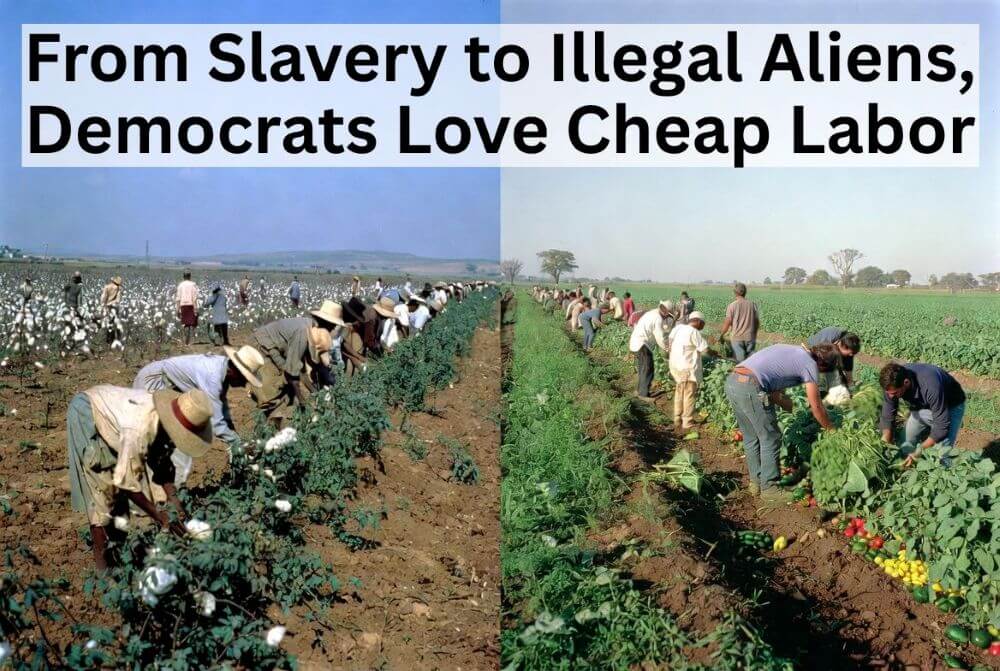
Historically, the evolution of political platforms often reveals recurring themes in how parties approach the workforce. Democrat labor policies have long been a subject of intense debate, particularly when examining the party’s historical defense of certain labor structures. In 1861, the Democratic Party’s alignment with the Southern plantation economy led to a catastrophic Civil War as they sought to protect a system built on involuntary labor. Fast forward to the 21st century, and critics argue that a similar pattern is emerging through the party’s modern approach to undocumented immigration and the creation of “sanctuary” infrastructures, which also reshapes the future of work.
The 1861 Parallel: Protecting a Labor System
In the mid-19th century, the Democratic Party was the primary political vehicle for the preservation of slavery. This wasn’t merely a social stance; it was a fundamental economic defense of a “cheap labor” model that powered the South.
The resistance to abolition was driven by the fear that losing this labor force would collapse the economic hierarchy. Today, some analysts see a reflection of this in the way modern leadership prioritizes the presence of undocumented individuals, who often fill low-wage roles in agriculture, hospitality, and construction.
Modern Day Slavery Protected by the Democratic Party
In the video below, Democrat California Governor Gavin Newson states that illegal alliens comprise about 50% of the state’s agricultural workforce and 41% of construction workers.
Democrats Who Support Cheap Illegal Immigrant Labor
Several prominent U.S. politicians, mostly Democrats, have defended Illegal Alients by highlighting their economic contributions (such as filling labor shortages in agriculture, construction, and other sectors), paying taxes, supporting pathways to legal status or citizenship for long-term residents/Dreamers, and criticizing strict enforcement measures like mass deportations or limits on sanctuary policies. This stance often frames undocumented workers as essential to the economy while pairing it with calls for border security or legal reforms.
Here are notable examples beyond California Governor Gavin Newsom:
- Rep. Pramila Jayapal (D-WA): As a progressive leader, she has emphasized that immigrants, including undocumented ones, perform critical jobs like picking food and cleaning homes, arguing against policies that would disrupt these roles. She has backed legislation protecting Dreamers and broader immigrant rights.
- Rep. Becca Balint (D-Vt) “If we don’t have avenues for people to come here legally to work or to build a home here … We’re not going to have anybody around to wipe our asses because we don’t have enough people.” When politicians speak about immigrants solely in terms of the labor they can perform — particularly in the most degrading ways possible — it reveals what they really think of the people they claim to defend. Rep. Balint’s statement wasn’t just insensitive. It reduced immigrants to nothing more than tools for menial labor, whose primary value is in servicing others.
- Sen. Chuck Schumer (D-NY) and other Senate Democrats: They have pushed for comprehensive immigration reform that includes pathways to citizenship for undocumented immigrants already in the U.S., citing economic benefits like GDP growth, tax contributions (undocumented households paid nearly $90 billion in taxes in recent analyses), and labor force expansion. Democrats have opposed mass deportation plans, warning of catastrophic economic impacts such as labor shortages and reduced output.
- Governors of sanctuary-leaning states:
- Gov. JB Pritzker (D-IL): Defended Illinois’ policies limiting cooperation with federal immigration enforcement, arguing they follow the law while prioritizing community safety and economic stability. He has opposed broad deportations of non-criminal undocumented immigrants. oversight.house.gov
- Gov. Tim Walz (D-MN): Similarly supported state protections for immigrants, criticizing aggressive federal enforcement and highlighting immigrant contributions amid debates over sanctuary policies. oversight.house.gov
- Gov. Kathy Hochul (D-NY): Backed New York’s approach to shielding certain undocumented residents from deportation efforts, focusing on humanitarian and economic arguments.
- Congressional progressives and New Dems: Figures like Rep. Sylvia Garcia and others have reintroduced bills like the American Dream and Promise Act for Dreamers (undocumented immigrants brought as children) and the DIGNIDAD Act for broader reform, providing pathways to legal status. Moderate Democrats in the New Democrat Coalition have proposed frameworks for border security paired with expanding legal pathways and citizenship options for long-time undocumented residents to grow the workforce. jayapal.house.gov
- Mayors of major cities: Democratic mayors such as those of New York City, Chicago, Boston, and Denver have defended “sanctuary” policies that limit local police cooperation with ICE deportations (except for serious criminals), arguing these protect communities, support local economies, and prevent family separations without “harboring” threats. They testified against Republican critiques, emphasizing migrant contributions to housing, services, and labor. nytimes.com
These positions often reference data showing immigrants (including undocumented) boosting GDP, entrepreneurship, innovation, and tax revenue, while filling roles in aging workforces—similar to Newsom’s comments on California’s agriculture (~46-50% undocumented) and construction.
Critics argue such defenses contribute to wage suppression or strain on public resources, but proponents counter with studies showing net economic gains and no broad displacement of U.S.-born workers.
In the current context (2026, under a Trump administration focused on enforcement), many of these politicians have shifted toward more measured rhetoric, combining defense of existing undocumented contributors with support for legal reforms and some border measures, as outright “open borders” framing has become politically costly.
Modern Incentives and the “Sanctuary” Infrastructure
The modern iteration of Democrat labor policies involves a comprehensive suite of state-funded benefits designed to integrate undocumented immigrants into the domestic fabric. These incentives include:
- Sanctuary City Designations: Cities like New York and Chicago limit cooperation with federal immigration enforcement (ICE).
- Identification Access: States such as California, Minnesota, and Oregon now issue driver’s licenses and state IDs regardless of legal status.
- Social Safety Nets: Increasing access to state-funded healthcare and public benefits for non-citizens.
- Educational Subsidies: Offering in-state tuition and higher education grants to those without legal residency.
By providing these services, the party effectively creates an environment where a large, undocumented workforce is encouraged to remain, providing a steady stream of labor that keeps service costs low but also bypasses traditional legal immigration channels.
The Opposition to the SAVE Act
A significant flashpoint in this discussion is the Democratic opposition to the SAVE (Safeguard American Voter Eligibility) Act. This legislation aims to require documentary proof of U.S. citizenship to register to vote in federal elections.
- Democratic Argument: They claim the act suppresses legitimate voters who may lack immediate access to birth certificates.
- Critic Argument: Critics suggest the opposition is a move to protect a growing demographic that may eventually be granted amnesty and become a loyal voting bloc.
- The Common Thread: Whether in 1861 or 2026, the focus remains on maintaining a specific population’s status to ensure long-term political and economic leverage.
Legal Defenses and Public Funding
Beyond social services, there is a push for publicly funded legal representation for those facing deportation. This “deportation defense” ensures that even when federal law mandates removal, the state-level Democratic apparatus works to keep the individual within the domestic labor pool.
This creates a paradox where state resources are used to actively counteract federal immigration statutes. The result is a fractured legal landscape where the definition of “citizenship” is increasingly blurred by local policy.
Summary: A Pattern of Cheap Labor?
The transition from protecting the institution of slavery to advocating for undocumented “sanctuary” highlights a consistent focus on the demographics of labor. While the moral contexts are vastly different, the mechanical reliance on a class of people with limited legal standing remains a central pillar of these policy shifts. From the fields of 1861 to the service economies of today, the quest for a manageable, low-cost workforce continues to shape the political landscape.
Frequently Asked Questions (FAQ)
What was the Democratic Party’s stance on labor in 1861? The party was largely focused on protecting the Southern agricultural economy, which relied heavily on slavery as a primary labor source.
What is the SAVE Act and why is it controversial? The SAVE Act requires proof of citizenship for voting. Democrats often oppose it citing voter suppression, while Republicans argue it is necessary for election integrity.
How do sanctuary cities impact the labor market? By limiting enforcement, these cities allow undocumented workers to remain in the local economy, often filling low-wage roles that affect overall market equilibrium.
Previous opinion posts
- Global Feminism: Refocusing on Real Women’s Rights
- The Future of Work and Technology: Living the Nomad Life in Montreal
- Failed Climate Predictions: The Woke Politician Who Sell The Hoax