| 📊 Alain’s Holdings — July 13, 2026 | ||||
|---|---|---|---|---|
| Symbol | Name | Price | Change | Change % |
| VOO | Vanguard S&P 500 ETF | 688.50 | -5.36 | -0.77% |
| QQQ | Invesco QQQ Trust | 711.74 | -13.77 | -1.90% |
| XIU.TO | iShares S&P/TSX 60 ETF | 52.74 | +0.05 | +0.09% |
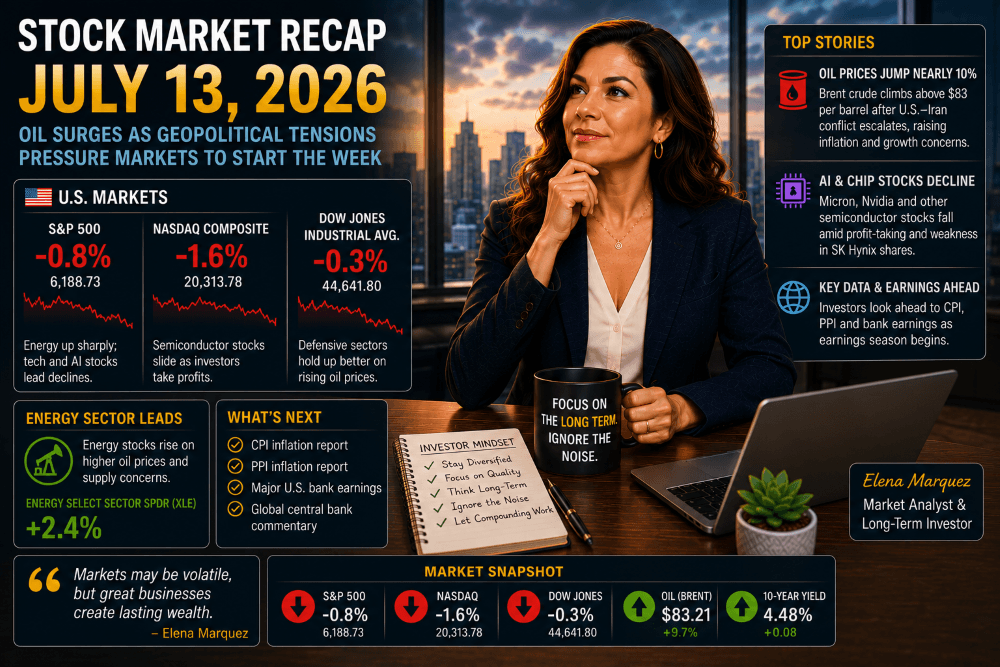
Wall Street opened the week under pressure as escalating tensions in the Middle East sent oil prices sharply higher, reigniting concerns about inflation and weighing heavily on technology stocks.
The S&P 500 fell 0.8%, the Nasdaq Composite dropped 1.6%, and the Dow Jones Industrial Average lost 0.3%. Semiconductor and AI-related companies led the decline, while energy stocks outperformed as crude oil surged.
The biggest story of the day wasn’t earnings or interest rates.
It was oil.
Following renewed military conflict involving the United States and Iran, Brent crude jumped nearly 10%, climbing above $83 per barrel as markets reacted to renewed disruptions around the Strait of Hormuz, one of the world’s most important energy shipping routes. Investors immediately began reassessing the potential impact on inflation and global economic growth.
Artificial intelligence stocks also had a difficult session.
Micron Technology, Nvidia, and several semiconductor companies moved lower as investors took profits following last week’s rally. The weakness was amplified by a sharp decline in SK Hynix shares in South Korea, which rippled through the global semiconductor sector.
Now the market’s attention turns to what could become the defining events of the week:
- Consumer Price Index (CPI) inflation data
- Producer Price Index (PPI)
- The unofficial start of second-quarter earnings season, led by the major U.S. banks
Those reports will help determine whether investors remain focused on geopolitical risks or shift their attention back to corporate fundamentals.
Today’s selloff is also a reminder that markets rarely move in a straight line.
Long-term investing requires accepting that periods of uncertainty are inevitable.
Geopolitical events may dominate the headlines for days or weeks.
But over years and decades, corporate earnings, innovation, and economic growth remain the primary drivers of stock prices.
Other Stock Market blog posts