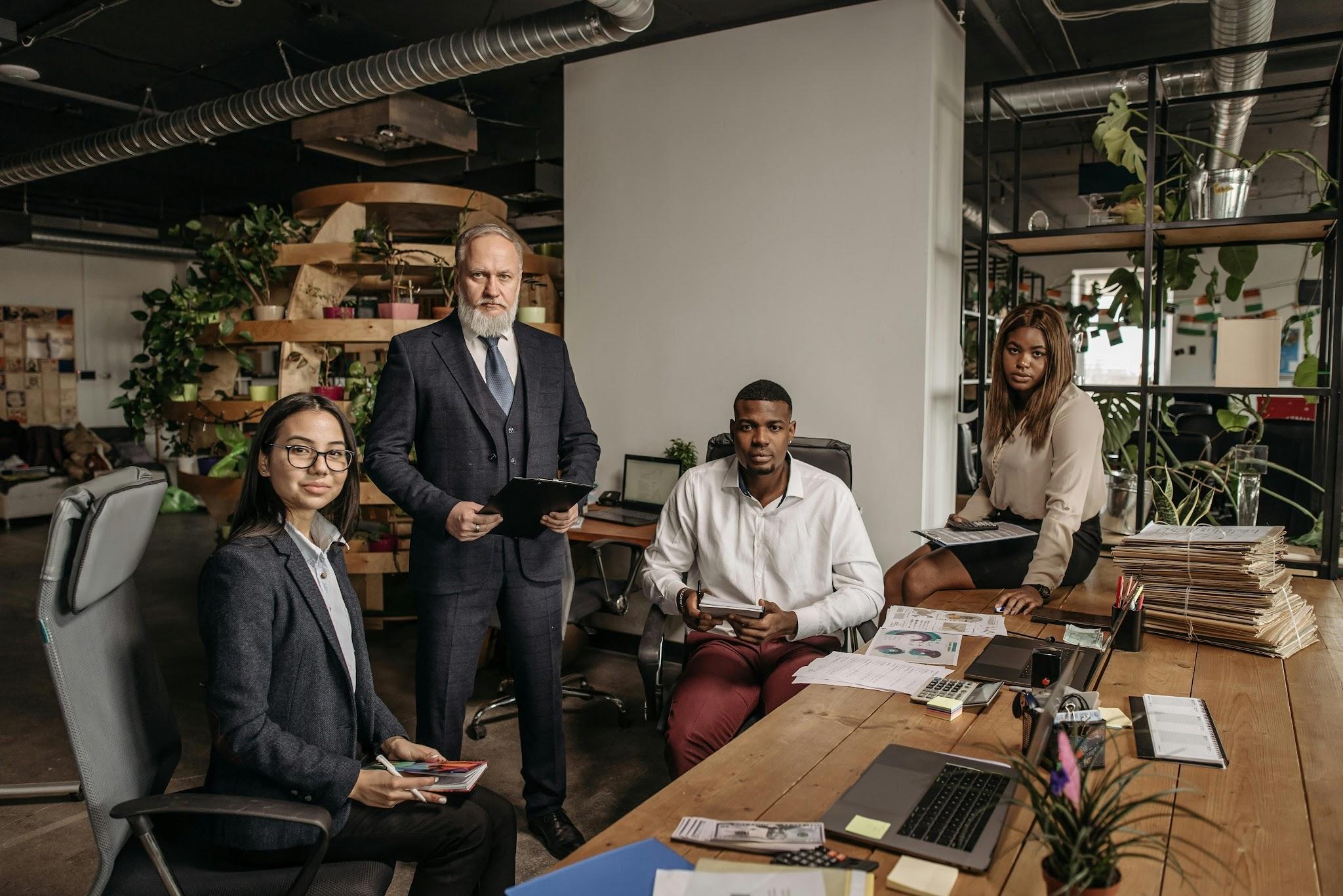
It’s hugely important to ensure that your workplace is as safe as possible – not just for your own sake, but that of your staff and all visitors as well. But getting that right can actually be quite difficult at times, and can require that you have a particular focus. Making a workplace safer in 2026 isn’t about ticking boxes or reacting after something goes wrong. It’s about designing an environment where risks are anticipated, reduced, and, in many cases, engineered out entirely. The data alone makes the case unavoidable: in the UK, around 680,000 workers still suffer non-fatal injuries each year, while 1.9 million experience work-related ill health. That’s not a marginal issue, it’s a structural one.
The good news is that the path forward is clearer than ever. Safety today is less about isolated policies and more about systems thinking: how people, processes, and equipment interact across the working day.
The Reality of Risk in Modern Workplaces
One of the most persistent myths is that danger belongs only to obviously hazardous environments – construction sites, factories, or farms. In reality, risk is distributed far more evenly. Offices deal with ergonomic strain and mental health pressures, while retail and logistics environments face constant exposure to slips, trips, and repetitive physical tasks.
Among all these risks, one stands out for its stubbornness: manual handling. Lifting, carrying, pushing, or pulling loads accounts for around 17% of all non-fatal workplace injuries, making it one of the leading causes of harm. Even more striking is the long-term impact – over 500,000 workers suffer from musculoskeletal disorders, often linked directly to these tasks. This is where many workplaces fall short. They treat manual handling as a training issue when, increasingly, it’s a design issue.
Designing Safety Instead of Managing Accidents
The shift happening in 2026 is subtle but significant. Rather than relying on people to behave safely in risky environments, businesses are redesigning environments to reduce reliance on human judgement altogether.

That means asking different questions. Instead of “Are staff lifting correctly?” The better question is “Why are they lifting at all?” This is where material handling equipment becomes central. Tools such as pallet trucks, conveyor systems, hoists, and automated storage solutions are no longer luxuries reserved for large warehouses: they’re becoming baseline safety infrastructure. By reducing the need for repetitive or heavy lifting, they directly tackle one of the most common sources of injury.
The Overlooked Role of Workflow
Even the best equipment won’t fix a poorly designed workflow. Many accidents happen not because of a single failure, but because of friction in the system – awkward layouts, rushed processes, or unclear responsibilities.
A safer workplace tends to be one where movement feels natural. Materials flow logically. Tasks don’t require awkward twisting, overreaching, or improvisation. Walkways are clear not because someone tidied up, but because they were designed to stay clear. This is especially relevant in hybrid environments, where employees may switch between home and workplace settings. Poorly set-up home workstations, for instance, introduce new forms of strain that traditional safety policies rarely accounted for.
Training Still Matters, But It’s Not Enough
Training remains essential, particularly around manual handling techniques, hazard awareness, and emergency procedures. But there’s a growing recognition that training alone cannot carry the weight of workplace safety.
People forget. They rush. They adapt. Even well-trained employees can make unsafe choices when under pressure or fatigue. That’s why the most effective safety strategies combine training with physical safeguards – guardrails, automation, ergonomic design, and, again, appropriate material handling equipment. The goal is to make the safe choice the easiest one.
Mental Health Is Now Central to Safety
Another major shift in 2026 is the recognition that safety isn’t purely physical. Stress, anxiety, and burnout are now the largest contributors to work-related ill health, affecting nearly a million workers annually.
A workplace that pushes people beyond sustainable limits – tight deadlines, constant monitoring, lack of autonomy – creates conditions where accidents become more likely. Fatigue reduces concentration. Stress narrows awareness. Small mistakes become more probable. Improving safety, then, also means looking at workload, communication, and culture. Are people encouraged to speak up? Are near-misses treated as learning opportunities or quietly ignored?
Building a Culture That Sustains Safety
The safest workplaces tend to share a particular atmosphere. There’s a sense that safety isn’t imposed from above but lived day to day. That might look like a warehouse worker suggesting a better layout for stock movement. Or an office employee flagging a recurring issue with cable management before it causes a fall. Or a manager choosing to pause a process because something doesn’t feel right. Culture like this doesn’t appear overnight. It’s built through consistency – responding to concerns, acting on feedback, and showing that safety isn’t negotiable, even under pressure.
Small Changes That Compound
Not every improvement requires major investment. Often, the biggest gains come from small, cumulative changes. Reorganising storage to reduce unnecessary lifting. Introducing simple lifting aids where none existed before. Adjusting shift patterns to reduce fatigue. Keeping walkways consistently clear. Reviewing risk assessments regularly instead of filing them away. Each change on its own might seem minor. Together, they reshape the environment.
Looking Ahead
Workplace safety in 2026 is less about reacting to incidents and more about preventing them through design, technology, and culture. The data shows the scale of the challenge, but it also points to where the solutions lie. Manual handling risks remain a major issue, but they’re also one of the most solvable, particularly through the thoughtful use of material handling equipment and smarter workflows. Ultimately, a safer workplace isn’t one where nothing ever goes wrong. It’s one where the system is built so well that most things simply can’t.