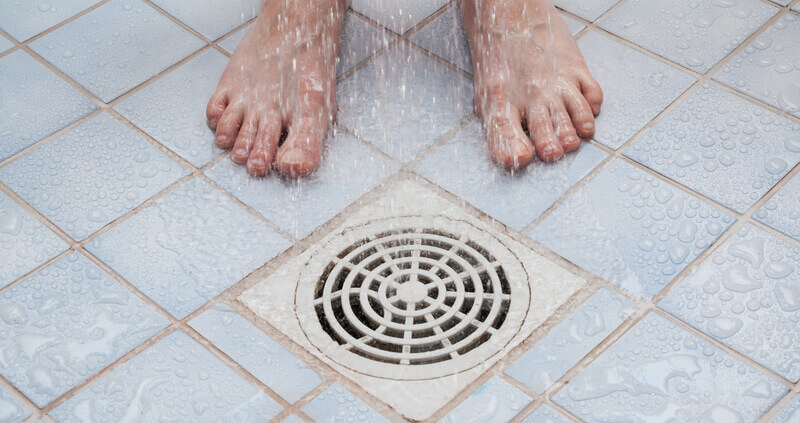
A slow drain that keeps coming back isn’t a one-off clog. It’s a sign that something inside the pipe has changed shape, narrowed, or taken root, and no amount of plunging will fix that until you know what you’re dealing with. The symptoms are almost identical – a slow drain is a slow drain, no matter what’s causing it – and this isn’t the kind of problem you can get a good look at just by peering down the drain for a while. You need to test for an answer. Luckily, there’s an easy way to check for buildup and intrusion and a quick way to test for structural damage, so you can start the right treatment plan with minimal hassle.
What makes a slow drain “chronic” rather than a one-off
A single slow drain that you can clear with a plunge and never think of again is not a chronic slow drain. It’s just a clog. Chronic slow drains follow a pattern: they come back, week after week or month after month; they survive the plunger and maybe survive a 6-foot snake; they present in more than one nearby fixture at the same time.
That’s the pattern a problem presents when the problem is not that there’s a solid obstruction sitting at the same point in the pipe every time you ignore it. Instead, something is gradually reducing the effective diameter of the drain line, or something is severely restricting flow far down the main or branch line. Treating it like the same simple clog you’ve solved with chemical cleaner, boiling water, and a plunger again doesn’t address the problem; it just gives you a few days lull before the symptom repeats.
Start with a whole-home triage test, not a single fixture
Test the flow at every sink, tub, shower, and toilet before you do anything. If you miss this step, you’ll waste time – sometimes days – snaking sink traps and branch drain lines when the real problem is a blocked main line three feet away.
If only one sink or other fixture is affected, the clog is likely local. Branch lines usually run from six to twenty feet before feeding into a stack. With most clogs, you can snake the branch line back from the fixture to the point the line enters the stack and immediately find whatever’s blocking it. Some DIY enthusiasts choose to release the trap on the fixture to do this, and it may work out fine.
The main line runs from the very bottom of your home’s stack all the way to the sewer or septic tank. Main lines are three to four inches in diameter, and it takes a pretty large piece of toilet paper to block them. If more than one fixture is affected, especially if every one of them is, you’ve got a main line clog and you’re wasting your time snaking out the trap under the bathroom sink.
Match the symptom to the likely cause
Different causes create different patterns, and recognizing the pattern helps you avoid speculating.
Recurring kitchen smells and a slow kitchen sink are almost always FOG. Fats, oils, and grease leave the sink warm and liquid, then cool and solidify against the pipe wall. Layer by layer, over the course of months, the used diameter narrows until flow becomes a trickle. It’s the most common chronic home kitchen drain ailment, and it’s completely self-inflicted – poured fat, rinsed pans, and food scraps.
Entire-house slow drains with gurgling toilets is hinting that mass is building deep in the main sewer line, often a mix of grease, scale, and whatever else has made it that far. Scale and minerals in the pipe are especially common in older homes with metal plumbing, where hard water gradually deposits on the inside of the pipe wall and tightens the used diameter year by year.
Recurring clogs consolidated in one bathroom or one section of yard, particularly in a thirty-years-or-older home, are pointing to roots. Roots wiggle into cracked or aged clay pipes through ever-so-small joints and gaps, then they start growing, catching debris and partially blocking the pipe. This is incredibly common in old properties with big trees near the sewer lateral, and it’s a problem that doesn’t get better over time. A pipe affected by roots does not magically get un-affected.
The P-trap is your first mechanical suspect
If only one drain in the house is sluggish, the cause is likely the P-trap for that drain. The curved section of a P-trap holds water, and that water creates a seal that prevents sewer gas from passing from the drain pipe back into the building. Because of its shape, it’s a natural catch point for hair, soap scum, and small debris. Most of the residue in a clogged P-trap is found right at the bottom of the curved section of the trap.
Place a bucket underneath, unscrew the slip nuts by hand, and pull the trap free. You’ll usually find a solid wad of hair and congealed soap sitting right in the bend. Clear it out, rinse the trap, reassemble it, and run water to test. This fixes a huge share of single-fixture slow drains and costs nothing but ten minutes. If the trap is clean and the fixture is still slow, the problem sits further down the branch line, and that’s where DIY tools start running into trouble.
Why chemical drain cleaners make chronic problems worse
Using caustic chemicals out of the box without trying any other method can trap you on a chemical treadmill, constantly pouring more aggressive substances down the drain with less and less effect. Instead, they should be your last resort before bringing in the professionals – use a tool or physical method like a snake or plunger first, then give enzyme or bio-cleaner some time to work. If those methods don’t cut it and you have to go chemical, follow the instructions carefully. Wear heavy gloves and eye protection, use the recommended amount of cleaner, keep the room ventilated, and never use a plunger or snake with chemical cleaners (they can splatter). If the cleaner won’t shift the blockage within a couple of applications based on the instructions or if the clog seems even a little less severe, give up and make the call. They’re too dangerous and too likely to do long-term damage to keep pouring them down your drain.
Know where DIY tools stop being useful
A plunger, a handheld drain snake, and boiling water are all fine for blockages located at or near the fixture trap, because that’s where a blockage is by definition. If your problem is beyond that point – that is, out in the pipe that’s physically inaccessible to you without equipment – then no amount of plunging or snaking will ever stave off the problem for long. A short household snake can’t even reach that far, and if it could, it wouldn’t clean the pipe anyway; it would just make a hole in a dirty pipe.
That’s different, and important, because a “chronic buildup” is a substance that lines the pipe instead of just sitting in the middle of it. Sluggish, blocked, or smelly drains caused by the accumulation of grease or scale from soap, hair, toothpaste, or even paper dust are common – but it’s not like that mess is sitting in one place. It coats the inside of the pipe you can’t reach, and continues to do so even after you’ve punched a hole through it with the short snake. The problem goes away for a week or two, and then returns, often worse, because that little hole in the gunk catches debris faster than a clean wall would.
What professional diagnosis actually finds
This is precisely the situation where the direct cause of a slow drain is unknowable without sending in a camera. If you’ve had no luck with a plunger and the blockage isn’t located in the trap, you’re not going to know if an “object” has been put down your pipes without looking.
The same goes for determining whether or not a fatberg is building up without digging up the sewer to confirm. Fatbergs are a mixture of fats, oils, grease, non-biodegradable solid matter, and “flushable” wet wipes, which stick to concrete-like congealed masses in sewer systems. While they’re a particular problem for the maintenance staff who need to clear them, the user on the other end likely doesn’t even realize they’re contributing since no single act of disposal seems significant or reckless.
This is where a CCTV drain inspection earns its keep. A camera run through the pipe shows exactly what’s going on – grease coating, mineral scale, root intrusion, a collapsed section, or a genuine fatberg forming – rather than leaving you to guess based on symptoms alone. The scale of what unmanaged buildup can become isn’t theoretical, either: in 2017, Thames Water removed a 130-tonne fatberg roughly 250 meters long from a single London sewer, built up over time from exactly the kind of FOG and wet wipe accumulation that starts as a minor slow drain in someone’s kitchen.
Once the camera identifies the actual cause, the fix follows logically. Grease and scale buildup along the pipe wall calls for hydro jetting, which uses high-pressure water to scour the entire internal surface of the pipe rather than just punching through the middle. Root intrusion calls for root cutting, sometimes followed by pipe relining to seal the cracks roots are getting in through. A collapsed or severely damaged section may need excavation and replacement, which no amount of jetting or snaking will substitute for.
If you’re dealing with a chronic whole-home slow drain and you’ve ruled out the vent and checked your traps, this is the point where DIY has reached its ceiling. For anyone in the area, booking a proper Sydney blocked drain cleaning service with CCTV inspection and jetting capability will solve in an afternoon what months of plunging and chemical cleaner never will.
Prevention is part of the fix, not an afterthought
It’s not enough just to clear the blockage in the sewer pipe. If you don’t eliminate the cause, the problem reoccurs almost immediately.
There are a few practices guaranteed to help. Install mesh strainers in kitchen and bathroom drains to prevent hair and food from getting into the pipes. Regularly rinse kitchen drains with hot water to avoid grease buildup. Enzyme treatments are beneficial but use them to maintain a clear pipe, not to open a blocked one. Finally, adopt a strict no-FOG, no-wipes policy. Fat and oil should be disposed of in the garbage, not down the sink, and despite their labeling, “flushable” wipes accumulate in the lateral just like grease, causing unnecessary bulk.
For older houses served by clay sewers and with mature trees, the less-obvious problem is that roots are more than likely in the lateral already, and regular cutting is the best way to limit their impact. Have the line rooted and visually inspected by camera every 24 months, even without symptoms. Root cutting is relatively cheap; once the sewer lateral collapses the fix is not.
When to stop DIY-ing and call a professional
Some signs indicate it’s time to give up on the DIY and schedule a professional drain service instead: more than one drain is slowing down simultaneously, the same obstruction recurs twice or more per year, you smell septic odours inside, or you have unexplained wetness in the yard or indoors. These are all common clues of a main-line or lateral issue, which is more trouble than you can handle with a plunger or an over-the-counter snake.
Chronic slow drains seldom result from a single, compact mass in the cross-section of the pipe. They occur because of a slow accumulation of material on the interior surfaces over time. The solution depends on knowing your situation before you consider dumping corrosives down the drain or blindly poking through the trap.
Leave a Reply