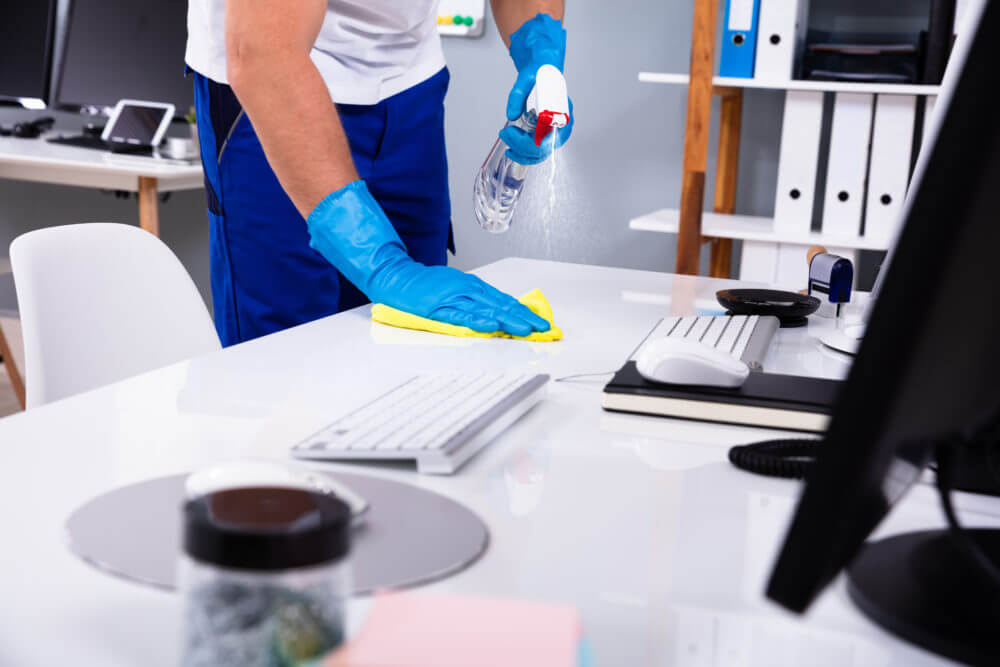
Maintaining cleanliness in a commercial building is not a matter of having the right amount of staff or putting in more elbow grease. It’s about having effective systems in place. Most of the time, the reason a facility isn’t kept clean isn’t that there aren’t enough people cleaning it, it’s that the systems that those people are working within aren’t optimized for success.
Map Your Facility Before You Write A Single Procedure
Before you can build a cleaning workflow, you need to map out your risk profile of the building. Not every room in your facility carries the same risk or warrants the same frequency of cleaning, and treating them all equally wastes labor on areas that pose no more risk to occupants and visitors than when they were last cleaned. Worse, the areas that actually need to be cleaned suffer as a result.
You start by aggregating rooms into three broad tiers: high-traffic (lobbies, restrooms, break rooms, elevator banks), medium-traffic (open-plan offices, conference rooms, corridors), and low-traffic (storage rooms, server rooms, occasionally used offices). The cleaning frequency, the level of product you use, and the amount of time you assign staff to those rooms would have all been defined by your tiering of rooms.
Within those zones are high-touch surfaces – door handles, elevator buttons, shared keyboards, light switches – that are significant enough to warrant a category of their own. These are fomites, in epidemiologists’ language, surfaces that facilitate ongoing transmission of pathogens between people. Your workflow needs to make sure that high-frequency fomite sanitization occurs regardless of how recently the clean-looking room that houses them was treated.
This tiering exercise also shows you where your biggest contamination risks are. If people entering a food preparation area must pass restrooms, you had better segment the direction of cleaning crews very carefully. Without this level of understanding in place, the following steps simply won’t gel.
Make In-House Vs. Outsourced A Real Decision
Eventually, every facility manager must decide if they should create and manage an internal cleaning team or contract with an outside company. The right answer will depend on the complexity of your facility – although that’s more complicated than most people think.
If you choose an in-house program, that means maintaining SDS (Safety Data Sheet) records for every chemical, training your team on dwell times and color-coding protocols, and providing them with the correct equipment and consumables. It means stocking consumables through a managed inventory system and training and onboarding your team – including developing your own back safety program so your team has the knowledge they need to operate safely.
Opting for an in-house team often sounds simpler because, well, you control it – but that’s deceptive. Repetitive strain injuries are a real operational risk from improper training, and they lead to higher turnover costs. If you’re not managing all those little details, they’re still managing you.
For many businesses, the administrative time and costs will lead to the efficiency of outsourcing. Partnering with a Commercial cleaning company in Perth means you’re deploying an already-optimized operational system rather than building one from scratch. The training, the protocols, the equipment, the chemical management – it’s already in place.
That said, outsourcing doesn’t mean hands-off. The next step still falls to you.
Move From Reactive To Scheduled: Time-Blocking Your Cleaning Cadence
Many commercial spaces with cleanliness issues do not have an inefficient cleaning staff. They suffer from an inefficient system, where cleaning is done in response to complaints, not in anticipation of needs.
The solution is time-blocking: a proactive system that details what gets cleaned, and by whom, at the daily, weekly, and monthly level. Everything occupies a specific time block and is somebody’s responsibility.
Daily tasks are what you’d expect: restrooms, waste, high-touch surfaces, and often-used floors like kitchen or lobby must be mopped. Weekly tasks apply to tasks like glass and desk cleaning, and vacuuming with HEPA-filter vacuums. Monthly tasks are even more important, involving carpets, grouting, HVAC vents, and high dusting.
Monthly and quarterly tasks are the Achilles heel of a reactive system. They get put off because they’re not in your face. Then they get put off again: six months later, the state of the carpet is a slap in the face that makes the decision for you. Better to put everything on a schedule, with a set owner for each task.
HEPA filters deserve particular attention. A typical vacuum cleaner stirs up tiny particles of dust and blows them back at you. In a crowded room full of people, that is a serious air quality issue. HEPA filter vacuuming fixes this, and should be scheduled once a week without fail.
Build Cross-Contamination Controls Into Every Procedure
This is the point at which many DIY cleaning programs fall down, and at which professional operations separate themselves from the pack. Cross-contamination – when you effectively transfer the pathogens from a dirty surface to a clean one via the same cloth or mop – goes unnoticed until your client’s team gets sick.
The color-coded cleaning system is a structural control here. Define certain colors for certain zones, and make those assignments non-negotiable. Typically, red microfiber cloths are used on restroom fixtures, yellow on restroom sinks and counters, desks and general office surfaces are cleaned with blue cloths, and green cloths are used in kitchen areas. The absolute rule is that a toilet-touched cloth does not touch a desk. Ever. This can never be up for debate.
This isn’t just a good idea; it’s the kind of protocol that should be in your Standard Operating Procedures documentation. Your SOPs should clearly indicate which color goes where, how cloths are laundered and stored at the end of each shift, and what happens when someone runs out of their designated color mid-task. Every question that you can answer in writing that will prevent a contamination shortcut is a win.
Enforce chemical dwell times with that same level of strictness. Proper disinfecting can’t occur immediately. Most products recommend that the surface remain wet for 5 to 10 minutes before the intended pathogens are eliminated. Spray-and-wipe in less than 30 seconds is performance art. Your SOPs should tell your team what the required dwell time is for every product in every zone, and your training should explain not just that this is a rule, but why it’s a rule.
Dilution control systems are another structural control worth investing in. Automatic dispensing units ensure that your team is cleaning with chemicals at the correct ratio each and every time, taking the guesswork and the natural variance out of manual mixing. This also leads to less chemical waste and reduces the chance that a worker could create a solution that is either too weak to sanitize or too strong and damaging to surfaces or themselves.
Design The Physical Movement Of Your Cleaners
The way a cleaner walks around a room matters almost as much as what they’re using to clean. A “clean-to-dirty” directional workflow means starting at the highest, cleanest surfaces and working downward and outward towards the most contaminated points – the waste bin, the floor near the entry.
In practice: dust ceiling vents and light fittings before you sanitize desks. Wipe desks before you clean the floors. Work from the far end of the room towards the door so you’re never walking over something you’ve just cleaned. In restrooms, work from the stall walls inward to the toilet, and leave the floor for last.
Zonal cleaning versus specialist cleaning are two different ways of deciding how to move people around a facility. Zonal cleaning gives one person one physical area – they do everything in it. Specialist cleaning spreads assignments around the whole building – one person vacuums every floor, another does all the restrooms. Neither model is better, but zonal creates stronger ownership and accountability, while specialist lets people achieve higher levels of mastery and do the same thing exactly the same way across your entire building. Most large facilities end up with a hybrid, but that decision should be made on purpose.
Set KPIs And Close The Feedback Loop
A cleaning workflow without measurement is just a list of intentions. KPIs (Key Performance Indicators) turn it into a system you can manage. Common metrics for facility managers: inspection pass rates (what percentage of randomly audited areas meet the hygiene standard), response time to logged issues, restroom service intervals, and tenant satisfaction scores gathered through periodic surveys.
The feedback mechanism matters as much as the metrics. Paper sign-off sheets on restroom doors are practically useless – they’re ignored, forged, and tell you nothing about actual service quality. Digital inspection tools, particularly QR-code-based systems where occupants can flag issues in real-time and cleaners log completed tasks with photo verification, give you a closed-loop system. Problems surface before they become complaints. Completion data is timestamped and searchable. Trends in recurring issues become visible across weeks and months.
Smart facility management software takes this further by integrating scheduling, task completion logs, and inventory management in one platform. When a consumable – hand soap, paper towels, bin liners – drops below a preset minimum stock threshold, the system flags a reorder. That kind of automated inventory management sounds like a small detail, but a building that runs out of soap in a high-traffic restroom at 9 a.m. on a Tuesday is not a building that feels professionally managed.
Don’t Forget Waste And Sustainability
Effective waste management has become an expected component of the service office workers and tenants expect. Waste separation between general waste, recyclables, and more specialized streams like e-waste needs to be managed as part of the cleaning process, not left as an afterthought. That means having the right bins, in the right places, staff who know which stream each material goes into, and a collection schedule that ensures each bin doesn’t overflow.
Green cleaning certification standards – GECA and Green Seal are two well-regarded frameworks – give guidance on how to begin a shift to environmentally preferable products and methods. Less volatile organic compounds in your cleaning chemicals means less chemical exposure for both your office staff and your cleaning staff. Oh, and a greener product is often cheaper, too. The business case and the environmental case run in parallel.
Clean offices have a direct impact on the people who work in them. Proper commercial hygiene can reduce occupant sick leave by up to 46% (Building Owners and Managers Association). That’s not a nice-to-have benefit – it’s a bottom-line cost that either appears on your spreadsheet every quarter or gets taken care of when people aren’t calling in sick right, left, and center.
A clean commercial premise isn’t the result of working too hard. It’s the result of a process that has been planned, written down, measured, and put into practice. Cleanliness is a result.