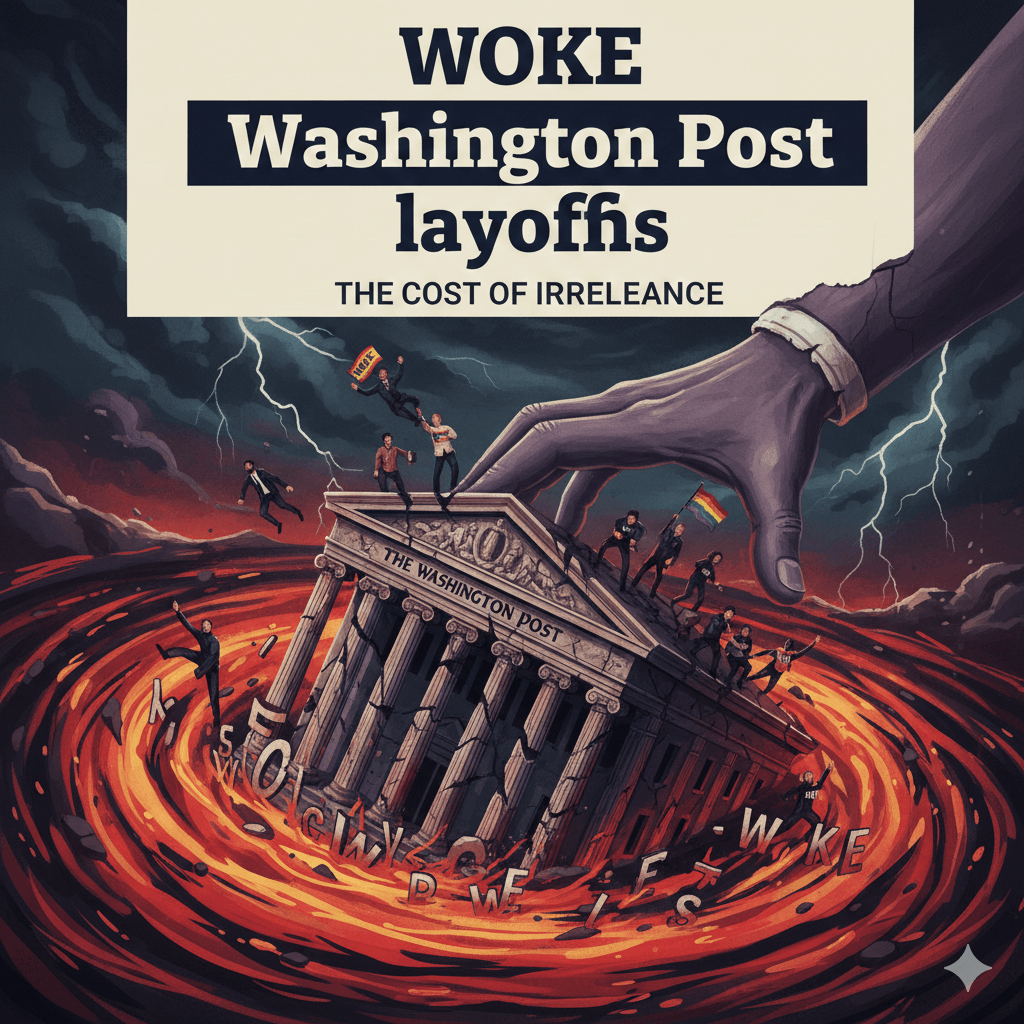
The recent announcement of the Washington Post layoffs has sent shockwaves through the media industry, but for many observers, the writing has been on the write-off for years. On February 4, 2026, the publication slashed 300 positions, representing a staggering one-third of its newsroom.
While the paper’s leadership points to shifting digital trends and AI, the reality is far simpler: a massive loss of trust. When a news organization stops reporting and starts preaching, the market eventually settles the score.
The Economic Reality Behind the Washington Post Layoffs
Financial sustainability requires a product that people actually want to buy. Unfortunately, the Washington Post has spent years alienating a broad swath of the American public.
The numbers tell a story of a brand in freefall. After years of operating at a loss—peaking at nearly $180 million in 2024—the paper had no choice but to downsize.
The Washington Post layoffs are not just a “restructuring”; they are a symptom of a shrinking market share. When you lose 250,000 subscribers in a single week due to editorial infighting, your business model is broken.
Woke Storytelling and the Loss of Engagement
For years, the paper leaned heavily into “woke” narratives that many Americans found out of touch. Instead of objective reporting, the paper focused on a narrow ideological agenda.
The public grew tired of a “news” source that prioritized the following:
- Climate Alarmism: Maintaining a massive team of climate reporters while local news desks were hollowed out.
- One-Sided Political Attacks: A relentless focus on disparaging Donald Trump at the expense of reporting on his administration’s policy successes.
- Cultural Extremism: Framing complex debates—like men in women’s sports or border security—through a purely progressive lens.
This “storytelling style” acted as a filter. It didn’t just report the news; it told readers how they were supposed to feel.
The Public is Voting with Their Feet
I personally lost all confidence in the Washington Post long ago. Most of their coverage felt like it was written for a small bubble in D.C. rather than for the average citizen in the Midwest or the South.
- Americans see through the bias: In the age of social media, we can compare multiple sources instantly.
- Alternatives are growing: Substack, independent podcasts, and niche news sites are thriving where legacy media is failing.
- Trust is hard to earn, easy to lose: Once a reader feels a paper is hiding the truth about the border or the economy, they don’t come back.
A Warning to Modern Media Outlets
The Washington Post layoffs should serve as a cautionary tale for any media entity that forgets its primary duty: to inform, not to indoctrinate.
When the public perceives you as biased, they don’t just stop reading; they “cancel” you in the most literal sense. They stop their monthly payments and find sources that respect their intelligence.
The decline of the Post was a choice made by its editorial board. The layoffs are simply the logical consequence of that choice.
Summary of the Crisis
The Washington Post layoffs are the result of a “perfect storm” of falling revenue, plummeting engagement, and a brand identity that no longer resonates with the majority of Americans. By doubling down on partisan narratives, the Post traded its credibility for a temporary ideological high, and now the bill has come due.
Frequently Asked Questions (FAQ)
Why did the Washington Post lay off so many staff? The paper faced massive financial losses totaling nearly $200 million and a significant drop in digital subscribers. The Washington Post layoffs were necessary to keep the company solvent.
Is the Washington Post considered left-leaning? Yes, most independent media watchdogs and public surveys categorize the Post as left-leaning. Critics argue this bias has contributed to their falling market share.
How many people were affected by the Washington Post layoffs? Approximately 300 employees, or one-third of the total newsroom staff, were let go in the 2026 restructuring.