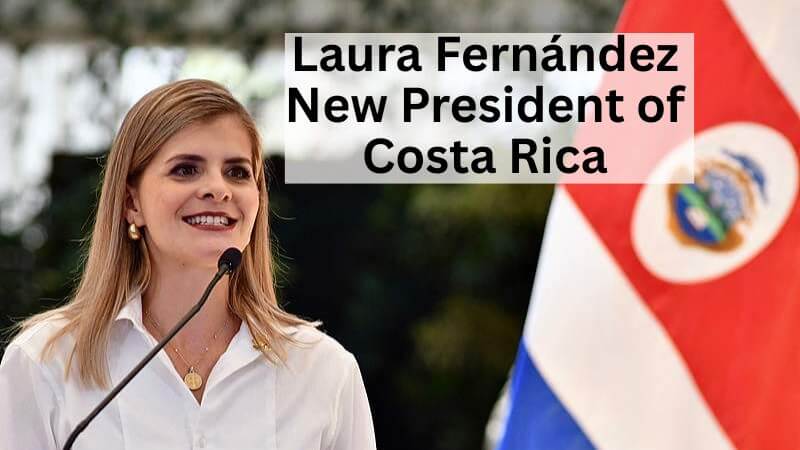
The political landscape of Latin America is undergoing a seismic shift, and the recent victory of Laura Fernández in Costa Rica is the latest evidence of a powerful “blue tide” sweeping the region. In a decisive first-round win on February 1, 2026, Fernández secured nearly 50% of the vote, sending a clear message that Costa Ricans are ready to prioritize safety, economic freedom, and traditional values over the failed experiments of the past.
For years, many Latin American nations have struggled under governments that were seen as lax on crime and overly focused on “woke” ideologies. The election of Laura Fernández signals that the people are tired of social welfare programs that drain the treasury without providing a ladder to prosperity. Instead, they are choosing a society that rewards effort and hard work.
The Rise of President Laura Fernández and the Conservative Wave
As the handpicked successor of outgoing President Rodrigo Chaves, Laura Fernández ran on a platform of continuity and “deep, irreversible change.” Her victory is not an isolated event but part of a broader trend where nations are choosing capitalism and the rule of law over socialism and lawlessness.
From the “iron fist” of Nayib Bukele in El Salvador to the libertarian reforms of Javier Milei in Argentina, a new generation of leaders is emerging. These presidents are unapologetic about their right-wing labels and their commitment to national pride.
Why Voters Are Turning to Leaders Like Laura Fernández
The shift toward conservative populism is driven by three main factors that resonated deeply during the Costa Rican campaign:
- Security First: Like Bukele, Fernández has promised a “mega-prison” and a state of exception to crush organized crime.
- Economic Meritocracy: Her “Third Republic” vision focuses on cutting red tape and fostering an environment where hard work translates into wealth.
- Institutional Reform: She aims to “unblock” the state by reforming judicial and bureaucratic structures that have long hindered progress.
Comparing the New Leaders: Bukele, Milei, and Fernández
While each leader has a unique style, they share a common thread of prioritizing results over rhetoric. Bukele has shown that security can be restored to even the most violent nations. Milei is proving that fiscal discipline can stabilize a collapsing economy. Now, Laura Fernández is poised to turn Costa Rica into a beacon of stability and free enterprise in Central America.
Latin America’s Shift Toward Capitalism and Rule of Law
The win by Laura Fernández confirms that the “Pink Tide” of the early 2000s has been replaced by a demand for order. This movement isn’t just about politics; it’s about identity. Nations want to stand with pride in who they are and the society they are building.
They are rejecting the notion that the state should manage every aspect of life. Instead, they are embracing a model where the government’s primary role is to ensure the rule of law and protect the property of those who contribute to the economy.
- Argentina: Javier Milei continues to dismantle the socialist “caste” system.
- El Salvador: Nayib Bukele remains the gold standard for regional security.
- Chile: The recent election of Jose Antonio Kast shows that even traditionally centrist nations are moving right.
- Costa Rica: Laura Fernández enters office with a mandate to modernize the nation’s infrastructure and legal framework.
The End of “Woke” Governance?
A significant driver for Fernández’s supporters was a fatigue with progressive social agendas that many felt were imported and disconnected from local values. By focusing on religious freedom and national sovereignty, Fernández tapped into a silent majority that values the family unit and traditional work ethics.
Summary: A Regional Rebirth
The election of Laura Fernández is a victory for those who believe in a Costa Rica that is safe, prosperous, and proud. It marks a definitive turn toward a Latin America that values capitalism, security, and the dignity of the individual. As she prepares for her inauguration on May 8, 2026, the eyes of the world are on San José to see how this new chapter of the “Third Republic” unfolds.
Frequently Asked Questions (FAQ)
Who is the new president of Costa Rica? Laura Fernández is the President-elect of Costa Rica, having won the February 2026 election with nearly 50% of the vote.
What is the “Third Republic” mentioned by Laura Fernández? It refers to her plan for deep institutional reforms, aimed at reducing corruption and modernizing the Costa Rican state to favor free enterprise and security.
Is Laura Fernández similar to Nayib Bukele? Yes, she has explicitly praised Bukele’s security model and has pledged to build a high-security “mega-prison” to combat rising crime.
Previous Politics posts