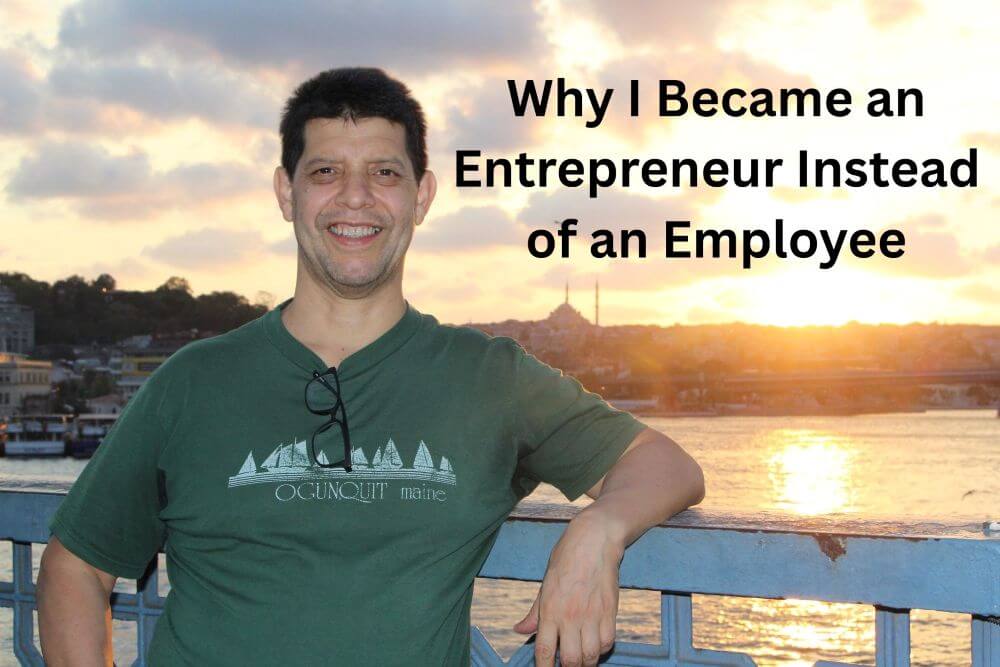
My Difficult Relationship With Formal Education
I have mentioned in many blog posts that, for me, one of the worst investments I ever made was my college education. I spent years of my life and a significant amount of money pursuing a degree that ultimately proved to be of little practical value in my career.
Most of the useful knowledge I have acquired came not from textbooks or classrooms, but from reading blogs, studying financial markets online, and watching YouTube videos. Today, I make my living as a stock investor, and almost everything I know about investing came from the internet, not from university lectures.
At age 35, after finally graduating from university, my goal was simple: get a stable job, work for a large corporation, and slowly climb the corporate ladder like everyone else. But my plans fell apart almost immediately.
As an immigrant in Quebec, I struggled to fit into the local labor market. My French was not considered “Quebecois enough,” and I experienced repeated rejection while searching for work. Whether intentional or not, I often felt excluded from opportunities because of my accent and background.
Eventually, entrepreneurship stopped being a choice and became a necessity.
Since I could not build the traditional corporate career I had imagined, I created my own path instead. Over the years, I started a dance school, invested in real estate, worked as a photographer, became an SEO technician, and eventually moved into stock investing.
My entrepreneurial journey was not glamorous. As an immigrant adapting to a different language and culture, survival itself often felt like an accomplishment. But those struggles also forced me to become resourceful, independent, and adaptable.

Since I could not build the traditional corporate career I had imagined, I created my own path instead. Over the years, I started a dance school, invested in real estate, worked as a photographer, became an SEO technician, and eventually moved into stock investing.
My entrepreneurial journey was not glamorous. As an immigrant adapting to a different language and culture, survival itself often felt like an accomplishment. But those struggles also forced me to become resourceful, independent, and adaptable.
The Well-Tested Path of Education and Employment
The traditional path still works for many people.
If you get good grades, attend a reputable university, choose a high-paying field, and perform well in the workplace, the odds are generally in your favor. A degree from a respected institution signals discipline, persistence, and competence to employers.
In many cases, employers are not necessarily hiring you because of the specific knowledge you learned in calculus or biology classes. Most graduates forget a large portion of what they studied anyway. Instead, employers are often responding to the signal your degree sends.

Good grades in high school signal to universities that you are likely to complete a degree. Universities then benefit from high graduation rates and strong employment statistics. Later, employers see your degree as evidence that you followed a structured and socially validated path.
From the employer’s perspective, hiring a graduate from a well-known university feels like the safer bet compared to hiring someone with a less traditional background.
Once inside the corporate system, people who consistently perform their duties, follow procedures, and build strong professional reputations often continue receiving promotions and salary increases. Over time, many graduates from reputable universities eventually reach six-figure incomes.
Of course, not all degrees offer the same financial outcomes.
Some of the highest-paying degrees typically include:
- Aerospace Engineering
- Chemical Engineering
- Computer Engineering
- Electrical Engineering
- Economics
- Physics
Meanwhile, some of the lower-paying fields often include:
- Social Work
- Music
- Education
Whether fair or unfair, these income differences are generally well known before students choose their major. Society rewards certain skills more highly than others, often based on supply, demand, and economic value.

There Are Always Exceptions
Real life does not always follow the script.
There are thousands of people who do everything “correctly” — earn good grades, attend reputable universities, work hard — and still struggle financially.
At the same time, there are many people who performed poorly in school, never graduated, or took unconventional paths, yet achieved enormous financial success.
That unpredictability is part of life.
The Irony of Success
Some of the world’s most celebrated entrepreneurs either struggled academically or never completed college at all.
Examples include:
- Michael Dell
- Steve Jobs
- Mark Cuban
- Bill Gates
- Mark Zuckerberg
- Ted Turner
- Larry Ellison
- Kim Kardashian
- John D. Rockefeller
- Henry Ford
- Lady Gaga
- Tiger Woods
This does not mean education is useless, nor does it mean dropping out guarantees success. It simply reminds us that there is no single formula for building a meaningful or prosperous life.
Conclusion
Nobody truly knows how successful they will become.
The best we can do is work hard, build strong relationships, remain adaptable, and place as many probabilities as possible in our favor.
For some people, the traditional path of education and employment works beautifully. For others, like me, life pushes them toward entrepreneurship and self-education.
Neither path guarantees success. But both can lead to a fulfilling life if pursued with persistence, curiosity, and resilience.
Frequently Asked Questions
Is college necessary for entrepreneurship?
No. Many successful entrepreneurs built their careers without completing college. However, education can still provide valuable structure, networking, and credibility.
Can self-education replace formal education?
In some industries, yes. The internet has made high-quality information widely accessible through blogs, videos, online courses, and communities.
Why do some college graduates struggle financially?
A degree does not guarantee financial success. Career outcomes depend on industry demand, economic conditions, networking, adaptability, and personal initiative.
What skills are most important for entrepreneurs?
Adaptability, communication, resilience, sales, financial literacy, and problem-solving are often more important than formal credentials.