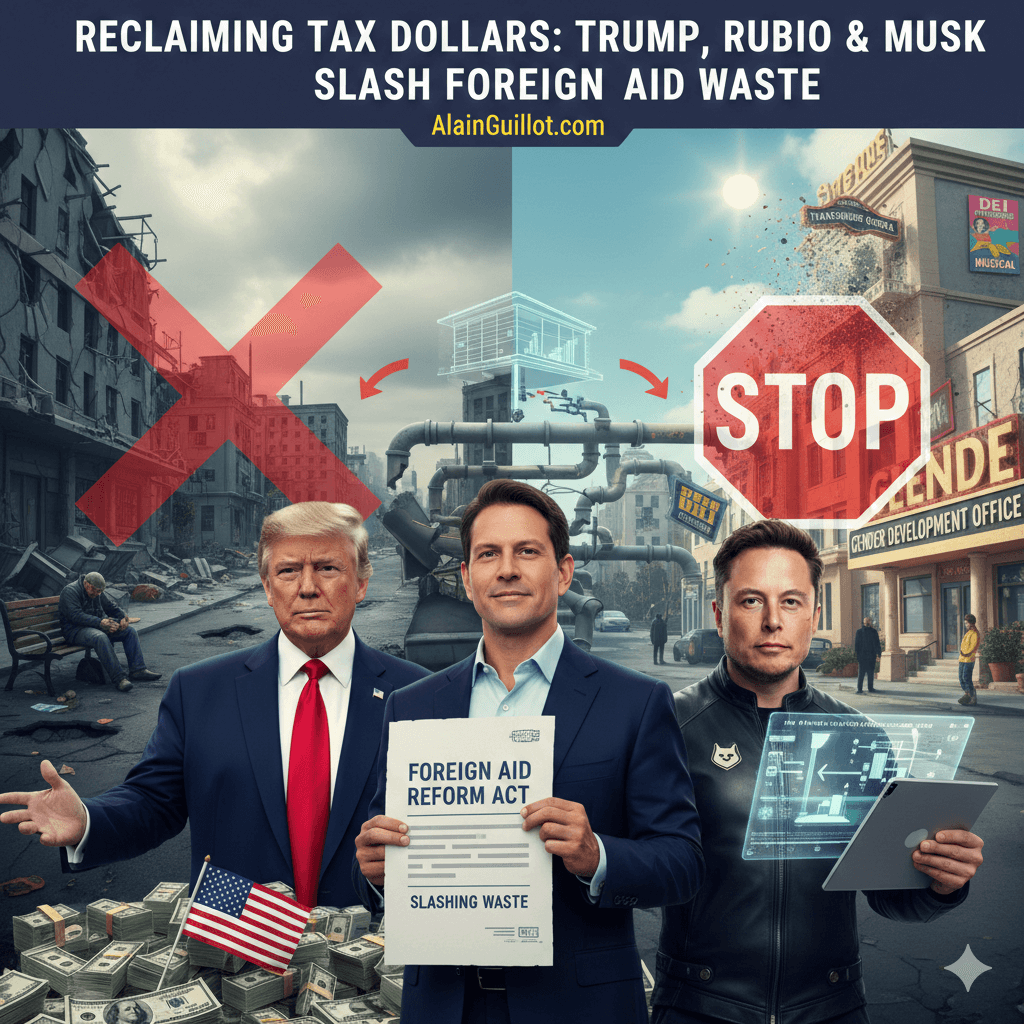
The Trump administration’s decisive action to slash foreign aid waste, championed by Secretary of State Marco Rubio and supported by Elon Musk’s innovative DOGE program, marks a monumental shift in American foreign policy. For too long, billions of taxpayer dollars have been siphoned off by an unaccountable network of NGOs, pushing agendas far removed from the interests of the American people. This new approach prioritizes fiscal responsibility and national sovereignty, ensuring that America’s resources are used to benefit Americans first.
Most Americans remain blissfully unaware of the staggering sums diverted from their pockets to fund questionable initiatives abroad. While the Biden administration pushed for higher and higher taxes, USAID’s annual disbursements climbed to approximately $43.8 billion in its peak years. When factoring in the State Department and Department of Defense, total U.S. foreign assistance peaked at over $70 billion in FY 2023. This is not just a figure; it represents a profound misuse of national wealth, especially when pressing domestic issues like veteran homelessness and crumbling infrastructure persist.
The Problem with Unchecked Foreign Aid Waste
Secretary Rubio articulates this paradigm shift clearly: “This new era of foreign assistance eliminates extreme ideological projects that previous administrations forced the American people to subsidize, cuts out the wasteful NGO industrial complex, and puts the American people first.” This statement resonates deeply with a populace tired of seeing their hard-earned money fund programs that directly contradict their values.
For decades, the “NGO Industrial Complex” operated as a self-perpetuating entity. Government grants fueled organizations that, in turn, lobbied for more government grants. Executives reaped six-figure salaries under the guise of “raising awareness,” while true accountability remained elusive. The most egregious aspect? A mere fraction of the funds actually reached the intended beneficiaries. The vast majority was recycled back into lobbying efforts, perpetuating this cycle of waste. This is precisely the kind of foreign aid waste the Trump administration is committed to eradicating.
Targeting “Extreme Ideological Projects” and Eliminating Foreign Aid Waste
Reports detailing the USAID program cuts, as announced by Secretary Rubio, highlight specific examples of what were rightfully described as “extreme ideological projects.” These initiatives, often tied to gender ideology, DEI (diversity, equity, and inclusion) initiatives, and LGBTQ+ activism, were terminated due to their lack of alignment with core U.S. national interests.
Consider these examples, which represent just a fraction of the programs targeted for elimination:
- DEI Advancement in Workplaces (Serbia): A $1.5 million program aimed at promoting diversity, equity, and inclusion in Serbian workplaces.
- DEI Musical Production (Ireland): A $70,000 initiative for a musical centered on diversity, equity, and inclusion themes.
- Transgender Opera (Colombia): A $47,000 program supporting a transgender-themed opera.
- Transgender Comic Book (Peru): A $32,000 project for creating a transgender-focused comic book.
- LGBT Activism and Gender-Affirming Care (Guatemala): A $2 million program supporting LGBT activism and “gender-affirming procedures.”
- Institutional Gender Development Offices: A hefty $16 million in funding for contractors supporting gender development offices within institutions globally.
Beyond these, significant cuts impacted programs often masked under broader humanitarian banners but frequently intertwined with ideological agendas:
- Reducing Sexual and Gender-Based Violence (UN Programs – Haiti): A $2.5 million initiative through the United Nations.
- Support for Victims of Gender-Based Violence (Venezuela): A $20 million program.
- UN Population Fund (UNFPA) Projects: Over 50 projects totaling more than $370 million, often including maternal health and gender-based violence efforts in countries like Egypt and Nigeria.
- Reproductive Health and Gender-Based Services (Bangladesh): Cuts affecting services for nearly 600,000 beneficiaries.
- Safe Spaces and Health Facilities (Palestine – Gaza and West Bank): Elimination of 40 safe spaces and 80 health facilities, impacting approximately 280,000 mothers and newborns.
- Reproductive Health Services (Sudan): Suspension affecting 200,000 women.
- Family Planning Integration Projects: Multiple projects in Ghana, Kenya, Zimbabwe, and other nations.
These examples underscore the Trump administration’s commitment to halting foreign aid waste and redirecting resources to truly impactful initiatives.
The Role of Elon Musk and the DOGE Program in Reducing Foreign Aid Waste
The involvement of Elon Musk and his innovative DOGE program (Direct Overseas Government Efficiency) represents a groundbreaking step towards ensuring transparency and direct impact in foreign assistance. By leveraging blockchain technology and direct disbursement mechanisms, the DOGE program aims to minimize bureaucratic overhead and ensure that funds reach their intended recipients without being diverted by layers of intermediaries. This direct, auditable approach is a stark contrast to the opaque systems that previously enabled widespread foreign aid waste. This innovative partnership exemplifies how private sector ingenuity can address inefficiencies in government spending, making every taxpayer dollar count.
The previous system, riddled with inefficiencies, saw taxpayer money funding climate activism disguised as aid, and DEI initiatives exported worldwide. All this, while American veterans slept on the streets and vital infrastructure in American cities crumbled. This stark contrast highlights the urgent need to prioritize domestic needs over dubious foreign ventures.
A New Era of Accountability and “America First”
The Trump administration’s policy, under Secretary Rubio’s guidance is about fundamentally rethinking the purpose and execution of foreign assistance. It’s about accountability, transparency, and a clear focus on American interests. By drastically reducing the “NGO Industrial Complex” and eliminating programs that serve ideological rather than practical purposes, the administration is fulfilling its promise to put the American people first. This bold move will undoubtedly free up billions, which can then be reinvested into critical domestic programs, strengthening America from within. The effort to slash foreign aid waste is a crucial component of this vision.
Summary
The Trump administration, led by Secretary of State Marco Rubio and supported by Elon Musk’s DOGE program, has made a crucial decision to drastically reduce foreign aid waste and dismantle the bloated NGO industrial complex. By eliminating ideologically driven projects and re-prioritizing American interests, billions in taxpayer dollars are being saved. This shift ensures accountability, transparency, and a renewed focus on domestic needs, marking a pivotal moment in American foreign policy.
Frequently Asked Questions (FAQ)
Q1: What prompted the Trump administration to reduce foreign assistance? A1: The administration observed significant foreign aid waste, including funding for ideological projects, a lack of accountability within NGOs, and a desire to redirect taxpayer dollars to pressing domestic needs such as veteran support and infrastructure development.
Q2: Who are the key figures behind this foreign aid reform? A2: President Trump, Secretary of State Marco Rubio, and Elon Musk, through his DOGE program, are spearheading the efforts to slash foreign aid waste and implement a more efficient system.
Q3: What specific types of programs were cut? A3: Programs identified as “extreme ideological projects” were targeted, including those focused on DEI, gender ideology, LGBTQ+ activism, and other initiatives deemed not aligned with core U.S. national interests. Many traditional aid programs that showed high levels of foreign aid waste were also scrutinized.
Q4: How does Elon Musk’s DOGE program contribute to this initiative? A4: The DOGE program leverages advanced technology, potentially blockchain, for direct, transparent disbursement of funds, aiming to reduce bureaucratic overhead and prevent foreign aid waste by ensuring money reaches its intended recipients more efficiently.
Q5: What is the estimated financial impact of these cuts? A5: The cuts target approximately 83% of USAID’s programs, freeing up billions of dollars. USAID’s annual disbursements alone climbed to $43.8 billion in peak years, with total foreign assistance reaching over $70 billion. The goal is to redirect these savings to domestic priorities.
Leave a Reply