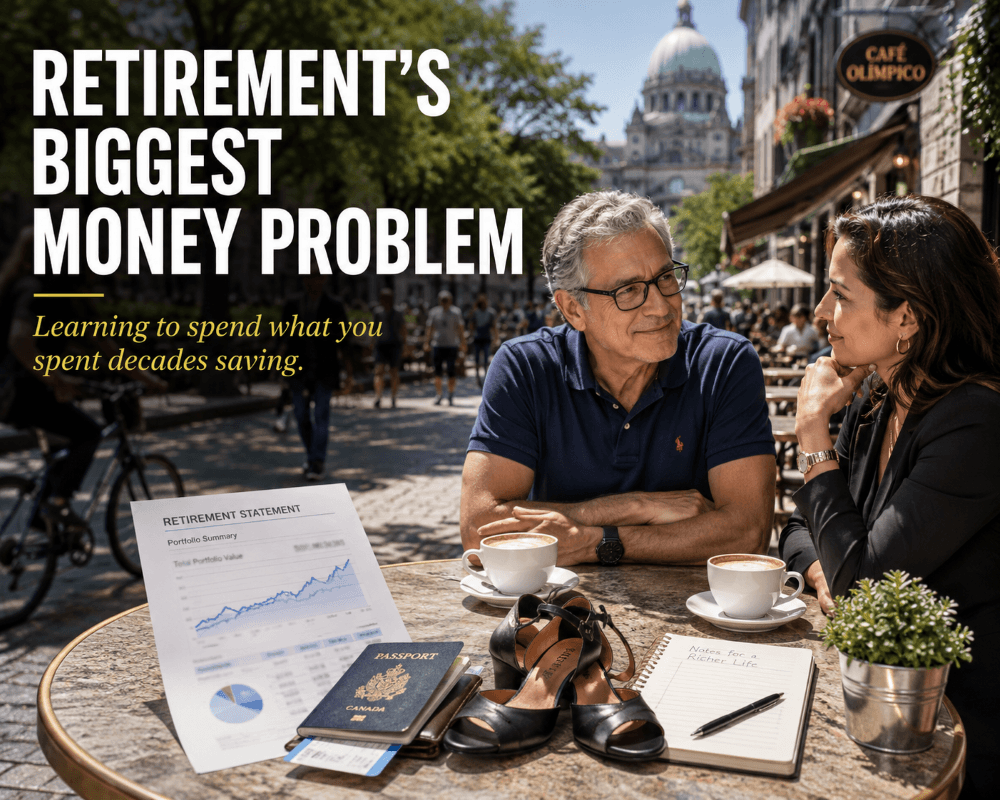
I have an unusual retirement problem. I have more money than I’ll probably ever spend.
For most of my adult life, retirement spending was never something I worried about. Saving was.
Like millions of people, I spent decades training myself to save every extra dollar. I invested consistently, avoided unnecessary purchases, resisted lifestyle inflation, and watched my retirement accounts grow year after year.
Today, at 59 years old, I am financially independent.
Ironically, I’ve discovered that spending money is far more difficult than earning or saving it.
I don’t need to work another day in my life, yet I continue working because I genuinely enjoy what I do and I don’t know what to do with myself if I don’t have this daily activity called work. Meanwhile my investments continue to grow faster than I can realistically spend them.
The problem isn’t that I don’t have enough money.
The problem is that I no longer know how to spend it.
And it turns out I’m far from alone.
Retirement Spending Is Harder Than Saving
A recent Corebridge Financial survey found something surprising.
- Fewer than one-third of retirees feel comfortable withdrawing money from their retirement savings.
- Seven out of ten retirees say it’s very important that their nest egg never shrinks.
- Thirty-eight percent admit they deliberately avoid spending money simply to preserve their savings.
Think about that.
People spent forty years saving for retirement…
…and once retirement finally arrives, many refuse to spend the money they worked so hard to accumulate.
That seems irrational.
Until you realize we’ve spent our entire lives being rewarded for saving.
We Train Ourselves to Accumulate, Not Decumulate
Every paycheck teaches us the same lesson.
Save more.
Invest more.
Increase your net worth.
Watch the graph go up.
Personal finance books celebrate growing investment balances.
Financial news celebrates higher account values.
Net worth becomes the scoreboard.
Then retirement arrives and suddenly we’re expected to reverse decades of conditioning.
Instead of accumulating wealth, we’re supposed to slowly spend it.
Psychologically, that’s an enormous shift.
For many retirees, watching their investment account decline—even if it’s exactly according to plan—feels like failure.
My Retirement Spending Problem
When I imagined retirement in my twenties, I assumed I would eventually spend money on expensive things.
A luxury car.
A larger house.
Designer clothes.
Fine dining every night.
None of that happened.
I live in Montreal, where owning a car would mostly be an inconvenience.
I have a comfortable apartment that suits me perfectly.
My wardrobe is simple. A good polo shirt lasts for years.
My favorite hobby is salsa dancing, and the best dance floor in the city is…free.
I eat out regularly, but because my cholesterol is high, my doctor has encouraged me to follow a mostly plant-based diet. Ironically, eating healthier often costs less than dining out. And when I go out to eat, I go to small neighborhood restaurants to encourage the local owners. The waiters know me, the owners know me, and I feel at home.
I already take two international vacations every year.
Beyond that, I honestly don’t know what else I need.
The result?
My portfolio keeps growing because my spending simply hasn’t caught up with my savings.
Retirement Spending Doesn’t Mean Spending Carelessly
Many people hear this discussion and think the solution is simple:
“Just buy more stuff.”
I disagree completely.
Financial freedom isn’t permission to become a reckless consumer.
It’s permission to make choices based on happiness rather than necessity.
The goal isn’t to maximize spending.
The goal is to maximize fulfillment.
Sometimes that means spending more.
Sometimes it means spending exactly the same while feeling less guilty about it.
Better Ways to Practice Retirement Spending
If you’ve accumulated more than you’ll likely spend, consider investing in experiences rather than possessions.
Some ideas include:
- Travel more slowly instead of taking rushed vacations.
- Fly premium economy or business class on long international flights.
- Hire help for tasks you no longer enjoy.
- Take classes simply because you’re curious.
- Donate more generously to causes that matter.
- Support local artists and small businesses.
- Spend more time with family and friends, even if it costs money.
- Upgrade convenience rather than luxury.
Money can purchase comfort, freedom, education, health, and time.
Those often produce greater happiness than another expensive gadget.
Retirement Spending Requires a Plan
One reason retirees hesitate to spend is uncertainty.
How much is safe?
Will the money last?
What happens if markets fall?
These are reasonable questions.
That’s why every retiree should create a spending strategy, not just an investment strategy.
A retirement calculator can estimate sustainable withdrawal rates based on life expectancy, investment returns, inflation, pensions, and Social Security or government benefits.
When you know your numbers, spending becomes less emotional.
Instead of wondering whether today’s vacation is irresponsible, you know whether it fits within your long-term plan.
Confidence replaces fear.
Wealth Is Meant to Improve Life
One statistic from the Corebridge survey stood out to me.
Eighty-three percent of retirees simply expect to leave behind “whatever is left.”
That tells me many people aren’t intentionally creating a legacy.
They’re simply afraid to spend.
There’s nothing wrong with leaving an inheritance.
But there is something sad about sacrificing experiences today because you’re afraid to touch money you may never actually need.
Money is a tool.
Not a trophy.
Its greatest purpose isn’t sitting in an investment account.
Its purpose is improving the quality of your life and the lives of people you care about.
My New Financial Goal
For decades, my goal was increasing my net worth.
Today, my goal is different.
I want to maximize meaningful experiences while maintaining financial security.
I’m learning that retirement isn’t about protecting every dollar.
It’s about using those dollars wisely.
The greatest financial lesson of my working years was learning how to save.
The greatest lesson of retirement may be learning how to spend—with confidence, purpose, and without guilt.
Frequently Asked Questions
Why is retirement spending so difficult?
Because most people spend decades learning to save and invest, not to withdraw money. The psychological transition from accumulation to decumulation is one of retirement’s biggest challenges.
How much should retirees withdraw each year?
The answer depends on your investments, life expectancy, pensions, and other income sources. Many retirees use the 4% rule as a starting point, but a personalized retirement plan is often more appropriate.
Should I spend my retirement savings or preserve them for my heirs?
There is no universal answer. If your retirement is fully funded, spending on meaningful experiences and improving your quality of life can be just as valuable as leaving a larger inheritance.
What’s the best way to become comfortable with retirement spending?
Create a detailed retirement spending plan using a retirement calculator, establish a sustainable withdrawal strategy, and remember that your savings were built to support your retirement—not simply to grow forever.
Other personal finance blog posts