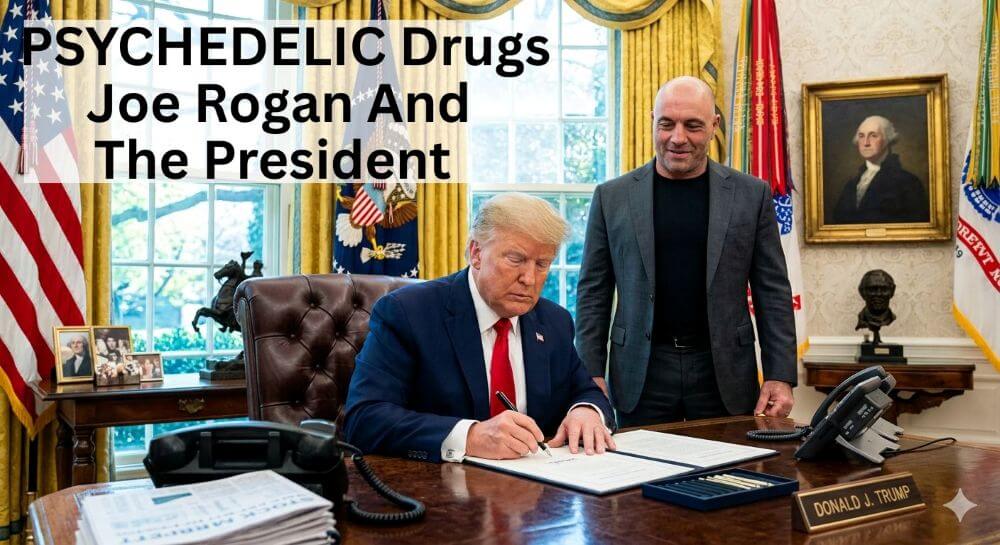
On April 18, 2026, the landscape of American mental health treatment shifted dramatically. President Trump signed the Psychedelic Executive Order (EO), titled “Accelerating Medical Treatments for Serious Mental Illness,” during a historic Oval Office ceremony.
This directive marks a fundamental change in how the federal government views substances like ibogaine and psilocybin. By prioritizing research over restriction, the administration is signaling a “moonshot” for treatment-resistant depression and PTSD.
What Motivated the Signing of the EO?
The motivation behind the Psychedelic Executive Order is rooted in the escalating veteran suicide crisis and the failure of traditional SSRIs to stem the tide of opioid addiction. High-profile advocates have long argued that current federal scheduling is a bottleneck to life-saving innovation.
Strategic pressure from Health Secretary Robert F. Kennedy Jr. and Administrator Mehmet Oz played a central role. They have championed “breakthrough” alternatives that focus on neuroplasticity rather than daily symptom management.
A notable presence at the signing was podcaster Joe Rogan. His long-standing advocacy for psychedelic research and his influence among veterans provided significant cultural momentum for this policy shift.
The Ibogaine Breakthrough
One of the most surprising elements of the EO is the specific focus on ibogaine. This compound, derived from an African shrub, is often cited as a powerful tool for interrupting opioid addiction.
The order directs the FDA to establish an expedited review process specifically for ibogaine. It also utilizes the “Right to Try” framework, allowing patients with life-threatening conditions to access these treatments before full FDA approval.
Market Winners: Companies Set to Benefit
The stock market reacted swiftly to the news. For investors tracking the “picks and shovels” of the AI sector or biotech, this EO creates clear front-runners.
- Compass Pathways (CMPS): As a holder of “Breakthrough Therapy” status for psilocybin, they are first in line for the new Priority Review Vouchers.
- Atai Life Sciences (ATAI): Their diversified portfolio in various psychedelic compounds makes them a broad-based play on this regulatory easing.
- Optimi Health (OPTI): This company is well-positioned as a GMP-certified supplier for the clinical trials the EO aims to fund.
Potential Market Losers
While the news is bullish for biotech, it poses risks to other sectors:
- Legacy Big Pharma: Companies reliant on long-term, daily antidepressant prescriptions may face competition from one-time or short-course psychedelic treatments.
- Private Rehab Centers: High-cost, traditional abstinence-only centers may suffer if rapid ibogaine-assisted detox becomes the new clinical standard.
The Road Ahead for Investors
The Psychedelic Executive Order isn’t just about healthcare; it’s about capital efficiency. By shortening the FDA review timeline from years to months, the “burn rate” for these biotech firms drops significantly.
However, caution is warranted. These remain high-beta stocks. While the regulatory path is clearer, clinical results still dictate the final valuation of these companies.
Frequently Asked Questions (FAQ)
Does this EO legalize psychedelics? No. The Psychedelic Executive Order fast-tracks research and clinical access through the FDA and “Right to Try” pathways, but these substances remain controlled until they receive formal rescheduling following clinical trials.
What is the role of the $50 million funding? The federal government is allocating $50 million through ARPA-H to match state-level investments, particularly in states like Texas and Kentucky that have already begun funding psychedelic research.
How does “Right to Try” apply here? It allows eligible patients who have exhausted all other options to access investigational psychedelic drugs that have completed basic safety testing but are not yet fully approved for the general market.
Previous stock market posts