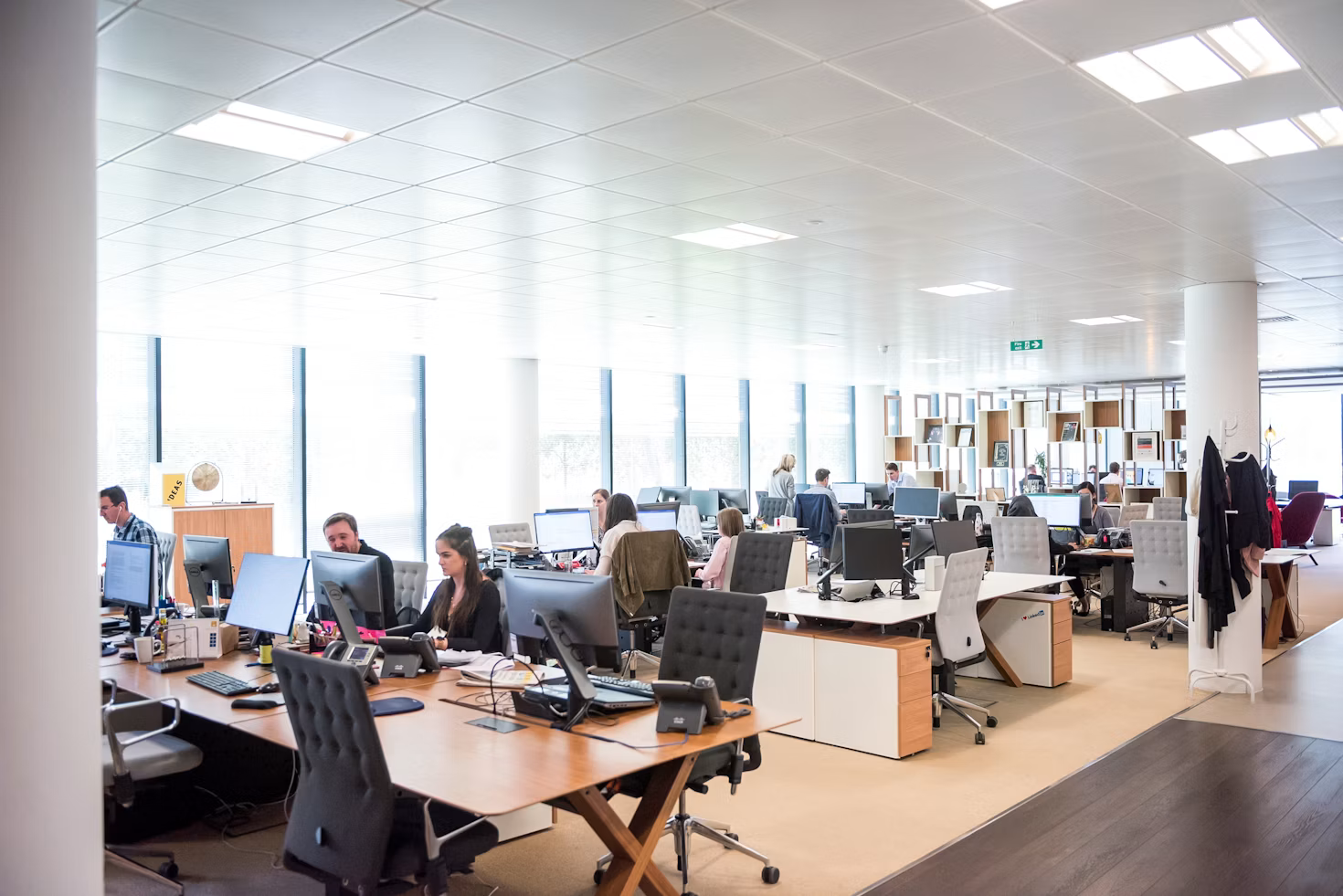
How your office looks does more than just make it pretty. It really drives your company culture, how happy your employees are, and how much everyone gets done. A well-thought-out workspace can help people work together and focus, but a poorly planned one can cause problems and distractions. As businesses change, their physical spaces need to change too, so they can support new ways of working and help teams do their best.
Workspace Design Impacts Output
It’s a known fact that your physical surroundings affect how well you perform. Things like natural light, good air, and how noisy it is directly impact whether an employee can concentrate and stay energetic all day. An office that’s cramped, dark, or loud can lead to stress and make people less efficient. On the flip side, a space that offers different options, comfort, and control lets employees pick the best spot for their task, whether it’s quiet work alone or a lively team brainstorm. The goal is to create a place that cuts down on distractions while making everyone feel comfortable and good, which then helps them do better work.
Beyond the Open Plan Trend
For years, the open-plan office was seen as the perfect way to get people to collaborate and break down old hierarchies. But after trying it out and doing some research, we’ve found some big downsides. Constant noise, no privacy, and frequent interruptions can really mess with concentration and amp up stress. Studies have even shown the high cost of open offices when it comes to people losing focus and feeling unhappy. The promise of more collaboration often doesn’t happen, with research suggesting it can actually hurt employee productivity. This has made many companies rethink the idea of a one-size-fits-all office and look into more balanced, hybrid setups that mix collaboration with the need for focused work.
Custom Solutions for Every Business
Since every team has its own unique needs, the best office designs are made specifically for their workflows and company cultures. This means ditching generic layouts for something more flexible and modular. Some teams might do great with a bunch of collaborative desks, while others need quiet, closed-off spots for deep concentration. The answer is a “kit of parts” that could include phone booths for private calls, small huddle rooms for quick meetings, and comfy lounge areas for casual chats. Companies are now teaming up with suppliers like Transfer Enterprises to find adaptable furniture and create custom layouts that support specific tasks, helping teams work better.
Measuring ROI on Workspace Investment
Redesigning an office costs a lot, and business leaders need to see that it’s worth the money. While a nicer-looking office is good, the real success comes from actual business results. You can use Key Performance Indicators (KPIs) to measure how much a new workspace design helps. You might track things like how many employees stay, changes in how often people are absent, and how long projects take to finish. Getting direct feedback is another powerful tool. Doing surveys before and after the redesign can give you super valuable information about how happy employees are, if they feel more productive, and their overall morale. When employees say they feel more focused, collaborative, and valued, you know your investment is paying off.
Making your office space better is all about creating a place where your team can do their absolute best work. By looking past trends and focusing on what your people actually need, you can build a workspace that’s not just a place to be, but a real tool for success.