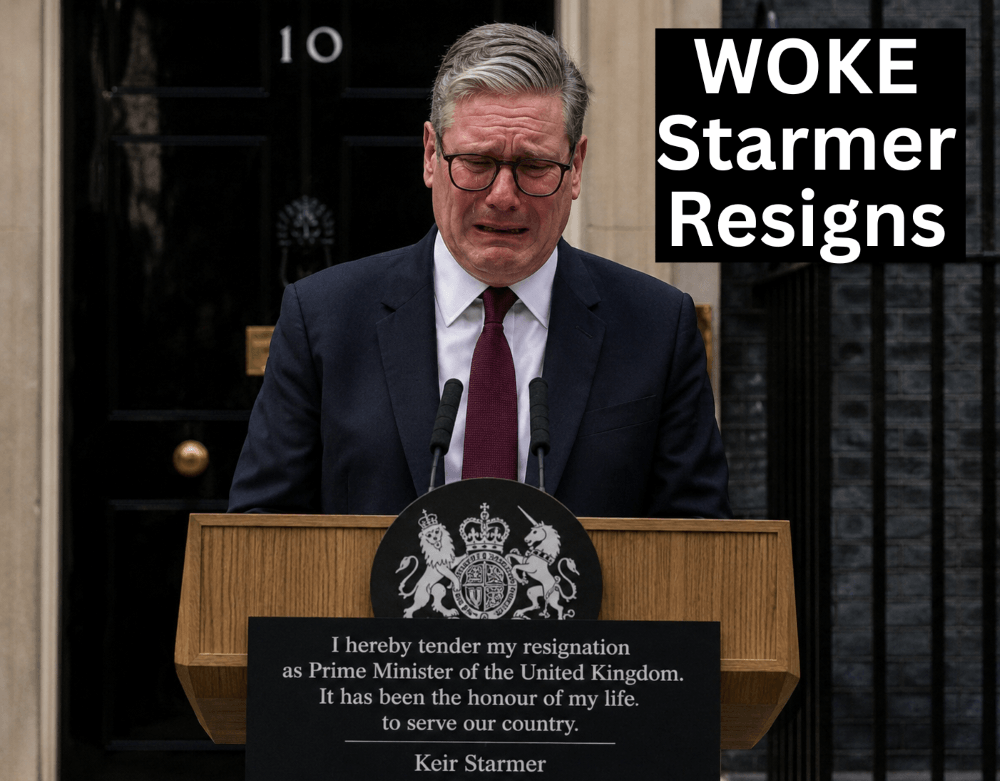
The Keir Starmer resignation brings genuine joy to millions of Britons who watched their country decline under his leadership. Starmer was simply too woke and too weak — a disgraceful representation of England and of manhood. His time in office highlighted everything wrong with modern progressive politics: prioritising optics over safety, ideology over national interest, and weakness over strength.
Britain is breathing easier today. The departure of this Labour leader signals a chance for real leadership. Here’s why his exit is excellent news for the British people and the wider world.
The Woke Weakness That Defined Keir Starmer
Keir Starmer embodied a spineless brand of politics that put political correctness above public safety. He was accused of being soft on crime and opening the doors to unrestricted immigration. Under his watch, thousands of immigrants entered the country with minimal vetting, straining communities and public services.
Critics rightly pointed out that Starmer was no Winston Churchill. When President Trump sought support against Iranian threats, Starmer showed cowardice by refusing to stand firmly with Britain’s strongest ally, the United States. This hesitation spoke volumes about his lack of resolve on the world stage.
His government fostered a two-tier justice system that left ordinary British citizens vulnerable. People were arrested for posting mean comments on social media, while while Pakistanis men who raped young white british girls faced lighter consequences.
Shocking Examples of Two-Tier Justice
- The case of Henry Nowak, arrested for a racial slur yet left to die from stab wounds, highlighted the dangerous inconsistencies in policing and justice.
- In Belfast, Northern Ireland, a Sudanese refugee attempted to behead a British citizen in the street — another grim reminder of failed integration and soft policies.
These incidents fuelled public anger and eroded trust in institutions. Starmer’s approach left many feeling that British citizens came second.
Grooming Gangs, Epstein Links, and Failed Leadership
One of the most damning aspects of Starmer’s record was his time as Director of Public Prosecutions. Critics argued he allowed grooming gangs to flourish because he feared being called racist. Pakistani grooming gangs operated for years with authorities turning a blind eye — a catastrophic failure that victimised thousands of vulnerable girls.
Adding to the scandals, Starmer’s choice of US ambassador was a close friend of Jeffrey Epstein who had attended many of his events. This cronyism raised serious questions about judgment at the highest levels.
The economy also suffered badly. Growth stalled, taxes rose, and working families faced higher costs. Winter fuel payment cuts for pensioners symbolised a government that had lost touch with the people it claimed to serve. Starmer’s U-turns on key promises further painted him as lacking conviction.
Keir Starmer resignation comes after plunging polls, local election disasters, and widespread disillusionment. Britain deserves a real leader — not a woke coward who prioritised virtue signalling over border control, law and order, and national strength.
Why the Keir Starmer Resignation Matters Globally
Starmer’s weak foreign policy and domestic failures had ripple effects. Allies questioned Britain’s reliability. At home, cultural cohesion weakened as mass immigration continued without proper integration.
His government’s emphasis on “woke” issues alienated traditional Labour voters and the working class. Free speech suffered under heavy-handed responses to social media posts during unrest, while real crimes were sometimes downplayed.
The Keir Starmer resignation is a turning point. It proves that even entrenched political figures can be held accountable when they drift too far from public sentiment. Britain now has an opportunity to elect leaders who put citizens first, secure borders, and restore pride in British identity.
A New Chapter for Britain
The end of Starmer’s tenure should be celebrated as a victory for common sense. The British people endured years of declining safety, economic pressure, and cultural erosion. His departure opens the door for stronger, more decisive governance.
Real leadership means protecting borders, enforcing equal justice, supporting allies, and rebuilding the economy. Britain has a proud history of resilience — it’s time to reclaim it.
The joy surrounding the Keir Starmer resignation is not about partisanship. It’s about hope for a better future where strength, fairness, and national interest guide policy once again.
FAQ
Q1: Why did Keir Starmer resign? Keir Starmer resigned amid terrible polling, major local election losses, cabinet tensions, and widespread criticism over his handling of immigration, crime, and the economy. Public discontent with his woke policies reached a breaking point.
Q2: What was the two-tier justice system under Starmer? Many accused his government of applying uneven standards — arresting British citizens quickly for online speech while showing leniency toward grooming gangs, rapist, and murders from the immigrant population. High-profile cases fuelled this perception.
Q3: How did Keir Starmer’s immigration policies impact Britain? Critics say his administration allowed large-scale, poorly vetted immigration that strained housing, services, and social cohesion. This contributed to rising tensions and public frustration.
Q4: Was Keir Starmer weak on international alliances? Yes. His hesitant response to requests for support from the United States against Iran was seen as a failure of leadership and a departure from Britain’s traditional strong alliances. Keir Starmer is no Wiston Churchill.
Previous Politics posts