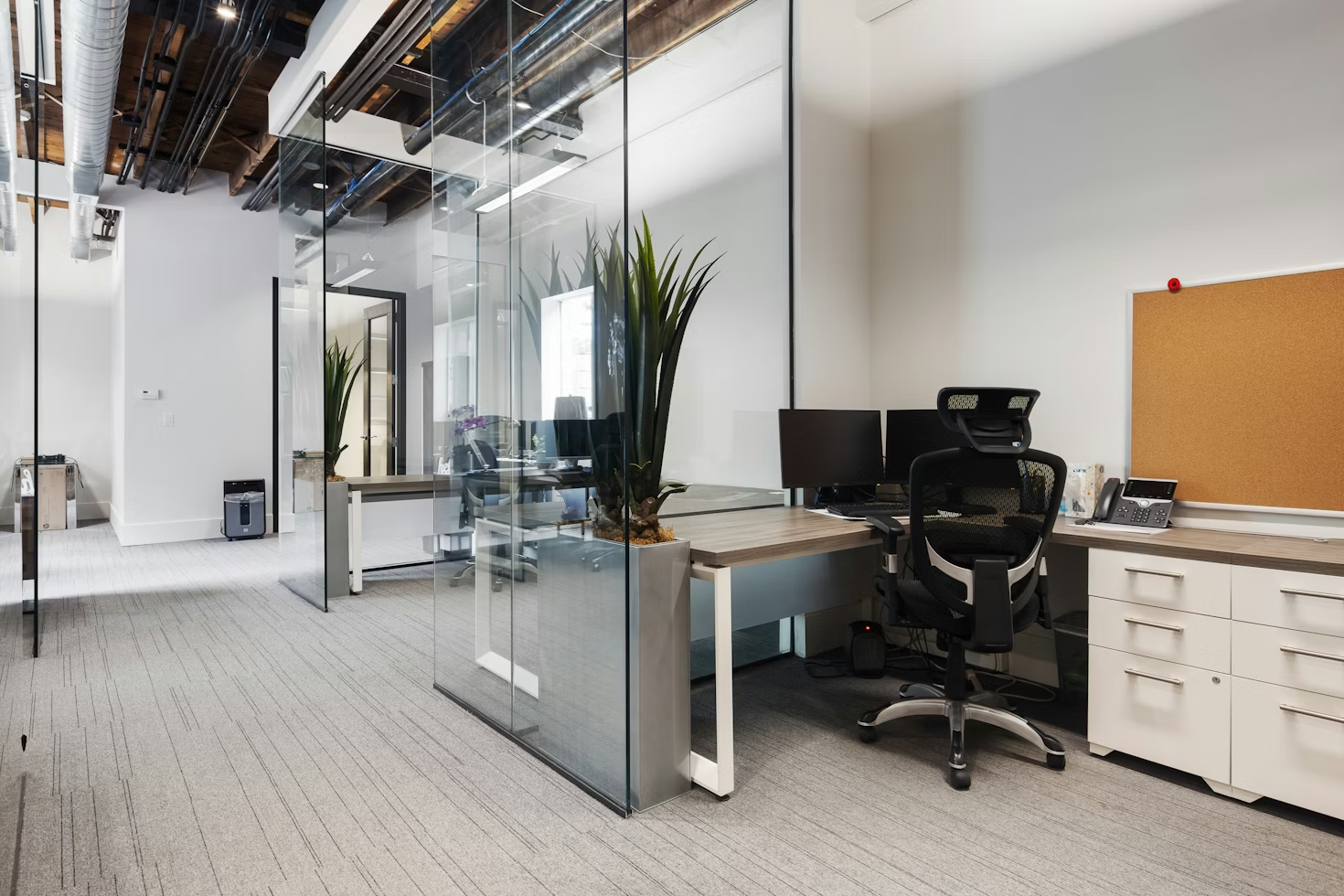
Why might your office be temporarily out of action? Your mind automatically drifts to the negative reasons – like a serious break-in or a bout of bad weather, both of which could leave your office in a terrible state, demanding repairs. On the other hand, it could just as easily be a positive thing: maybe you’re expanding your premises or undergoing a complete office makeover to align with a new brand image.
Whatever the case, you’re in a situation where your office is temporarily unusable. You can’t go in and work as you normally would – and you don’t have a clear timeframe for how long this will last. The people in charge of working on your office repairs/renovations provide a predicted timescale, but who knows if that will be accurate?
You’re left in a dangerous position where you need to keep your business going without access to your main base of operations. Lucky for you, the guide below will offer some solutions to do this, along with why it’s important to keep plugging away instead of taking a break.
Three Ways To Carry On Working When Your Office Is Unavailable
If we’re being totally realistic, you have three main ways to continue working and to run your business when your office is unavailable. It is well worth exploring all three of these options to determine which one fits your business model the best:
- Remote Working
- Portable Site Offices
- Temporary Office Space
Remote Working
The first option is one that a lot of businesses were forced to adopt a few years ago: remote working. There’s no pandemic involved this time, but switching back to a remote working model could help you continue operations while your office gets restored, expanded, or renovated. The clear advantage that this option holds over the others is cost: it’s free for you to do.
You don’t need to pay to rent any additional office space; everyone just stays at home or goes to a remote working space and works from there. If you ran a business in 2020/21, then you should already have the framework to initiate this without running into many blockages, so that’s another reason to give it a go.
The downside is also obvious: some workplaces don’t translate well when they go remote. If you didn’t have much success working remotely before, then maybe you don’t want to risk it again. It’s also more of an option for short-term disruptions, say, a week or so. You don’t really want to work remotely for months on end, as it can impact things negatively.
Portable Site Offices
What if your office relies on its location? Maybe you’re perfectly positioned for staff members to get to – or perhaps you use your location for either marketing purposes or to draw in leads. A real estate business is the perfect example of this: you rely on walk-ins to generate business, so you’d like to stay in the same place if possible.
There is, genuinely, a solution to this: find a transportable site office for sale and set that up while your office undergoes any work. You find these on construction sites a lot, and they’re basically modular office spaces that you can build and then knock down again. So, while your office is out of use, you set up a temporary one right next to it. You still rely on any marketing benefits from your location – and you can still encourage walk-ins, if necessary.
It’s a fantastic choice if your location matters a great deal to how your business operates and makes money. It’s also excellent if your staff all live close by – or you expect to be out of action for an extended period. The only minor negative is that it costs money, but think of this as an investment in your business; without spending the money, you could lose even more.
Temporary Office Space
The final option is to rent temporary office space somewhere else. It’s convenient, but you never know where you’ll have to rent. What if there aren’t any suitable locations nearby? You might have to branch out further and end up working in a completely different location for a few weeks/months. It’s not a terrible idea, but it’s worse than the previous one if you need to stay in your location.
That being said, for businesses that don’t need to stay close to their office location, but also don’t want to work remotely, temporary office space could be the best solution. Hey, maybe it’ll help your business to swap locations for a while – some people find that it gives them a fresh take on things.
Another potential downside to this is that it could cost a fortune to rent office space temporarily. Most of the companies that lease temporary office space adjust their rates so they’re way more affordable if you commit to a long-term lease. Obviously, if you don’t know how long your office will be out of action for, you can’t commit to this and will end up paying the higher rates.
Why It’s Important To Keep Your Business Going
Why bother going to these lengths to keep your business going? Surely you could take a few weeks off and just hope for the best, right? People think this all the time, especially if they make money through monthly subscriptions, so having an out-of-action office shouldn’t eat into the bottom line.
The truth is that time spent away from work will mean you spend longer getting back into the swing of things. Even if you don’t feel the pinch immediately after your office is back in action, you may feel it in the following weeks/months. Looking for alternative ways to carry on working means everyone stays in the swing of things, and you mitigate any damages. It’s simply the sensible thing to do – if you take an extended break, then you’re also taking a big risk.
So, which one of these solutions makes the most sense for your organization? Consider how you work, the importance of your current location, and the costs involved in setting something up.