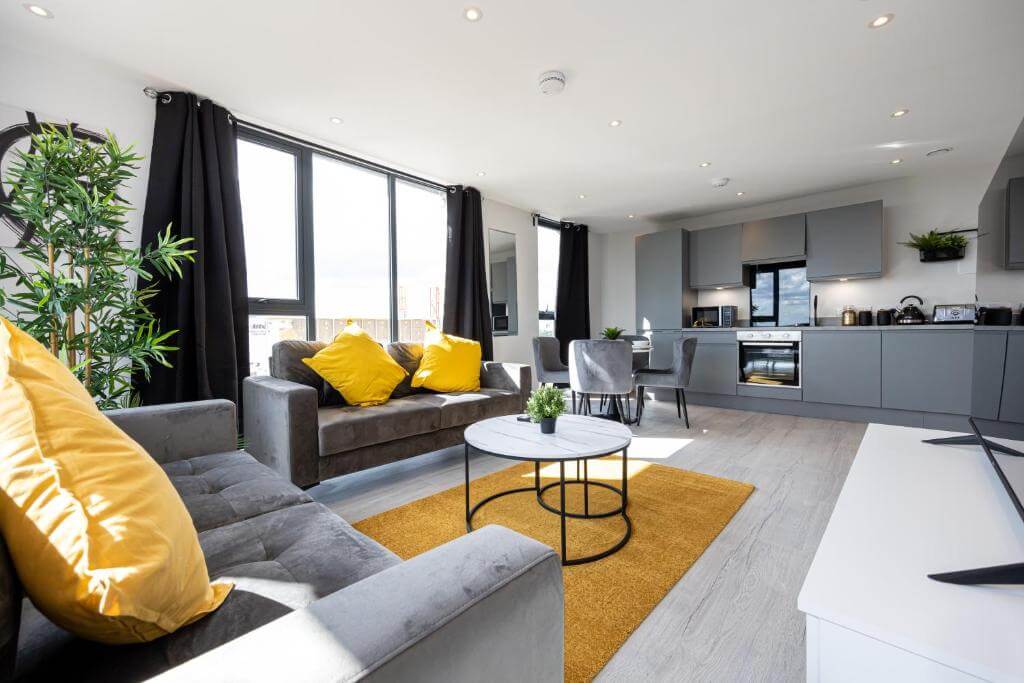
The best way to compare Manchester apartments is to test them against a normal weekday. If the commute, the shop run, the noise at night and the monthly running costs work, the styling matters less.
Map your week before you compare floorplans
Start with two morning routes you will actually take. If work or study takes you to Oxford Road, time that walk. For destinations such as Salford or MediaCity, compare the full door-to-door time, including the walk to a suitable tram stop and any changes. Don’t trust the map pin. Walk it at rush hour and back at night.
Shops and open space help central living feel easy. Check where you would buy food for the week and where you would go for air when you need a break from the block.
Test the evening walk as well as the morning one. A street that feels busy at noon can feel empty at ten. Check the lighting and whether the shortcut still feels comfortable.
Find your regular food stops within ten minutes. A market hall for weekends and a small shop for midweek top-ups will shape daily life more than a distant supermarket.
If those daily trips already feel like a chore, they won’t improve after you move.
Judge the apartment itself, not the staging
Floorplans tell you more than photos. Look at where the bed goes and whether the sofa blocks the balcony door. Open every cupboard and ask where the vacuum and winter coats will live.
Stand in the rooms at different times if you can. Orientation, shading and nearby buildings all affect daylight and summer comfort. Listen for sound from adjoining homes where possible, then step into the hall to assess lift and stair noise.
Ask for the Energy Performance Certificate and look at insulation and heating type. Use it as one indicator of likely energy demand, alongside the heating system, tariff and your own usage. Turn taps and open windows. Close each internal door to test weight and seals.
Ask what sits between floors and between homes. Ask whether acoustic test information is available; construction labels alone do not tell you how well a particular floor or wall controls sound. Double glazing helps, but check seals and trickle vents too.
Light changes how storage feels. A deep hall with no window can feel tight even when the floor area looks generous on paper. Look for full-height cupboards near the entry and a utility nook that keeps laundry out of the living room.
Add up amenities, rules and service charges honestly
A gym that you use four times a week is worth real money. One you pass on the way out offers little value. The same test holds for co-working lounges. If they replace a membership you already pay for, count that saving.
Concierge and parcel rooms help if you get lots of deliveries. Keyless entry with CCTV and a clear intercom routine also makes late returns feel straightforward. Outside space works the same way. A balcony you can sit on beats a large podium garden you never visit.
Service charges need the same honesty. List what is covered and be strict about what you will actually use each month. A furnished layout with a bookable dining room for guests can save the cost of a larger apartment, while high terraces and a sky lounge give you room to host without owning extra space. That’s how to weigh Manchester apartments and their lifestyle amenities against each other.
Rules matter as much as rooms. Ask when the gym gets busy and whether co-working desks need booking at peak times. Find out who can use the dining room and terraces, and what late-night limits apply.
When you’re ready to shortlist a development, explore Vita Living Circle Square to see how floorplans and resident spaces work on Oxford Road. It helps to compare specifics rather than headlines.
Check how the building is run
Good management shows in small details. Ask who handles repairs and how fast they respond during evenings and weekends. Find out how parcels and access work when you are away.
Ask whether the building offers an online portal for service requests. Check if you can log faults and see service charge statements in one place, and how shared rooms are booked. Walk the halls and lifts to check cleanliness and lighting. Tired corridors tell you how standards slip.
Read a sample service statement before you decide. Look for clear splits between staffing, cleaning, lifts and shared spaces. Check there is a reserve for long-term repairs. Ask the managing agent to explain vague entries and how major repairs will be funded if there is no reserve.
Score your shortlist on the second viewing
Give each apartment marks out of five for daily routes, apartment comfort, amenities you will use and management clarity. Don’t simply average them. Give more weight to the parts you can’t change, such as light, noise, storage and travel time.
Bring a tape and your own list. Measure the desk wall and the wardrobe depth rather than guessing. Note plug points and where sun lands in the afternoon.
Take the same photos in each place. Capture the view from the sofa and the street after dark. Revisit your top two at a different hour. You’ll spot what the first visit missed.
Pick the apartment that makes ordinary days simple. The right choice won’t shout. It will still feel right in month ten when routines have settled.
Leave a Reply