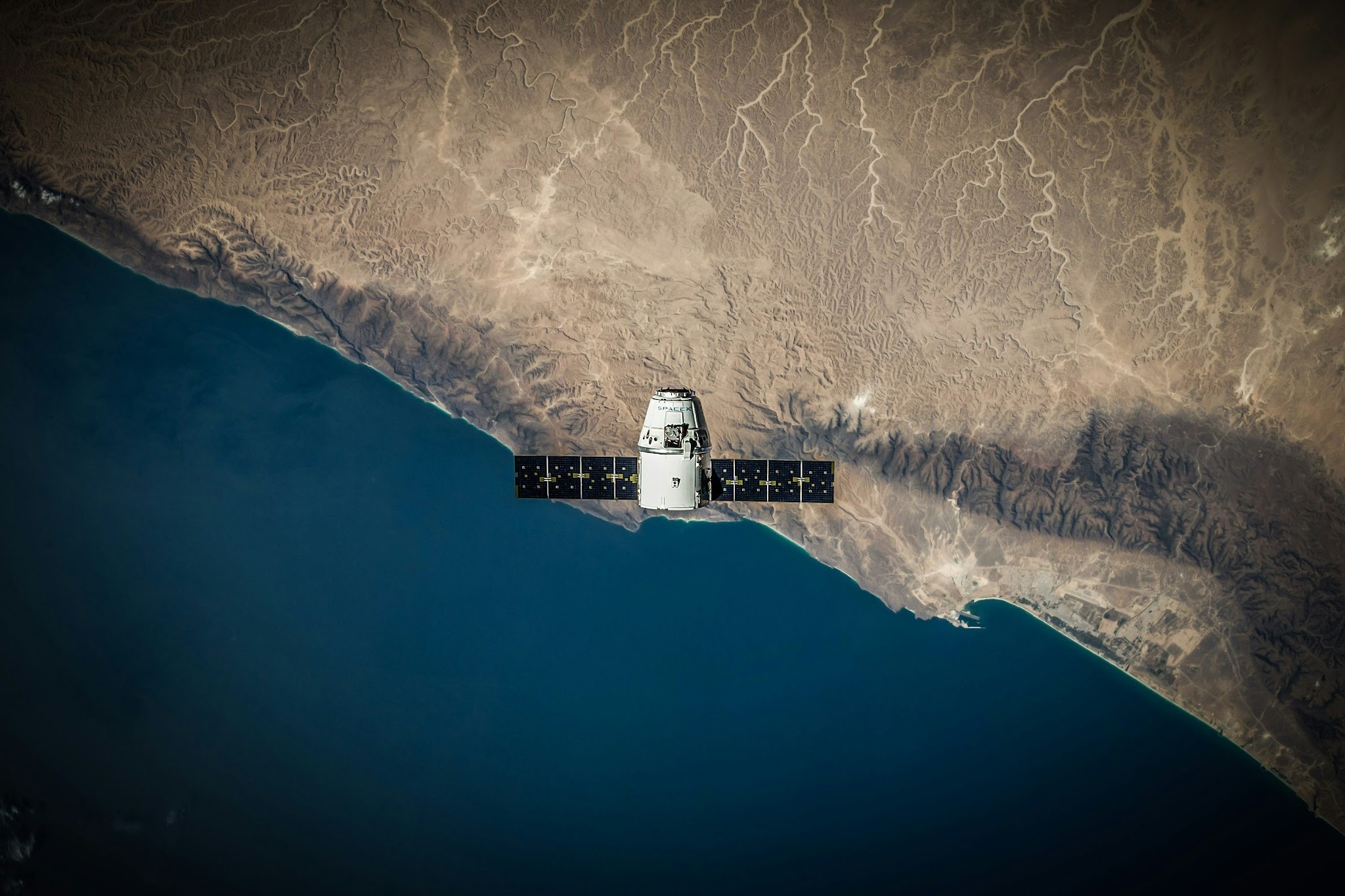
Getting into the aerospace industry as a firm is challenging, but it can be extremely rewarding if you get it right. Once you have a functioning aerospace business, your ability to win contracts grows exponentially. Just look at the success of firms like Airbus, Boeing, and Lockheed.They have almost guaranteed business models because governments around the world rely on them for their expertise and in-house knowledge.
How do you break into this lucrative industry, and what really works at a fundamental level? That’s what we’re going to explore in this guide, which looks at the techniques and policies you should adopt if you want to break in and make real progress.
Understand “new space” and the commercial paradigm around it
First thing I want to look into is the new space race and how the commercial ecosystem is developing around it. While many people think the 1960s and 1970s were the heyday of space exploration, it’s really the 2020s that we’re seeing a genuine, sustainable takeoff.
The space economy is being driven by commercial launch projects, satellite constellations in place, and SATCOM (the development of satellite communications for the emerging space industry). The number of opportunities in this space is enormous because the ecosystem is growing all the time. Large companies require ancillary services to keep them operating and provide the maintenance they need.
There’s also the development of urban air mobility and a desire for small payload electric vehicles that can take to the skies. These are already appearing in leading world cities like San Francisco and Dubai, but the market potential for electric vertical takeoff and landing aircraft is enormous. It could provide regular shuttle services between airports and downtown areas, taking traffic off the road.
You don’t need to create an entirely new vehicle and ecosystem to get into this industry. Most opportunities lie in the supply networks around these companies. If you’re reliable and can deliver parts on time, you’ll likely have a viable business model.
Prepare for certification and regulatory barriers
Another way to break ground in the aerospace industry is to prepare for certification and regulatory barriers. Unlike software, you cannot move fast and break things. Instead, you need to approach the process deliberately and work closely with regulators.
For example, AS9100 certification is essential if you want to set up a supplier business and provide parts to aerospace companies. You need some sort of system, quality management, certification in place if you want to be taken seriously, and it’s essentially non-negotiable.
You will also need to secure independent approval from various regulatory bodies, such as the FAA in the US and EASA in the EU. This can be a multiyear process, so the earlier you start, the better. If you plan to send products overseas, you will also need to investigate relevant export controls. You may find that certain parts are restricted or subject to limits because of their dual-use nature, and you may not be able to send them to Western geopolitical adversaries in some cases.
Decarbonisation issues
Another hurdle you may need to overcome if you want to get into the aerospace industry is the issue of decarbonization. Sustainability is no longer just a buzzword in the aerospace sector. It has become a central focus for many companies as they seek ways to reduce carbon emissions and their overall environmental impact.
Aerospace is viewed by many in political circles as one of the leading drivers of environmental devastation. For that reason, the sector is facing pressure from governments and individuals around the world to change how it operates. As a result, there is a growing focus on sustainable aviation and new types of propulsion.
On the sustainable aviation side, many companies are now exploring the use of more synthetic e-fuels or scaling supply chains to make them more sustainable. On the propulsion side, there is a drive to use more liquid hydrogen or cryogenic hydrogen tank design. These changes should ultimately lead to less fossil fuel usage and make international travel more eco-friendly.
Companies that can address these engineering challenges will become increasingly valuable in the future. The market for these technologies is growing, so firms that can generate proof of concept will thrive over the next five to ten years.
Master capital dynamics

Most startups require relatively little capital to begin, but that is not true for aerospace. Managing money over decades is one of the biggest challenges any new entrant in the sector faces. You will need to structure how you operate and how you use your capital to make the most of it and avoid disappointing investors or lenders.
Even though managing capital is hard for many aerospace companies, it is also an opportunity for others in the ecosystem. For example, if an airline needs to constantly upgrade its aircraft’s computer systems or communication interfaces, you could be the company that does this work. That business model is lower risk because you are not taking on any development costs. All you need is a group of people with the training to make it happen.
Target the maintenance, repair, and overhaul market if you can. Retrofitting existing fleets yields returns far faster than taking on debt.
Another approach is to leverage government R&D programmes. Many authorities around the world pay private sector firms to conduct research and develop new technologies. If you lean into these programmes, you can secure more reliable revenue.
As this article made clear, getting into the aerospace sector requires savvy. It is not the easiest industry to enter, but those who succeed can benefit from the biggest and longest-term profits. Aerospace is notoriously challenging to break into, and companies that succeed over the long term are likely to thrive for many years to come. After all, even the biggest contractors, like the government, have limited options.
A single contract with an aerospace company can last 10 to 20 years. If you can work on these projects over the long term, you can build a sustainable, stable income that remains even as technology changes.