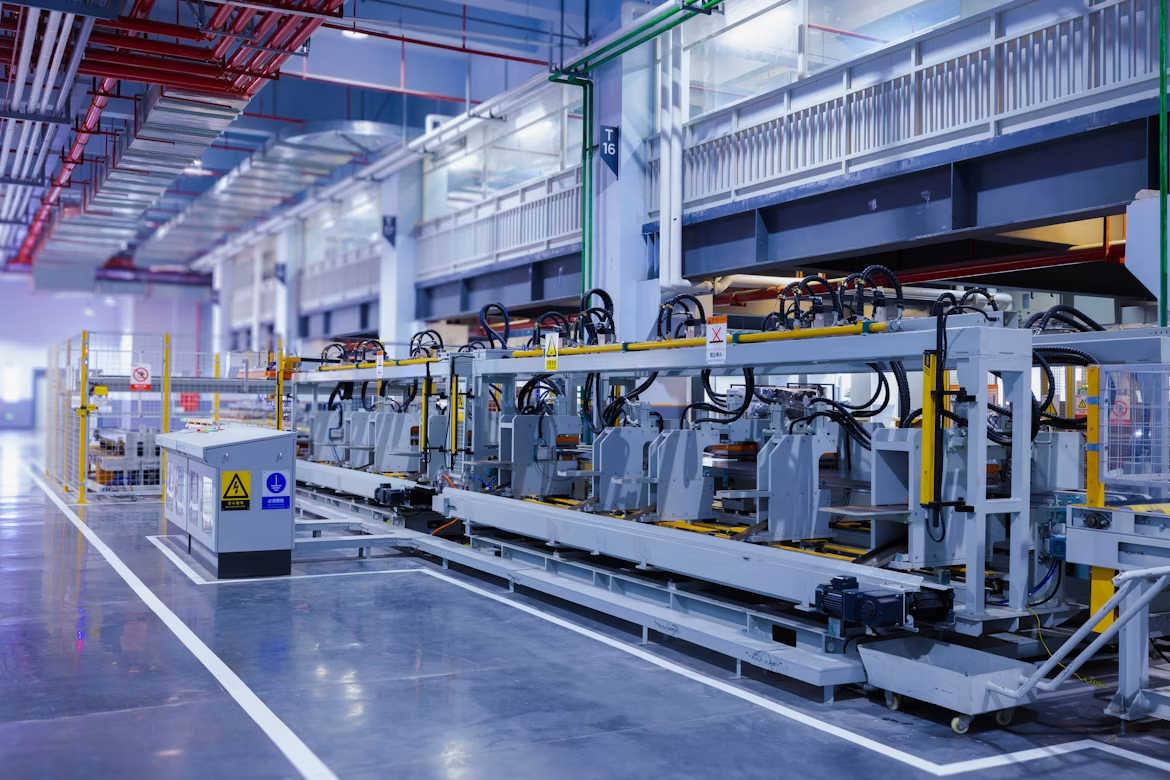
The manufacturing sector is undergoing its biggest transformation since the assembly line came along. This new industrial revolution, often called Industry 4.0, is creating interconnected, data-driven systems known as smart digital factories.
These facilities are a huge step away from the old, linear, and separate processes, moving towards a dynamic, intelligent, and highly efficient future. It’s a future where technology doesn’t just replace human effort; it boosts human potential, opening up new roles and opportunities.
The Dawn of Smart Manufacturing
A smart factory is much more than just a building with robots. It’s a fully integrated system where physical production and digital operations are deeply connected. In a traditional factory, decisions often rely on old data and manual checks. But in a smart factory, sensors, machines, and production lines constantly collect and analyze real-time information. This gives a live, clear view of the entire operation.
This steady stream of data is key to what makes these facilities “smart.” It allows for predictive maintenance, meaning machines can signal they need service *before* they break down, which prevents expensive downtime. It also enables dynamic resource allocation, making sure materials and people are exactly where they’re needed, right when they’re needed.
As a helpful guide to smart factories explains, this connectivity makes things more agile, letting manufacturers quickly adjust to changes in customer demand or supply chain issues. The result is a production environment that’s not only more efficient but also tougher and more responsive to the market.
Key Pillars of Industry 4.0
The idea of a smart factory rests on several core technologies that work together to create an intelligent, automated environment. To understand Industry 4.0, you need to see how these technologies come together on the factory floor.
- The Internet of Things (IoT): This is a network of physical objects, sensors, machines, and devices. They’re all embedded with software and other tech to connect and share data over the internet. In a factory, IoT sensors can track everything from a machine’s temperature and vibration to where inventory is in a warehouse.
- Big Data and Analytics: The huge number of IoT devices in a smart factory creates massive amounts of data. Big data analytics uses advanced software to sort through these enormous datasets. It finds patterns, connections, and insights that a human couldn’t possibly spot. This helps optimize processes and leads to better decisions.
- Artificial Intelligence (AI) and Machine Learning: AI takes data analysis a step further, playing a vital role in transforming manufacturing processes. Machine learning algorithms can learn from production data to predict outcomes, catch quality control problems in real-time, or even adjust machine settings on their own to improve performance.
- Cloud Computing: The cloud provides the storage and computing power needed to handle all the data a smart factory generates. It allows for secure, accessible data storage and lets powerful analytics applications run without needing huge server setups on-site.
- Cyber-Physical Systems: These systems directly link the digital and physical worlds. Computer-based algorithms control them, and they’re tightly integrated with internet technologies. A robot arm that gets instructions based on real-time sensor data is a perfect example of a cyber-physical system.
Reliable Computing for Harsh Environments
A smart factory’s advanced digital setup needs reliable hardware as its base. The factory floor is a tough place for standard electronics. Dust, humidity, extreme temperatures, vibrations, and chemicals can quickly ruin regular computers. This is why specialized industrial computing solutions are crucial for making sure the whole operation stays reliable.
For data to be collected and processes controlled right at the source, operators need interfaces and computers that work perfectly in these challenging conditions. These devices are the vital link between human workers and the automated systems they manage. They must be tough enough to handle the daily grind of an industrial setting, while also having the processing power for complex applications. Many companies work with a specialized industrial panel PC manufacturer to install hardware specifically designed for this.
These industrial-grade computers often feature:
- Fanless Designs: This stops dust and debris from getting pulled into the system, which is a common cause of failure.
- IP Ratings: An Ingress Protection (IP) rating shows how well a device resists solids and liquids. A high rating like IP65 means it’s completely dust-tight and can handle water jets.
- Wide Operating Temperatures: They’re built to work reliably in extreme heat and cold, far beyond what consumer electronics can handle.
- Durable Touchscreens: Often made for use with gloves, these screens resist scratches and impacts, making them good for hands-on control.
Without this tough hardware, the data streams that power a smart factory would be unreliable, and the promise of Industry 4.0 would be impossible to achieve.
Upskilling the Workforce for Tomorrow
A common fear about automation is that it will lead to many job losses. While it’s true that the nature of work is changing, the rise of the smart factory is less about replacing people and more about upgrading their roles. As routine, repetitive tasks become automated, workers are free to focus on more complex, valuable activities that need critical thinking, problem-solving, and creativity.
The factory worker of the future won’t be an assembly line operator, but a technician, data analyst, or process manager. Their job will be to oversee automated systems, interpret data to make improvements, and maintain the sophisticated machinery that drives production. This shift demands a huge investment in training and education. Companies that succeed in moving to smart manufacturing are also the ones that commit to upskilling their current workforce. As experts note, smart factories are changing manufacturing, and leaders must adapt by investing in their people.
This new human-machine teamwork is already happening. “Cobots,” or collaborative robots, are designed to work safely alongside humans, helping them with physically demanding or very precise tasks. The human provides the strategy and oversight, while the robot provides the strength and precision. This partnership allows for a level of productivity and quality that neither human nor machine could reach alone. Lifelong learning will become normal, with workers constantly updating their skills to keep up with evolving technology.
Economic Impact of Automation
Adopting smart manufacturing has big implications for the wider economy. For individual companies, the benefits are clear: more productivity, lower operating costs, better product quality, and improved safety. These advantages make companies more competitive globally. By cutting production costs through automation, smart factories can also make it financially practical for companies to “reshore” manufacturing, bringing production back to their home countries.
This can create new, high-skilled jobs and help build stronger local supply chains. A supply chain that relies less on distant manufacturing is less vulnerable to political instability, shipping delays, and other disruptions. The COVID-19 pandemic showed how fragile global supply chains can be, speeding up interest in local, automated production.
What’s more, the growth of Industry 4.0 is creating entirely new industries and economic opportunities. A whole ecosystem of companies is emerging to support smart factories, providing everything from specialized sensors and robotics to AI software and data analytics services. This technological wave drives innovation across many sectors, contributing to overall economic growth and creating a more dynamic, technologically advanced industrial base.
The move to smart manufacturing isn’t just about technology; it’s a strategic necessity for economic progress. It represents a future where human ingenuity and machine efficiency combine to create a more productive, resilient, and sustainable world.