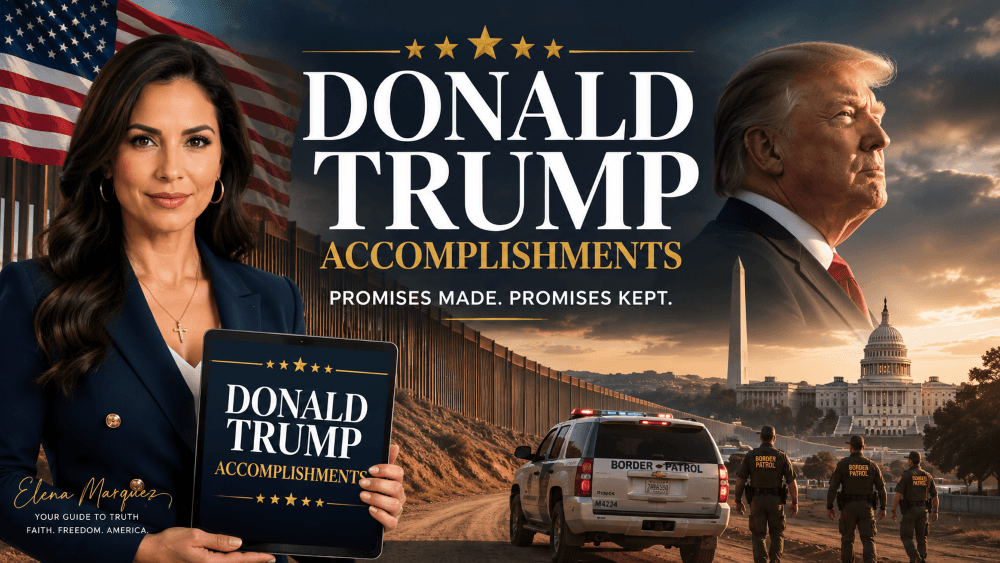
Few presidents in modern American history have generated as much admiration and criticism as Donald Trump. Yet regardless of one’s political views, it is difficult to deny that many of the Donald Trump accomplishments represent policies that previous administrations promised but never fully implemented.
Supporters argue that Trump’s legacy rests not simply on his rhetoric, but on his willingness to take politically difficult actions. From immigration enforcement and border security to foreign policy and cultural issues, they believe his administration fundamentally changed the direction of the United States.
Whether history ultimately ranks him among America’s greatest presidents remains to be seen. But there is a compelling case that he will be remembered as one of the most consequential leaders of the twenty-first century.
Donald Trump Accomplishments in Immigration and Border Security
Immigration may become the defining issue of the Trump presidency.
For decades, presidents from both political parties acknowledged that securing America’s southern border was a national priority. Yet despite repeated promises, illegal immigration continued at historically high levels.
Supporters argue that President Trump was the first modern president to demonstrate that dramatically reducing illegal immigration was achievable through determined enforcement, expanded border security, and changes to asylum and deportation policies.
According to analyses by organizations including the Dallas Federal Reserve, millions of unauthorized immigrants entered or remained in the United States during the 2021–2024 period. Supporters point to this contrast as evidence that policy choices have a substantial impact on migration flows.
Advocates of Trump’s immigration policies also highlight reports that net migration fell sharply during his second administration, arguing that this reflected the effectiveness of stronger enforcement measures.
To supporters, the message was simple:
- National borders matter.
- Immigration laws should be enforced.
- Sovereign nations have both the right and the responsibility to control who enters the country.
Public Safety and the Rule of Law
Another pillar of the Donald Trump accomplishments narrative is public safety.
The administration prioritized the removal of undocumented immigrants accused or convicted of serious crimes and expanded efforts to locate individuals with outstanding deportation orders.
Supporters argue that enforcing immigration laws strengthens respect for the rule of law and makes communities safer. They contend that removing individuals involved in violent crime, gang activity, or drug trafficking protects innocent Americans and reduces opportunities for criminal organizations to operate.
Although researchers continue to debate the broader relationship between immigration and crime, many Trump supporters view these enforcement efforts as an essential responsibility of government.
Fighting the Fentanyl Crisis
The fentanyl epidemic has devastated communities throughout the United States.
President Trump made disrupting drug trafficking organizations a central national security objective.
His administration expanded efforts to intercept narcotics before they reached American communities, including maritime operations targeting trafficking networks in the Caribbean and elsewhere.
Supporters argue that every shipment intercepted represents lives potentially saved, since disrupting the supply chain reduces the availability of deadly synthetic opioids responsible for thousands of overdose deaths each year.
America First Foreign Policy
Trump’s foreign policy reflected an “America First” philosophy that emphasized deterrence, strength, and decisive action.
Supporters cite several major initiatives, including pressure on NATO allies to increase defense spending, a tougher posture toward China, continued pressure on Iran’s nuclear ambitions, and a more confrontational approach toward authoritarian regimes.
One of the most significant developments during Trump’s second term was the U.S. operation that resulted in the capture of Venezuelan leader Nicolás Maduro to face criminal charges in the United States. Supporters describe the operation as a historic demonstration of American resolve and argue that it created new opportunities for Venezuela’s democratic transition and reintegration into the global economy. Critics, however, have questioned both the legal basis of the operation and its long-term geopolitical implications.
Similarly, supporters praise Trump’s willingness to confront Iran’s nuclear program, arguing that he demonstrated a readiness to use American power to prevent a nuclear-armed Iran, even while acknowledging the complexity of the region and the ongoing debate surrounding the best path forward.
Defending Women’s Sports
Another issue that energized Trump’s supporters was the participation of transgender women in women’s athletics.
Trump argued that biological differences between males and females create competitive advantages in many sports and that women’s athletic competitions should be based on biological sex.
Supporters believe these policies protect fairness, preserve opportunities for female athletes, and maintain the integrity of women’s competition.
Critics disagree, arguing that such policies unfairly exclude transgender athletes. The debate remains one of the most contested cultural issues in American politics.
Merit Over Identity
Trump also challenged Diversity, Equity, and Inclusion (DEI) initiatives within parts of the federal government and other institutions.
Supporters argue that some DEI programs shifted emphasis away from individual merit and toward group identity. They believe hiring, promotions, and admissions decisions should prioritize qualifications, experience, and performance rather than race, ethnicity, or sex.
Critics contend that DEI initiatives help address historical inequities and create more inclusive workplaces. The disagreement reflects broader debates over equality of opportunity, equality of outcomes, and the appropriate role of government and institutions in addressing disparities.
Leadership That Challenged the Status Quo
Perhaps Trump’s defining characteristic was his willingness to challenge established political norms.
Unlike many career politicians, he often pursued policies that both supporters and critics considered politically risky.
His supporters see this as one of his greatest strengths. They argue that effective leadership requires not only making promises but also following through on them, even in the face of intense opposition.
Bringing Down Prescription Drug Prices
One of President Trump’s most impactful domestic achievements has been dramatically lowering prescription drug prices for American families. Through bold Most-Favored-Nation (MFN) pricing agreements with major pharmaceutical manufacturers and the launch of TrumpRx.gov, his administration aligned U.S. prices for many high-cost medications with the lowest rates paid in other developed nations. Patients gained access to steep discounts on widely used drugs—including GLP-1 treatments like Ozempic, Wegovy, and Zepbound, as well as insulins and other chronic condition therapies—often reducing monthly costs from over $1,000 to as low as $149–$350 depending on the medication and dosage. Supporters highlight this initiative as delivering hundreds of millions in direct savings while pressuring global pricing fairness, marking a historic shift that previous administrations had promised but failed to achieve at this scale.

Conclusion
History often judges presidents differently than contemporary commentators do.
Supporters of Donald Trump argue that his greatest achievement was demonstrating that long-standing political problems were not necessarily unsolvable. Whether addressing illegal immigration, confronting drug trafficking, reshaping foreign policy, or engaging in contentious cultural debates, they believe he acted where others hesitated.
Future historians will continue to debate every aspect of Trump’s presidency. Yet if history rewards leaders who fundamentally altered the trajectory of their country and delivered on major campaign promises, Donald Trump may ultimately be remembered as one of the most consequential presidents of modern American history.
Frequently Asked Questions
Was immigration Donald Trump’s biggest accomplishment?
Supporters argue that immigration and border security were Trump’s defining accomplishments because they believe his administration significantly reduced illegal immigration through stricter enforcement and policy changes. Critics dispute aspects of both the policies and their broader effects.
What foreign policy accomplishments do Trump supporters emphasize?
Supporters often point to pressure on NATO allies, a tougher stance toward China and Iran, the Abraham Accords during his first term, and the operation leading to Nicolás Maduro’s capture during his second term as examples of a more assertive American foreign policy.
Why do supporters praise Trump’s approach to DEI?
Supporters argue that Trump’s efforts to limit certain DEI initiatives reinforced merit-based hiring and admissions, while critics argue that DEI programs remain important tools for promoting equal opportunity and inclusion.
Why do supporters consider Trump one of the most consequential presidents?
Supporters believe Trump delivered on several major campaign promises, particularly in immigration, border security, judicial appointments, and cultural policy, while reshaping the Republican Party and influencing American politics in lasting ways.
Previous Politics posts