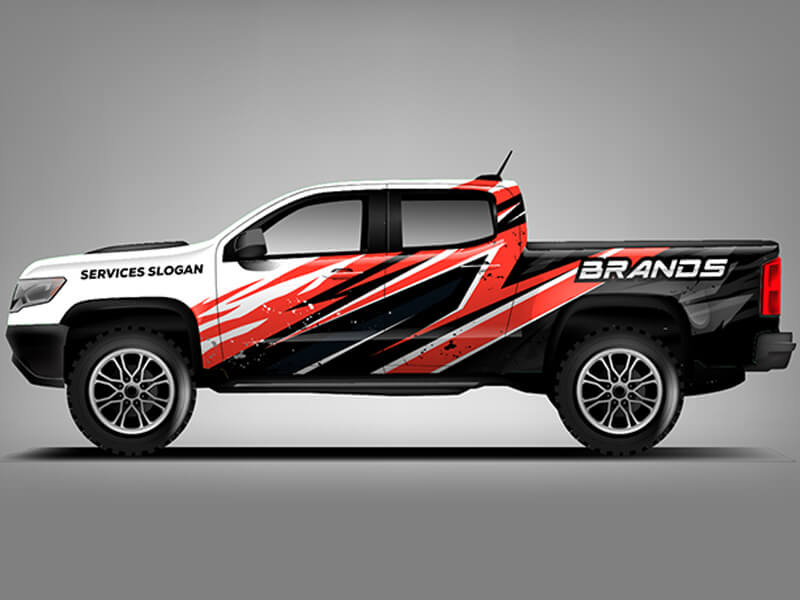
When a small plumbing company bought its third van, the owner was proud of how the business had grown. Then a customer called and said, “I think your other truck is parked outside, but I’m not sure.” One van had a magnet sign, one had hand-painted lettering, and the new one was plain white. Three vehicles, three different impressions, and a customer left wondering who was at the curb.
For a small business, vehicles are often the most visible thing you own. They park in driveways, sit in traffic and show up at job sites every day. A thoughtful, consistent design helps people recognize you without a single word of advertising. Here is how to approach it without overthinking it or overspending.
Why Your Vehicles Are Part of Your Brand
Large companies have storefronts, signage and marketing teams. Small businesses often have a handful of vehicles and a website. That makes each vehicle do a lot of the work of introducing the company to people who have never heard of it.
People do notice. A 2019 Nielsen out-of-home study, summarized in 3M’s overview of fleet graphics, found that 64% of respondents said they noticed vehicle graphics. Results will always depend on your routes and your market, so it is best to see this as a sign that vehicles get looked at, not as a forecast for any one business.
Start With the Basics of Your Brand
A good design does not begin with graphics. It begins with a short list of facts about your business. If you already have a logo and colors, you are ahead of the game. If not, a designer can help build a look from the ground up, but it helps to know what you want customers to remember.
• Logo and colors: the elements people should connect with your name.
• Typography: a readable font that still works from a distance.
• What you do: a short, clear description of your service so no one has to guess.
• Contact details: one phone number and one web address, kept easy to read.
Less is usually more. A vehicle that shares three things clearly tends to be remembered better than one that shares ten things in small print.
Design Each Vehicle Around the Work It Does
Different vehicles show different faces to the world. A van is seen mostly from the side and rear, a pickup has smaller panels and a bed that may carry equipment, and a box truck offers a big canvas that is also easy to overload. Stretching one layout across all of them can put a logo over a door seam or hide a phone number behind a handle.
Things a Good Design Takes Into Account
• Viewing angles: where people will actually see the vehicle, such as traffic, driveways or loading areas.
• Windows, handles and seams: keeping key information clear of them.
• Equipment: ladders, racks and toolboxes that change the layout.
• Vehicle role: a service van and a delivery truck rarely need the same message.
The core look stays the same from vehicle to vehicle, while the layout adapts to each one. That is what makes a small fleet feel like one company.
Choose the Coverage That Fits Your Budget
A full wrap is not the only way to get a consistent look. Many small businesses mix and match, using full coverage on one vehicle, a partial design on another, and simple lettering or decals on the rest. Partial wraps can even work with existing paint, which can be a practical choice for vehicles that are already in good shape.
This is where custom fleet wraps can be adapted to the size of the business: a single vehicle today, a few more next year, all sharing the same identity. Starting small and adding vehicles over time keeps costs manageable while the fleet gradually comes together.
Working With a Wrap Partner
Once you know what you want, a team that handles design, production and installation together makes things simpler. RoadRunner Wraps, based in Beltsville, Maryland, has completed more than 70,000 vehicles since 1988 and serves the Washington, DC and Baltimore area, with projects nationwide. Its approach is to build a design system for each vehicle rather than copying one layout everywhere, and to review proofs before anything is printed.
Services Small Businesses Commonly Ask About
• Full wraps and partial wraps for cars, SUVs, vans, Sprinters, work trucks, tow trucks, box trucks, trailers, buses, shuttles, RVs and boats.
• Vehicle lettering, truck decals and graphics for lighter coverage.
• Wrap design, installation and removal, including clearing older graphics when you rebrand.
• Trade-specific wraps such as HVAC, plumbing, roofing, food truck, ice cream truck and construction trailer designs, plus police, fire and ambulance vehicles.
• Wall and window wraps, including interior, office and exterior walls, and wholesale wraps for other businesses.
Getting Ready for a Quote
A short checklist makes the first conversation easier and the quote more accurate. The more you can share up front, the easier it is to discuss scope and timing.
• Vehicle count and types: what you have today and what you plan to add.
• Locations: where the vehicles are based and where they can be serviced.
• Availability: which vehicles can be taken off the road, and for how long.
• Existing graphics: anything that needs to be removed or updated.
• Proof review: plan to check every phone number and web address before approving.
Conclusion
A recognizable look does not require a big budget or a big fleet. It starts with a few clear brand elements, a layout that suits each vehicle and a coverage level that makes sense for your business.
Take it one step at a time, check the proofs carefully and let the vehicles do some of the introducing for you. Done thoughtfully, the next time a customer looks out the window, they will know exactly whose truck just pulled up.
Leave a Reply