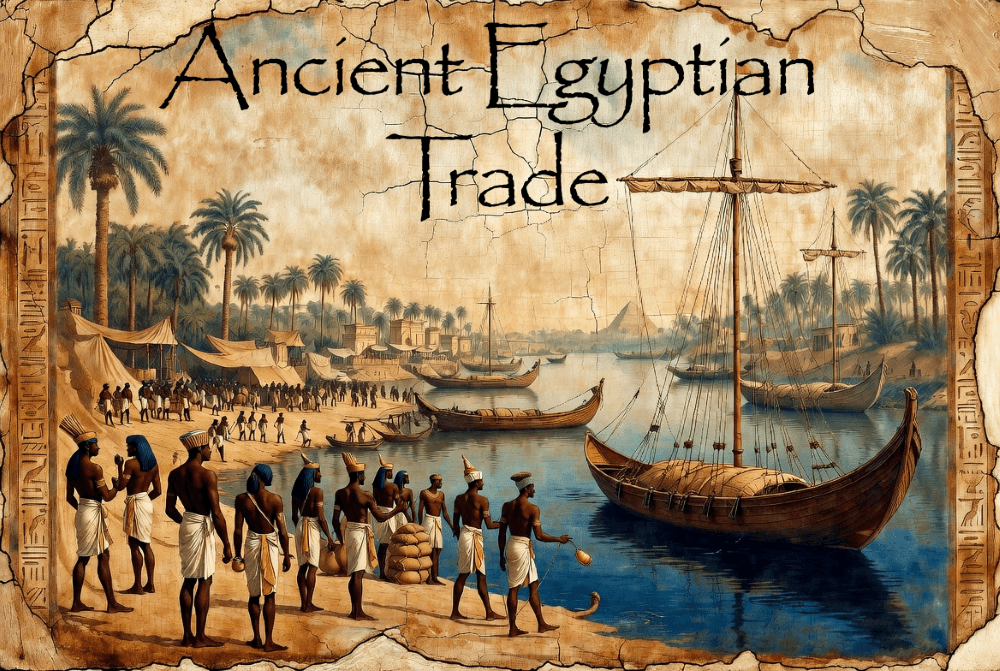
While Sumerian merchants were building contracts in Mesopotamia, another civilization was quietly becoming one of the wealthiest trading powers of the ancient world. Ancient Egyptian trade ran on a very different engine: not merchants chasing profit, but a centralized state controlling nearly everything that moved.
This is the third article in our history of entrepreneurship series. Where Sumer gave us contracts and credit, Egypt gives us something just as important — the power of infrastructure, logistics, and state-driven commerce.
What Made Ancient Egyptian Trade Unique
Egypt had a massive advantage most ancient civilizations didn’t: the Nile River. It flooded predictably every year, deposited rich soil, and doubled as a highway connecting the entire kingdom.
Unlike Mesopotamia’s independent merchant class, Ancient Egyptian trade was largely controlled by the pharaoh, temples, and the state. Commerce wasn’t just business — it was politics, religion, and power rolled into one.
1. The Nile Was the Original Supply Chain
Boats could move goods from Upper to Lower Egypt in days, something no land route could match at the time.
- Grain, stone, and goods flowed easily between cities
- Trade and taxation were centralized along the river
- Transportation costs were low compared to overland trade elsewhere
2. Surplus Grain Created Wealth and Leverage
Egypt regularly produced more grain than it needed, giving it enormous economic leverage.
- Surplus grain was stored in state granaries
- It could be traded internationally or used to pay workers
- Grain reserves protected Egypt during famine years, unlike many neighbors
3. The State Controlled Major Trade Expeditions
Unlike Sumer’s independent traders, Egyptian commerce leaned heavily on royal and temple-sponsored expeditions.
- Pharaohs commissioned trade missions to foreign lands
- Temples often managed resources and redistributed goods
- Scribes recorded everything, creating detailed trade records
What Did Ancient Egypt Trade?
Egypt lacked certain key resources, particularly timber and metals, which pushed it to trade far beyond its borders.
- Gold – mined in Nubia and used both domestically and as a diplomatic tool
- Grain – exported to allies and used as leverage in foreign relations
- Papyrus – a uniquely Egyptian product exported across the Mediterranean
- Cedar wood – imported from Byblos, since Egypt had almost no usable timber
- Incense and myrrh – imported from Punt, used in religious and burial rituals
- Copper and turquoise – mined in the Sinai Peninsula
The Legendary Expeditions to Punt
Few stories capture Ancient Egyptian trade better than the expeditions to the Land of Punt, believed to be located along the Horn of Africa or southern Red Sea coast.
- Ships were built specifically for long sea voyages
- Expeditions returned with incense, myrrh trees, gold, and exotic animals
- These missions were recorded in temple reliefs, most famously under Queen Hatshepsut
These weren’t small trading trips. They were massive, state-funded operations meant to showcase wealth and divine favor as much as generate profit.
How Trade Worked Without Coined Money
Egypt, like Sumer, didn’t use coined currency for most of this period. Instead, trade relied on:
- Barter systems based on standardized units of value like grain or copper
- The deben – a weight measurement used to compare the value of goods
- State redistribution – goods collected as taxes were redistributed as wages or trade goods
This system worked because the state had enormous control over production and distribution, something Mesopotamia’s more fragmented city-states didn’t have to the same degree.
Why Ancient Egyptian Trade Matters for Entrepreneurship History
Egypt shows us a different model of early commerce — less about individual risk-taking, more about organization at scale.
- Centralized logistics enabled trade few individuals could manage alone
- Standardized records and measurements reduced disputes
- Long-distance expeditions required serious planning, capital, and risk management
In many ways, Egypt’s approach resembles a modern corporation more than Sumer’s independent merchant model — a state-run enterprise coordinating resources, labor, and trade on a massive scale.
FAQ: Ancient Egyptian Trade and the Nile Economy
Why was the Nile River so important to Egyptian trade? The Nile acted as a natural highway, allowing goods like grain and stone to move quickly and cheaply between Upper and Lower Egypt, something land routes couldn’t match.
Did Ancient Egypt trade with other civilizations? Yes. Egypt traded with regions including Nubia, Byblos, the Sinai Peninsula, and the Land of Punt, exchanging goods like gold, cedar, copper, and incense.
Did Ancient Egypt use money for trade? Not coined money. Egyptians used barter and a standardized unit called the deben to compare the value of goods in trade.
What was the Land of Punt famous for in Egyptian trade? Punt was a major source of incense, myrrh, and gold, and expeditions there, especially under Queen Hatshepsut, became some of the most celebrated trade missions in Egyptian history.
Previous History of Entrepreneurship posts