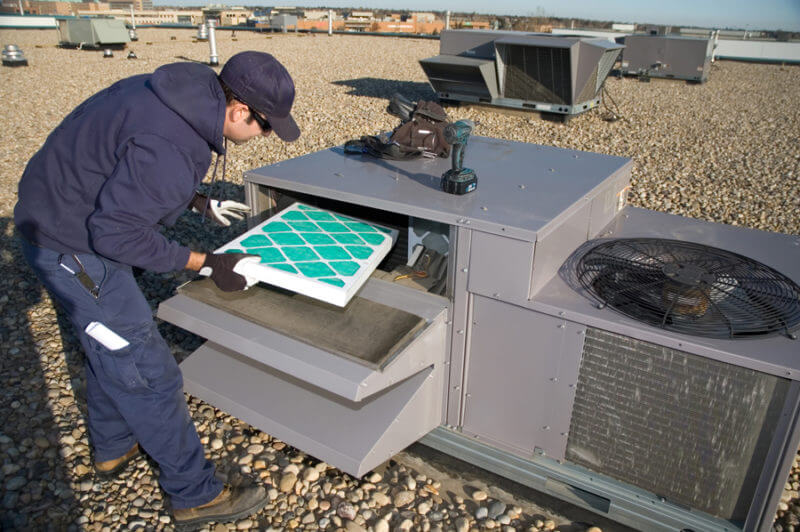
Most facility managers inherit a filter change schedule from the person before them. They order the same filters, replace them as often (or infrequently) as dictated and call it a day. Everything is running according to plan. But good facility managers, the ones who keep buildings comfortable at a cost-effective rate, go beyond assumptions into what those air filters are actually doing.
Air filter performance doesn’t just measure whether air moves through or not; it assesses how much particulate they capture, how long they remain effective and whether they’re even intended for the space for which they’re servicing. A filter that’s great in an office building suburban setting is horrible in a downtown manufacturing facility. Understanding the difference separates adequate facility management from higher-performing buildings.
MERV ratings are bandied about all the time, but what matters most is that the number designates what type of particulate the filter removes. Higher numbers get rid of smaller particles. It’s as simple as that.
But the problem is that people think too hard about this or not hard enough. A MERV 13 filter seems better than a MERV 8 and on some levels, it is, it captures more stuff. But if your HVAC system isn’t equipped to handle the flow restriction which accompanies MERV 13, then you’re doing more harm than good.
Good facility managers equip MERV ratings with building need capability. A typical office with typical occupancy and no special air needs? MERV 8 to 11 usually satisfies.
Change Frequency vs Filter Effectiveness
This is where it gets interesting, and where a lot of money gets wasted.
A filter has a life expectancy based on moderate standards. But there are no moderate standards in actual commercial buildings. One building may be next to a construction zone for six months straight. Another may have an opening loading dock with 100 visits per day. All of this changes how long a filter lasts.
The best facility managers care about more than just time. They care about pressure drop through filters, changes in system efficiency, etc. A filter may be rated for three months but need replacing in six weeks because the dust is insurmountable, or it may go four months easily in another situation.
When researching multiple suppliers/products, seasoned facility managers work with companies that provide quality air filtration products designed for commercial applications, as matching filter construction to actual building conditions prevents both premature replacement and extended lifespan beyond acceptable means.
The Pressure Drop No One Talks About
Filters create resistance when they’re installed. The more they get dirty, the more resistance they generate. The more resistance they create, the harder the HVAC system works to deal with it. The harder it works, the more energy it uses.
Most facility managers know this on a theoretical basis. But on a practical one? Not so much.
Initial pressure drop means just as much as how quickly it changes over time. A filter that starts at low resistance but gets dirty quickly doesn’t help anyone. A filter that maintains efficiency but blocks air flow ability from Day 1 because it requires an increased standard does no good either.
The facility managers who understand performance look at the pressure drop curve, the rate at which resistance occurs from blockage of particles. Some filters are efficient until they fill up; others limit output airflow much sooner and that impacts your bills month over month.
Construction Quality That Holds Up
Here’s an aspect most people rarely consider until they need to.
Filters fail for more reasons than getting dirty. Frames bend in high humidity spaces, seals split, media comes off frames, pleats collapse under pressure; any of these result in bypass of contaminated air and the worst part is, you’re not aware until someone points out a dusty corner or resident air quality issue.
Quality construction matters more than statistics indicate. Metal frames help; cardboard boxes do not when excess moisture is present. Properly bonded media stay intact better under reduced airflow situations, gaskets that actually bond and compress seal, instead of look like they should work but fail to do so.
Experienced facility managers examine filters upon replacement, not every one, but enough to ascertain patterns; corners breaking apart, media ripping, frames broken upon arrival, these constitute reliability better than any marketing brochure could illustrate.
Matching Filters to Actual Building Conditions
A downtown building surrounded by traffic needs filters that accommodate vehicular exhaust particles. A building that overlooks the ocean must contend with salt air. Manufacturing spaces generate their own unique particle makeup; general office filters may meet MERV specs but still perform poorly in these conditions.
Smart facility managers ask detailed questions about the media, is it treated for moisture? Is it sound in extreme temperatures? How does it acclimate to any specific particle type that their spaces experience most?
They also take seasons into account. Spring pollen loads are different from winter dusts; those buildings that rely heavily on outside air have different stipulations than those that recirculate more often; all of this contributes to filter selection versus replacement timing.
What the Stats Actually Tell You
Good facility managers document more than I replaced the filter on this date; they note energy expenditures, occupant complaints regarding comfort levels and system performance metrics, over time these highlight which filters are truly doing what they intend.
This data often contradicts what filters boast. A filter that claims longer life may end up costing you due to high energy bills; one that boasts superior capture may yield comfort complaints.
Temperature differentials across coils, fan energy usage and even minor humidity control changes revolve around filter performance; facility managers who monitor and track them catch it early and can make better decisions based on outcomes instead of promises.
The Economics Behind Performance
Separating effective facility management from penny-pinching extends beyond up-front costs toward total expense perception.
Energy penalties for restricted airflow can incur within weeks at a greater expense than filter costs. Early replacement because filters fill up quicker than expected incurs as material and labor costs justify expense. Poor filtration due to coil contaminations creates maintenance costs that dwarf savings.
It’s not hard math; it’s merely requiring consideration of bigger picture variables. Smart facility managers assess cost per month of valuable operation not merely cost per filter; they assess disposal costs, labor for changes and energy impacts as well, when you calculate honestly, cheap filters hardly ever win out.
How to Make Better Decisions About Filters
It’s often the questions you ask before the sale that separate good facility managers from great ones, even if they’re still asking basic ones like what’s the MERV rating?
Asking what’s important for this filter in comparison to others? How does this perform with buildings similar to mine? What’s its true lifespan outside of optimal expectations (which very rarely occur)? What factors lessen its practical application lifespan with real world conditions?
They form relationships with suppliers who understand their challenges instead of shipping a box across town because they’re cheap, new products are tested in controlled spaces before building-wide implementation, and no claim that’s too good to be true goes un-skeptical, because in commercial HVAC, that’s usually true.
Air filter performance impacts energy costs, occupant comfort, equipment longevity and maintenance budgets, getting it right means knowing proper applications outside of data sheet specifications; it means properly applying products to conditions, tracking actual results and determining decisions based on total costs instead of purchase price alone, which only smart facility managers figure out, and continues good building operation year after year.