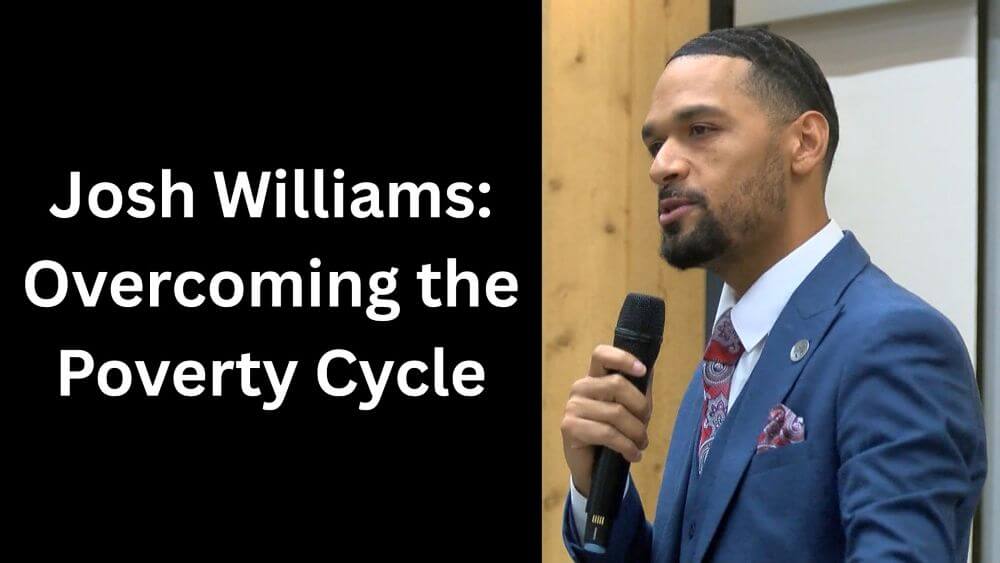
The story of Ohio State Representative Josh Williams perfectly illustrates how the state manufactures dependency. Williams’ journey from a homeless high school dropout to a successful attorney is a testament to human grit, but it almost didn’t happen because of government intervention.
From Homelessness to a Debilitating Injury
- Early Life: Williams was born into poverty in Toledo and was sleeping on park benches by age 18.
- The Railroad Job: He found dignity in hard labor until a 30-foot fall from a train left him with a crushed spine.
- The Pit of Despair: Confined to a bed for years and hooked on opioids, he reached a point of near-suicide before deciding to fight back.
When the State Said “No” to Progress
When Josh Williams attempted to enroll in college to become a paralegal, the system fought him. The state of Ohio informed him that if he pursued an education, his disability benefits would be severed immediately.
As Williams noted, the government was “literally relegating me to perpetual poverty.” They preferred him to remain a ward of the state rather than a self-reliant professional. He had to threaten a lawsuit under the Americans with Disabilities Act just to be allowed to go to school.
The Moral Failure of Choosing Dependency
While we must criticize the system, we must also address the personal responsibility of the recipient. To live as a “mooch” on society—intentionally avoiding work to stay on the public ledger—is a betrayal of the American spirit.
Self-reliance is the only path to true freedom. When an individual settles into a state of permanent dependence, they lose more than just money; they lose their purpose.
Why Americans Must Strive for Self-Reliance
- Personal Dignity: There is no substitute for the pride of earned success.
- Economic Stability: Government checks can be cut or changed at any time; skills and trades belong to you forever.
- Modeling for the Next Generation: Breaking the poverty cycle requires showing children that work is the source of prosperity.
How We Break the Welfare Trap
To solve this crisis, we need a cultural and political shift away from handouts and toward workforce development.
1. Promoting Vocational Training
We need to stop pushing every student toward high-debt four-year degrees and start prioritizing trade certifications. Vocational training allows people to gain high-paying skills in months, not years, bypassing the traditional welfare traps.
2. Implementing Benefit Tapering
States must stop using “cliffs” and start using “slopes.” If a worker earns an extra $100, they shouldn’t lose $500 in childcare or food assistance.
3. Cultivating a Culture of Work
We must stop glamorizing the “dependency state.” We need to celebrate the individuals who do whatever it takes to remain independent.
Summary: Choosing Freedom Over the Cage
The welfare trap is a design flaw in our modern state that treats human beings as liabilities to be managed rather than assets to be developed. Josh Williams’ story proves that while the state may try to relegate families to “perpetual slavery,” the human spirit—fueled by a desire for self-reliance—is capable of breaking the chains.
FAQ
What is the welfare trap? The welfare trap is a situation where the government’s public assistance rules make it financially disadvantageous for a person to earn more money, as the loss of benefits outweighs the increase in wages.
How did Josh Williams overcome the welfare cliff? Josh Williams had to legally challenge the state’s decision to cut his benefits when he enrolled in college. By winning this battle, he was able to earn his law degree and eventually enter public service.
Why is workforce development better than traditional welfare? Workforce development focuses on teaching marketable skills and trades, allowing individuals to become self-reliant and earn high wages without the long-term debt or dependency associated with the current system.

Other Personal Development Posts
Leave a Reply