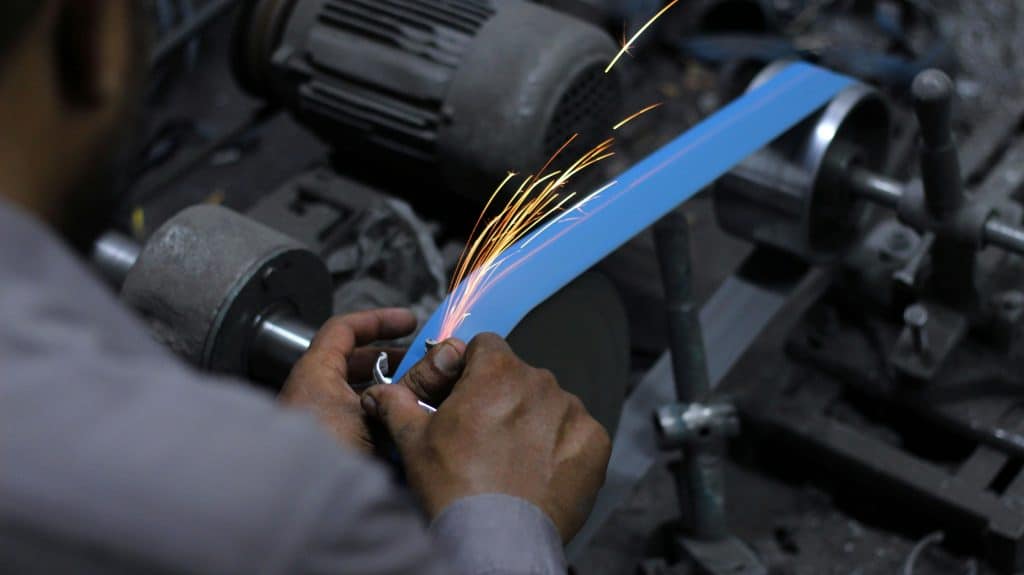
What’s the difference between an average finish and a flawless one? Often, it comes down to something that doesn’t get much attention: the abrasive belt. While it might not be the flashiest part of your setup, it’s easily one of the most important. Whether you’re smoothing timber, polishing metal, or prepping surfaces for coating, the belt you choose plays a big role in the final outcome.
What Exactly Is an Abrasive Belt?
At a glance, an abrasive belt might look pretty simple. But there’s a lot going on under the surface. Abrasive belts are made from a backing material coated with abrasive grains. These grains do the heavy lifting, cutting, grinding, smoothing, and polishing depending on the material and grit. The belt is looped and run through a machine, either by hand or automatically, to provide a consistent sanding motion.
The backing can be paper, cloth, polyester, or a mix. Each has its own use case. Some are flexible and perfect for curved surfaces. Others are tougher, made to hold up against heat and pressure. And those abrasive grains? They come in different materials like aluminium oxide, zirconia, ceramic, and silicon carbide. Each has its own strengths, depending on the surface you’re working on.
Why the Belt Matters So Much
A belt is a finish maker. It shapes how your product looks and feels. A poor-quality or wrong-type belt won’t just slow you down, it can also:
- Burn or damage surfaces
- Create uneven results
- Increase the number of steps needed
- Reduce the lifespan of your machines
- Waste materials due to over-sanding or poor control
Choosing the right abrasive belt ensures you get the finish you want without rework. That means better productivity, cleaner results, and less frustration overall.
Grit Levels – It’s Not Just About Coarse or Fine
One of the biggest mistakes people make is thinking grit is all there is to consider. While grit size is important, it’s only part of the equation.
Grit numbers range from coarse (around 24) to super fine (upwards of 600). The lower the number, the more material it removes. The higher the number, the smoother the finish. Most people understand this part. But there’s more to the story.
The type of abrasive grain affects the sharpness and durability. For example, ceramic grains stay sharper for longer, making them great for heavy-duty work on hard metals. Aluminium oxide is more general-purpose and often the go-to for woodworking.
Then there’s the grain shape. Blocky grains are aggressive and ideal for fast removal. Sharper, pointed grains cut cleaner and produce a finer finish.
The bonding and coating on the belt also matters. Open coat abrasives have space between grains, which helps prevent clogging. Closed coat abrasives are fully covered and better for hard, flat surfaces.
Choosing the Right Belt for the Job
You wouldn’t use a sledgehammer to hang a picture. The same logic applies here.
The belt you use should match the surface, material type, finish level, and machine setup. Here’s a general breakdown:
- Wood sanding – A cloth-backed aluminium oxide belt with medium grit works well for most timber projects. Coarse for initial shaping, finer for finishing.
- Metal grinding – Tougher belts with zirconia or ceramic grains are more effective. They can handle the heat and resist glazing over.
- Stainless steel finishing – Go for finer grits and non-loading materials. A belt with a top coating that reduces heat buildup will prevent bluing.
- Paint or varnish prep – Use finer grit and a soft backing that allows flexibility. The goal here is smoothness without digging in.
Also, always consider your machine. Is it a wide belt sander? A portable hand-held unit? A vertical belt machine? Not all belts will suit all machines. Size, speed, and tension settings all impact performance.
Maintenance and Storage – Don’t Let Your Belt Let You Down
Even the best belt won’t perform if it’s stored poorly or neglected. Abrasive belts can degrade over time if exposed to humidity or heat. They can crack, stretch, or lose adhesion.
A few easy habits can make a big difference:
- Store in a cool, dry place – Humidity is a belt’s enemy. It weakens the backing and can cause uneven wear.
- Hang belts vertically – Avoid coiling or stacking them. This helps them retain shape and tension.
- Inspect before use – Check for cracks, tears, or weak spots. A damaged belt can break during use, which is a safety hazard and a productivity killer.
- Clean during use – Belt cleaning sticks or brushes can extend the lifespan by removing clogging materials like resin or paint.
One Belt Doesn’t Fit All
It might be tempting to use the same abrasive belt for every task. After all, if it “kind of works,” why bother changing? But this shortcut often leads to more work down the line.
Matching the right belt to the right task is about precision, not guesswork. Each material and finish has unique needs. One belt might be ideal for raw steel but too harsh for pine. Another might be perfect for polishing but useless for shaping.
If you’re doing multiple stages—say, rough sanding, smoothing, and finishing—you’ll need different belts for each. Trying to skip steps or use a “one-size-fits-all” belt usually just means poor results and wasted time.
Invest in the Finish
You can have all the skill in the world and the best machines on the market, but if your abrasive belt isn’t up to scratch, your results will suffer.
Think of the belt as the connection point between your craftsmanship and the material. It’s where control meets contact. Investing a little more time and thought into belt selection pays off with smoother surfaces, faster processing, and longer equipment life.
Next time you’re setting up for a job, don’t overlook the belt. That small loop of abrasive could be the difference between “good enough” and professional-grade results.