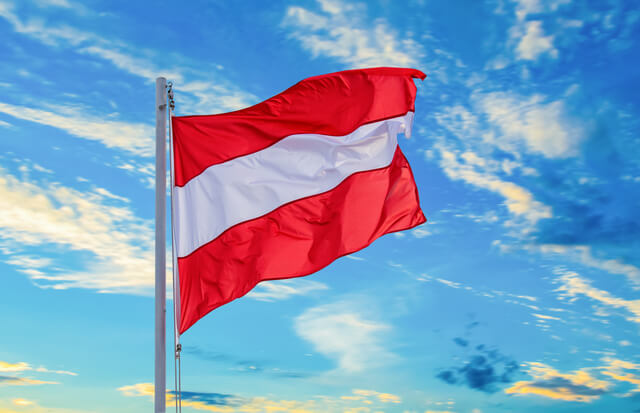
Despite being divided by geopolitical tensions and conflicting interests, countries all over the world remain united by a common goal: that of sustainable development. After all, we share the same planet, one that is very much impacted by the devastating consequences of climate change, a phenomenon that knows not of political alliances and allegiances but affects and concerns us all.
In the race to sustainability, everyone should do their part to move the needle in the right direction, and no one should be left behind if we want to ensure the health of the planet and the well-being of generations to come. However, some nations are obviously making notably more progress than others, and Austria is among those that are leading the charge. Ranking 8th in the 2024 Environmental Performance Index (EPI) out of 180 countries, ahead of Switzerland, Denmark, and the Netherlands, and with a significant investment in environmental official development assistance (ODA) (39.4% in 2022-23), it’s evident that Austria has a green edge over other countries.
But what is less evident, especially to those who are not familiar with local developments, are the initiatives and solutions that have paved the country’s path to sustainability and turned it into a global leader. So, let’s explore these innovations and see how they contributed to Austria’s sustainability success.
Green construction
In Austria, sustainability starts from the ground up, quite literally, as green construction is becoming an increasingly popular practice in the country. With construction being a major energy consumer and one of the biggest contributors to greenhouse gas emissions and, subsequently, the climate crisis, it makes perfect sense for authorities around the globe to focus their efforts on decarbonizing the sector.
Austria, a pioneer in green construction, has adopted an integrated approach to tackle these issues, employing innovative solutions in various key areas, starting with the prioritization of sustainable materials such as recycled steel, high-performance concrete, reclaimed wood, and green composites made of natural fibres, and continuing with the implementation of energy-efficient designs, eco-friendly operational practices, and waste management plans on construction sites.
Therefore, the focus falls not only on creating eco-friendly buildings and passive houses that feature high-performing components and systems such as thermal insulating glass panes, passive ventilation, and advanced biomass heating systems and solar energy, but also on how these structures are being built and managed afterwards, with Austria being a frontrunner in Building Information Modeling (BIM).
Gropyus stands as a prime illustration of the green building movement, advancing Austria’s journey toward sustainable construction. The Vienna-based company specializes in creating timber-hybrid buildings by employing digitalized processes supported by robotic technologies and automated systems.
Modern waste management solutions
With over 2 billion metric tons of solid waste produced annually, it’s pretty obvious that the world has a major waste problem. For Austria, whose goal is to transition to a climate-neutral circular economy by 2040, addressing waste management emerges as a priority, a fact highlighted by the numerous initiatives undertaken in this respect.
The country deals with the large amounts of discarded materials resulting from human activities by embracing modern solutions in waste collection, processing, and disposal, and resorting to top-tier recycling and composting programs. The Pfaffenau Waste Logistics Centre in Vienna, for instance, converts approximately 250,000 tonnes of mixed waste (residual and bulky waste) into clean energy every year.
Services such as Zellinger GmbH are taking waste disposal to the next level by switching to a fully electric fleet that runs on 100% self-generated electricity, thus eliminating carbon emissions during waste collection. Furthermore, waste management companies like Miltek come to companies’ aid by providing a wide range of balers and compactors suitable for various applications, and giving them the possibility to handle the waste they produce more efficiently and increase their recycling rates significantly.
Hydrogen technologies
Hydrogen technology can serve as a viable alternative to fossil fuels, reducing the reliance on these highly polluting energy sources and contributing to the decarbonization of key industries.
Home to HyCentA, a top research facility for hydrogen technologies and electrochemical systems, and many other similar centres, Austria has established itself as a trailblazer in the research and development of green hydrogen production and continues to make significant strides in this area. Moreover, Austria also hosts the world’s largest hydrogen electrolysis plant, the H2FUTURE plant, which is located in Linz. Being at the forefront of hydrogen development for so many years has helped the country draw closer to its goal of gradually reducing CO2 emissions from industrial processes and achieving net-zero by 2040.
Smart cities network
Major cities in Austria are not just actively engaged in promoting sustainable development on their own, but are also connected through the Smart Cities Network, a project funded by the federal government with the purpose of fostering collaboration, accelerating urban innovation, and creating climate-friendly cities.
The cities included in the project are Vienna, Graz, Salzburg, Villach, Klagenfurt, Innsbruck, and Linz, with the platform facilitating a constant exchange of sustainability-related ideas and best practices among them. Larger consultation processes also see the participation of other cities like St. Pölten and Dornbirn.
Green Tech Valley
For those wondering where all the green innovations and cutting-edge technologies that Austria boasts come from, look no further than the Green Tech Valley. Located in the south of Austria, the Green Tech Valley is the environmentally-focused equivalent of America’s Silicon Valley, being home to over 600 services and industry leaders in the green tech sector.
This hub is especially known for the contribution it brings to renewable energy and the circular economy, making it a strategic location for any green tech company aiming to be at the forefront of green innovation. It is estimated that almost 20% of the world’s green electricity is being produced with technologies developed in Austria’s Green Tech Valley.
Austria’s commitment to sustainability is made obvious by the numerous projects, services, and innovations it has developed over time, which have helped the country foster a systemic transformation towards a greener future.