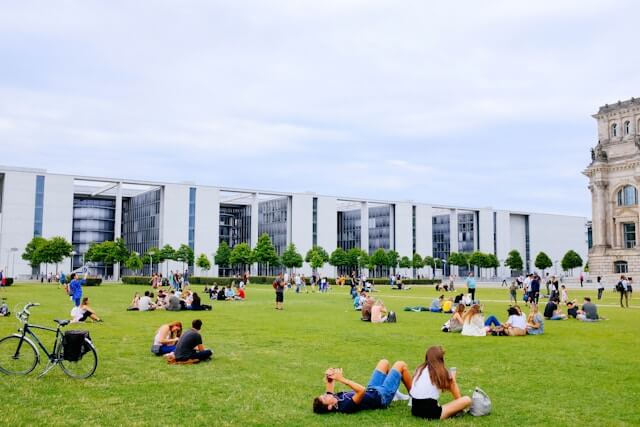
The urgency of addressing climate change is reinforced by scientific consensus, with multiple studies showing that human emissions and activities have caused 100% of the warming observed since 1950. Long-term shifts in temperature and weather patterns pose multifaceted challenges, impacting health, food security, and economic stability. Colleges, as key players in education and research, have an important role in promoting sustainability, equipping students with the knowledge and skills they need for green growth and eco-innovation. Making more sustainable choices campus-wide can help the entire college population, as well as nearby residents.
A campus that prioritizes sustainability in its academics and master plan empowers a vibrant, caring, innovative, creative, and resilient place to worm, live, and study. Investment in green technology based on knowledge and innovation is rewarded by higher-than-usual growth expectations. By capitalizing on technology in both necessary and urgent cases, educational institutions can reduce their carbon footprint, gain deeper insights into their environmental impact, and, above all, identify areas ripe for improvement. Ambitious action is needed to combat global warming so the decisions we make today can make a difference in the future.
Curtailing Energy Consumption, Which Results In Substantial Cost Savings
More than half of the energy used in libraries, lecture halls, and student centers goes toward ventilation, computer equipment, and lighting. Many colleges have tight operating budgets, which translates into the fact that it’s crucial to identify low or no-cost ways to reduce energy expenses. By instituting energy efficiency and renewable energy initiatives, educational institutions can improve energy efficiency to manage their costs. Put simply, they can provide the best learning environments for young people. Types of solutions include but aren’t limited to:
- Lighting control sensors: As the name clearly suggests, light control sensors measure the amount of ambient light present and adjust the lights accordingly. This prevents lights from being left on in classrooms, hallways, offices, and restrooms. Reduced energy usage can expand the lifespan of LED lighting fixtures, leading to lower maintenance and replacement costs.
- Real-time energy monitoring: Monitoring energy usage patterns and spotting inefficiencies helps make better choices to achieve carbon neutrality. Maintenance teams are able to predict equipment failures based on abnormal energy patterns and adjust energy use during peak times to avoid high charges.
- Smart building technologies: Sensors, controllers, and software work together to make intelligent decisions in real-time. Insights are leveraged for continuous improvements such as cost attainment and better overall efficiency. Types of smart building technologies include but aren’t limited to the Internet of Things (IoT), artificial intelligence and machine learning, building automation, and aerial drones.
Combating climate change requires the reduction of energy consumption and the implementation of energy efficiency measures, which are vital steps.
Optimizing The Use Of Resources And Minimizing Waste
Resources in higher education guide colleges both strategically and tactically, creating a culture of accountability and performance for faculty and staff members while supplying academics with the infrastructure they need to function optimally. For many students, the campus is their second home, yet most struggle with the same waste management problems, so colleges are unable to make positive changes. From paper cups to e-waste from electrical items, campuses are renowned for producing an abundance of trash. Through recycling, waste can be used as materials for other products. It’s the best approach to handling the by-products produced on college campuses.
In recent years, the importance of sustainability and circularity in waste management systems on college campuses has become increasingly evident. Integrating practical and innovative findings into waste management has multiple benefits, such as demonstrating the educational institution’s commitment to environmental stewardship and serving as a role model for students and the broader community. Mil-tek balers and compactors can be used to manage the diverse waste streams produced, such as paper, cardboard, plastics, food waste, etc. Though communal spaces have limited space, Mil-tek provides small-footprint machinery. If you have any questions or concerns, please contact the company directly.
Promoting Sustainable Transport Options To Reduce Emissions
The campus location can increase traffic around the area, notably during class entry and exit times, meaning that public transport systems are critical to facilitate access for students. As educational institutions strive to lower their carbon footprint, transportation offers a golden opportunity for improvement. Reducing parking areas and encouraging sustainable commuting helps minimize the environmental impact of private vehicles. Examples of initiatives that can make transportation more sustainable are:
- Biking: Today’s students are the next generation of leaders, and by fostering an environment that promotes safe cycling, colleges invest in a future that is accessible to all. With minimal investment and maximum health benefits, biking is one of the best transportation options on campus. Students can form organizations and hold bike-related events like campus tours, cycling marathons, or charity bike rides. For those inspired by electric mobility, modern e-bikes such as the Surron offer an efficient and eco-friendly alternative for sustainable commuting.
- Ride-sharing: Ride-sharing (or carpooling) can contribute to cleaner air and a smaller carbon footprint for the campus community, not to mention that it can alleviate traffic congestion on campus roads and surrounding areas. A few incentives can support mass transit. For example, students can list their rides and find a carshare partner. This helps low-income students, in particular, who can’t afford more expensive alternatives.
- Electric vehicles: Traditional vehicles are expensive for colleges to operate and maintain. Making the transition to electric vehicles requires an investment in infrastructure, but using renewable energy like solar power eliminates the strain on the grid and the environment simultaneously. There are state and local programs to help fund such initiatives and promote battery electric vehicles and, in some cases, plug-in hybrid electric vehicles.
Concluding Remarks
Technological innovation drives positive change by alleviating resource consumption, cutting emissions, and promoting social equity. By harnessing smart systems and digital tools, colleges can build greener, more efficient campuses that enhance the well-being of their users. Monitoring and evaluation should be used to assess progress toward achieving targets set in the action plan and identify areas that require corrective action. Environmental performance indicators should be clear, transparent, and comparable. Students will be encouraged to integrate sustainable habits into their everyday routines and uphold these values in their careers, impacting their future workplaces.