Time works differently in different places. In a school hallway, the clock seems to crawl before the lunch bell; in a factory, seconds snap like drum beats on a line; on a job site, daylight is the only real timer. No matter the setting, teams need a fair, reliable way to track hours. Paychecks, compliance, and workplace trust all hinge on that little punch or beep. And when it goes wrong—when minutes are missing or math doesn’t add up—people notice.

Three workers, three stories, one shared problem
Let’s drop in on three workplaces. Jada, a teacher’s aide, sneaks into a classroom before sunrise to prep math worksheets. Marco, a factory line supervisor, juggles breaks, changeovers, and overtime like a circus act. Luis, a foreman, manages a crew on a noisy construction site where the smell of diesel and sawdust linger in the air. Different industries, but they share one pain: keeping time fair and accurate without making it yet another headache.
The case for keeping it simple
Funny thing—paper time cards still have a place. Not in the “pile of crumpled notes” way, but in a “let’s keep proof visible” kind of way. A pyramid clock that totals hours directly on a card blends the comfort of paper with the precision of automation. That means fewer late-night text messages from payroll asking, “Did Marco’s overtime get approved?” The answer is already printed, bold and clear, right on his card.
Fact check from the real world: Wasp Barcode’s 2025 study showed a manufacturer saved over 300 labor hours and $6,000 annually after moving away from manual additions. They broke even in two months—faster than most subscription services promise.
Shift Story #1: Jada in the classroom
She’s the type who quietly keeps things together—making sure kids get breakfast, helping them tie shoelaces, catching the shy ones before they disappear in a crowd. She clocks in early, and the card pops out the bottom with a crisp stamp. Later, during her short lunch, another neat punch. At pay period’s end, the pyramid time clock 4000 tallies up hours automatically. When she sees the total, there’s a sigh of relief—no math to double-check, no awkward disputes with the office manager.
Schools thrive on trust. Something as basic as a time card can reinforce that. And the staff know: if their hours are tallied by the pyramid 4000 auto totaling time clock, their paycheck matches what they saw on paper. That reassurance? It’s worth more than the machine itself.
Shift Story #2: Marco on the factory floor
The floor hums with machinery and the sharp tang of coolant in the air. Marco isn’t just watching numbers; he’s orchestrating a human-machine rhythm. When breaks run long, or overtime creeps in, costs skyrocket. A punch station at each entrance keeps his crew honest. Top-loading means even with greasy gloves, the card slides in without fuss. Totals print daily, which lets him spot trends before payroll does. He once joked it’s like having a dashboard that never lies.
And the data backs him up. Lift HCM’s 2024 article “Automated Time Tracking: Reducing Payroll Errors” revealed companies cut payroll processing time by 30% and payroll errors by 60% by ditching manual methods. Marco might not know the percentages, but he knows when Friday arrives without a fight over hours, morale is higher and weekends start smoother.

Shift Story #3: Luis on the job site
Imagine mud clinging to boots, air compressors buzzing, and trucks rumbling by. Luis doesn’t want his crew fiddling with apps that depend on Wi-Fi or cell towers. He prefers something that works rain or shine, even when reception drops out. The 4000 pro fits the bill: paper card in, punch, total at the bottom. Subs bring their cards at invoicing, totals already neat and undeniable. It’s not fancy, but it saves arguments—because on construction sites, disputes can cost more than concrete.
Oloid’s 2024 research showed manual records misstate hours by 1–8%. That’s huge when crews rotate and jobs are billed to the minute. Luis knows the difference between an error and an accusation. For him, a sturdy punch clock isn’t nostalgia—it’s insurance.

Culture, compliance, and credibility
Payroll mistakes do more than mess with budgets—they mess with trust. Lift HCM’s 2024 findings on structured systems reducing payroll errors by 58% confirm what workers feel. If the system’s flawed, the culture wobbles. But when people see totals in black ink on pyramid 4000 time cards, disputes evaporate. Nobody wants to spend lunch arguing about hours. They’d rather eat.
Personal touches that matter
In some schools, staff stick cards on a corkboard like a quiet badge of honor. In a plant, supervisors collect them in stacks, coffee stains and all. On construction sites, cards end up folded in glove compartments. These aren’t just pieces of cardstock—they’re artifacts of labor. And the fact they’re totaled at the point of punch makes life easier for everyone from the payroll clerk to the CFO.
Learn more without the hard sell
Curious about how this all comes together? Explore the product page here: Pyramid 4000 Pro Auto Totaling Time Clock. Or, if you want to compare across the line, take a look at the Punch Clock Calculator Collection. These links aren’t just for shopping—they’re a window into how different systems handle the very human task of keeping time fair.
A cheeky Clocktopus™ cameo
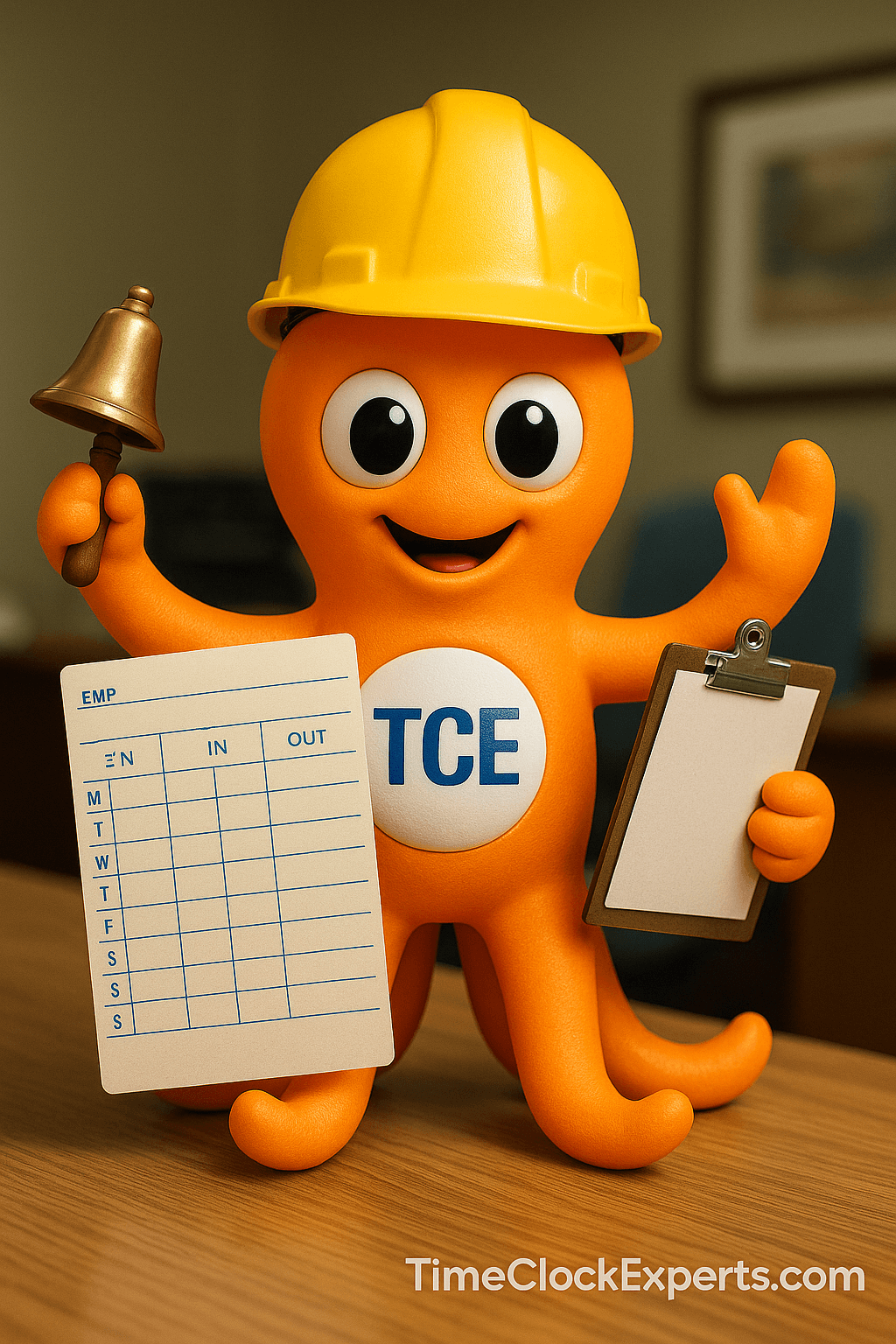
Picture this: Clocktopus™ wandering a factory floor with eight little clipboards, one on each arm. Six are waving wildly, one’s handing out pyramid 4000 pro time clock manual copies, and the last arm’s just holding a coffee. Some metaphors write themselves. Accuracy, multiplied.
What others say
FAQ: quick answers
- How does auto totaling cut down payroll headaches? Totals print directly on the card, which means supervisors and payroll share the same numbers—no mental math, fewer corrections, fewer late nights fixing mistakes.
- Is paper really better than apps for some crews? For teams without reliable connectivity—or where shared visibility matters—paper cards are more trustworthy. Many employers blend both systems for flexibility.
- What about overtime and pay period quirks? The clock supports common pay periods and calculates overtime clearly on the card. Printed totals become a trusted baseline for more complex payroll systems.
Closing thought
So here’s the question worth asking: what hurts more, losing five minutes of accuracy here and there, or losing the trust of a crew that thinks their time isn’t valued? In classrooms, factories, and job sites alike, the answer feels obvious. But maybe it isn’t. After all, time isn’t just numbers—it’s culture, it’s relationships, and sometimes it’s the difference between Friday night beers and another argument about timesheets.
Fact Source Reference Summary
-
Source: Wasp Barcode
Article Name: Employee Time Tracking Case Study: Afton Manufacturing
Publishing Date: 2025 -
Source: Lift HCM
Article Name: Automated Time Tracking: Reducing Payroll Errors
Publishing Date: 2024 -
Source: Lift HCM
Article Name: Best Practices for Accurate Time and Attendance Tracking in Payroll Management
Publishing Date: 2024 -
Source: Oloid
Article Name: Understanding Time Clocking Systems: Benefits and Challenges
Publishing Date: 2024
The information in this article is provided for general educational purposes only and does not constitute legal, HR, accounting, or compliance advice. Timekeeping requirements vary by jurisdiction and workplace. Always consult your HR team, legal counsel, or a qualified payroll professional before implementing policies or making decisions based on this content.
Product features, specifications, and availability may change without notice. Always follow the manufacturer’s instructions and official documentation for setup and use. Any third-party names, product marks, or trademarks mentioned are the property of their respective owners and are used here for identification purposes only.
While we reference industry sources believed to be reliable, no warranty is made regarding completeness or accuracy. Your use of this content is at your own risk.

About the Author
Anatoli Schwartz is the driving force behind TimeClockExperts.com, where he brings a rare mix of technology know-how and hands-on industry insight. Since 2001, Anatoli has been immersed in the world of time and attendance, helping businesses streamline payroll accuracy and compliance with solutions that balance tradition and innovation.
What sets him apart is his broader background—over two decades supporting aviation aftermarket operations across EMEA. That experience sharpened his eye for precision and accountability, qualities that carry through in his approach to workforce management. His philosophy is simple: smarter systems should reduce headaches, not add new ones.

Contributor — Clocktopus™
Meet Clocktopus™, our bright orange timekeeping sidekick and collaborator. Equal parts coach, checklist whisperer, and friendly workplace mentor, this mascot is here to make time and attendance a little less daunting.
Clocktopus translates shop-floor realities into simple, repeatable steps that keep shifts smooth. The tone is always practical and approachable—help comes first, pitches come later. And don’t be surprised if there’s a reminder about the little things: swapping out a ribbon, posting clear signage, or making sure everyone knows the punch window.
Think of Clocktopus as the extra set of arms your team never knew they needed—keeping Mondays calmer, shifts more predictable, and time management just a bit friendlier.
👋 Don’t Leave Without This
Looking to improve time tracking or simplify employee attendance? Get practical tools, quick wins, and exclusive offers tailored to your team.
- ✅ Free Time Clock Buying Guide for HR & operations
- ✅ 1-on-1 Demo with a TimeClockExperts specialist
- ✅ Early access to promos, bundles, and how-to templates
👉 Click here to request your free guide or schedule a call
📬 No spam—just clear, time-saving advice for busy teams.