Financial Habits That Prevent Expensive Mistakes
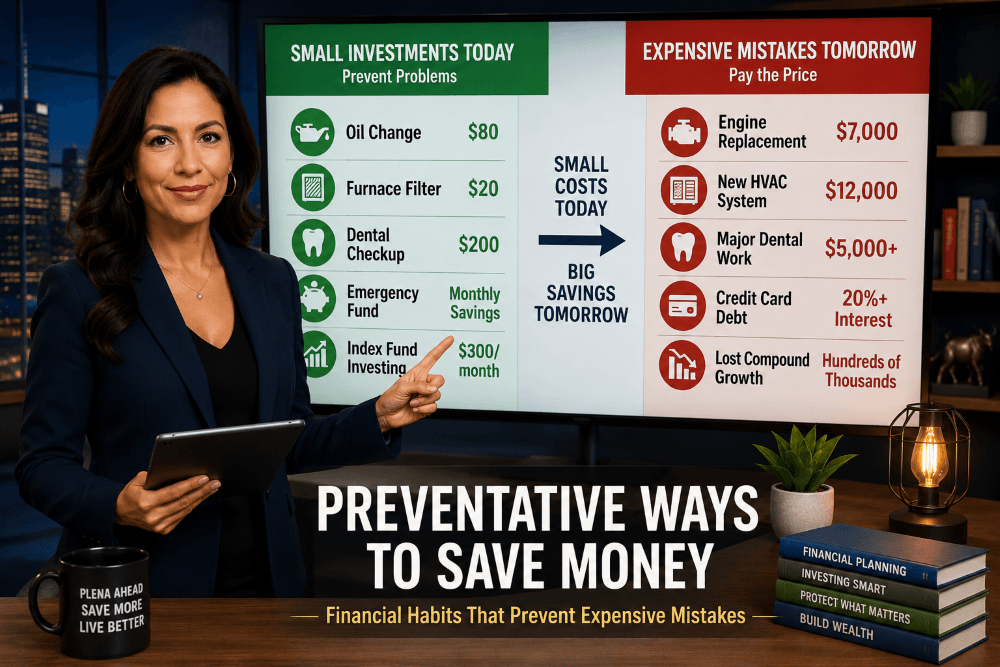
The best preventative ways to save money aren’t about clipping coupons or waiting for sales. They are the financial habits that help you avoid expensive mistakes before they happen. In many cases, the cheapest dollar you’ll ever spend is the one that prevents a much larger expense later.
Most people think wealth is built by earning more or investing better. Those things certainly matter, but another important ingredient is often overlooked: preventing financial disasters before they occur.
Think of preventive financial planning the same way you think about preventive healthcare. A regular checkup is far less expensive than major surgery. Likewise, a few smart financial habits today can save you thousands—or even hundreds of thousands—of dollars over your lifetime.
Preventative Ways to Save Money Start With Prevention
Every financial decision has future consequences.
You can either pay a small amount today to prevent a problem or pay a much larger amount tomorrow to fix it.
Successful investors, business owners, and financially secure families understand this principle. They spend less time reacting to financial emergencies because they’ve already taken steps to reduce the likelihood of those emergencies occurring.
Let’s look at some of the most effective preventive financial habits.
Build an Emergency Fund
An emergency fund is your first line of defense.
Unexpected events happen:
- Job loss
- Car repairs
- Medical emergencies
- Home repairs
- Family emergencies
Without savings, many people rely on high-interest credit cards or loans.
A well-funded emergency account can prevent:
- Credit card debt
- Payday loans
- Financial stress
- Poor investment decisions
- Forced withdrawals from retirement accounts
A good starting goal is three to six months of essential living expenses.
Maintain Your Home
Many homeowners postpone maintenance because they want to save money.
Ironically, delaying maintenance often costs far more.
Simple preventive tasks include:
- Cleaning gutters
- Replacing furnace filters
- Inspecting the roof
- Sealing windows
- Servicing heating and cooling systems
A $20 maintenance item today can prevent a $10,000 repair tomorrow.
Renting Can Sometimes Be the Smarter Financial Choice
Homeownership is often presented as the ultimate financial goal, but that isn’t always true. In some cities and circumstances, renting can be the more economical option. I live in one of Montreal’s trendiest neighborhoods, and because I’ve rented the same apartment for more than a decade, my rent is only a fraction of what it would cost me to own a comparable home. By avoiding mortgage interest, property taxes, condominium fees, maintenance, and unexpected repairs, I’m able to invest the difference. For me, renting isn’t throwing money away—it’s one of the most effective ways I’ve found to build wealth.
Maintain Your Vehicle
Cars are another example.
Routine maintenance such as:
- Oil changes
- Tire rotations
- Brake inspections
- Fluid checks
can significantly extend a vehicle’s life.
Ignoring these relatively inexpensive services often leads to major mechanical failures.
Not Owning a Car Can Save Thousands
Similarly, choosing not to own a car can dramatically reduce your annual expenses, especially in a dense urban environment. I own a bicycle and spend about $200 a year on maintenance. Beyond that, I rely on Montreal’s public transit, car-sharing services like Communauto, and Uber when needed. With more people working from home and transportation alternatives becoming increasingly reliable, owning a vehicle is no longer a necessity for many city residents. Between insurance, fuel, maintenance, parking, depreciation, and repairs, a car can become a very expensive convenience. For many people, especially those living in walkable cities, giving up car ownership can free up thousands of dollars each year for saving and investing.
Invest in Your Health
Perhaps the greatest financial investment you’ll ever make is your health.
Healthy habits include:
- Regular exercise
- Nutritious eating
- Adequate sleep
- Preventive medical checkups
- Stress management
Good health can reduce medical expenses, increase productivity, extend your career, and improve your quality of life.
One of the biggest mistakes people make is assuming they need an intense fitness program to benefit from exercise. The best exercise is often the one you’ll actually do consistently. Personally, I ride my bicycle for a few minutes every day and spend at least an hour salsa dancing. My neighbor practices yoga daily. Our routines are different, but the principle is the same: regular physical activity helps maintain strength, mobility, cardiovascular health, and independence as we age. Consistency matters far more than perfection.
Nutrition is equally important. One simple guideline is to minimize highly processed foods and build your meals around whole foods whenever possible. A diet rich in vegetables, fruits, legumes, whole grains, nuts, and seeds has been associated with better long-term health outcomes. You don’t necessarily have to become vegetarian or vegan, but shifting toward a more plant-based diet while reducing ultra-processed foods can benefit both your health and, over time, your finances by lowering the risk of chronic disease.
Healthcare isn’t only about living longer.
It’s also about enjoying more healthy years and protecting your financial future. A healthy body often means fewer medical expenses, fewer missed workdays, and a greater ability to enjoy retirement and the activities you love.
Buy the Right Insurance
Insurance is designed to protect against events that could otherwise be financially devastating.
Important types of coverage include:
- Home insurance
- Auto insurance
- Disability insurance
- Life insurance (when appropriate)
- Liability insurance
Self Insure if you can afford it
Self-insuring is often a superior financial proposition to buying insurance because it eliminates the heavy overhead costs embedded in every commercial premium. When you purchase an insurance policy, your money does not just fund potential claims; you are directly financing the insurer’s entire corporate infrastructure. This includes paying for the salaries of their regular employees, the commissions of sales agents, the maintenance of their high-rise office buildings, and state or local premium taxes. Furthermore, a portion of your premium is carved out purely to generate profit margins and dividends for the company’s shareholders. When you self-insure, you retain 100% of these premium dollars, allowing the money to compound and grow in your own wealth-building accounts. This strategy also completely bypasses the inherent conflict of interest built into the insurance industry, where corporate profitability is directly maximized by delaying, minimizing, or denying payouts whenever legally possible.
Start Investing Early
Time is one of the most powerful forces in finance.
Every year you delay investing is a year of compound growth you never recover.
Even modest monthly investments made early in life can grow substantially over several decades.
The biggest investing mistake is often waiting too long to begin.
I started investing the modest amount of $25/month since the first day I arrived in Canada. 25 year later, I was financially independent. It works!
Create an Estate Plan
Many people postpone writing a will because they believe estate planning is only for the wealthy.
It isn’t.
A basic estate plan can help prevent:
- Family disputes
- Costly legal proceedings
- Delays in distributing assets
- Unnecessary taxes in some situations
Planning ahead makes life easier for those you leave behind.
I write my will every year. There is a slow period right after new years. People are partied out, and business are generally working at a slower pace. For me, this is a good time to sit down, reflect about my legacy, and re-write my will.
Continue Learning About Money
Financial literacy is one of the highest-return investments you’ll ever make.
Understanding topics such as:
- Budgeting
- Investing
- Taxes
- Debt management
- Retirement planning
can help you avoid expensive mistakes throughout your lifetime.
Every good financial decision builds upon previous knowledge.
Automate Your Savings
One of the easiest ways to prevent financial mistakes is automation.
Arrange for automatic transfers to:
- Emergency savings
- Retirement accounts
- Investment accounts
When saving becomes automatic, you’re less likely to spend money impulsively.
Good habits become effortless.
Conduct an Annual Financial Checkup
Just as you visit a doctor regularly, your finances deserve an annual review.
Ask yourself:
- Has my emergency fund grown?
- Is my insurance still adequate?
- Am I saving enough for retirement?
- Should I rebalance my investments?
- Have my financial goals changed?
Small adjustments made regularly prevent larger problems later.
Because I am crazy about personal finance, I do a monthly financial checkup.
The Best Money Is the Money You Never Have to Spend
One of the biggest shifts in thinking is recognizing that wealth isn’t built only by increasing income.
It’s also built by avoiding unnecessary expenses before they occur.
Preventive financial habits help you avoid:
- Late payment penalties
- High-interest debt
- Major home repairs
- Expensive vehicle repairs
- Medical expenses caused by neglect
- Tax penalties
- Investment mistakes
- Fraud and financial scams
Every dollar you never have to spend is a dollar that can remain invested for your future.
The Preventive Wealth Mindset
The wealthiest people aren’t necessarily those who make the most money.
They’re often the people who consistently avoid costly mistakes.
They understand that financial success isn’t created by dramatic decisions.
It’s built through hundreds of small, thoughtful choices repeated over many years.
Saving consistently.
Maintaining what you own.
Protecting yourself with insurance.
Investing early.
Learning continuously.
Planning ahead.
These habits may not seem exciting, but they quietly build financial security over a lifetime.
Conclusion
When most people think about saving money, they think about spending less at the grocery store or finding better deals online.
Those strategies have value.
But the greatest preventative ways to save money come from avoiding expensive mistakes before they happen.
The cheapest financial mistake is the one you never make.
By building preventive financial habits today, you’ll not only save money—you’ll reduce stress, gain confidence, and create a stronger foundation for long-term wealth.
Frequently Asked Questions
What are preventative ways to save money?
Preventative ways to save money are financial habits that help you avoid expensive problems before they occur, such as maintaining an emergency fund, investing early, buying appropriate insurance, and maintaining your home and vehicle.
Why is an emergency fund important?
An emergency fund helps cover unexpected expenses without relying on high-interest debt, reducing financial stress and protecting long-term investments.
Is preventative financial planning only for wealthy people?
No. Preventative financial planning benefits everyone by reducing risk, avoiding unnecessary expenses, and helping people build wealth regardless of income.
What is the biggest financial mistake people make?
One of the most common mistakes is delaying action—whether it’s waiting to save, invest, buy insurance, or create a financial plan. Time is often your greatest financial asset.
Other Personal Development Posts