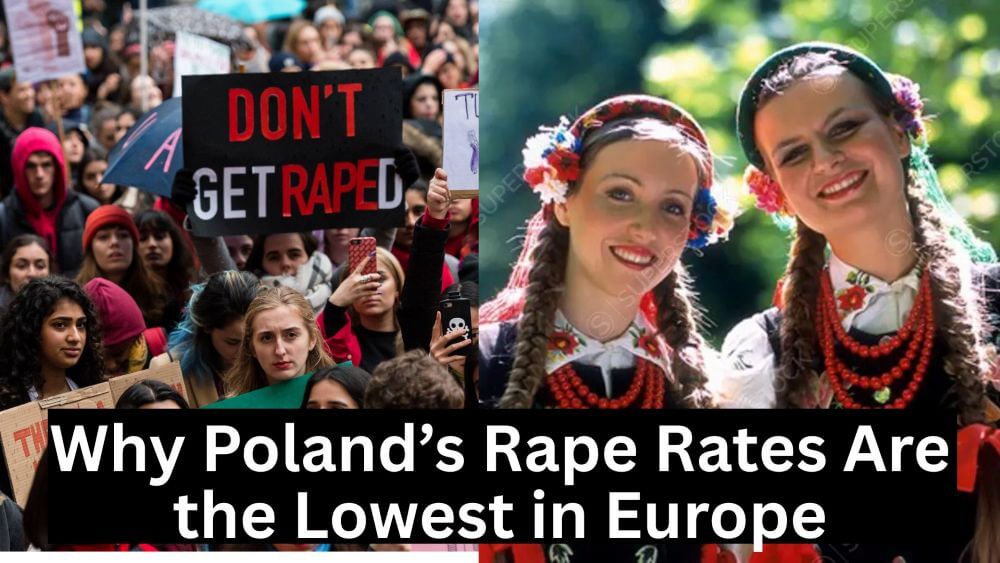
The safety of a nation is often measured by its most vulnerable statistics. When examining the safety of women across the continent, Poland’s rape rates stand out as a startling anomaly compared to Western European neighbors.
While much of Europe grapples with rising crime statistics, Poland reports just 1.3 rapes per 100,000 people. This figure is significantly lower than the rates found in countries like England or Sweden.
To understand this disparity, we must look at the intersection of demographic stability, immigration policy, and social integration. Many analysts point toward Poland’s refusal to participate in EU migrant quotas as a primary factor in maintaining these “rock bottom” statistics.
Comparing the Numbers: A Continental Divide
The statistical gap between Eastern and Western Europe is not just a minor deviation; it is a chasm. According to recent figures, the contrast in reported sexual violence is undeniable.
Reported Rapes per 100,000 People:
- Poland: 1.3
- Austria: 25.5
- Norway: 42.1
- France: 62.7
- Sweden: 84.4
- England: 117.2
These figures are drawn from recent Eurostat releases on police‑recorded offences and they suggest that Poland’s rape rates remain low while nations that implemented open-door policies for migrants from the Middle East and North Africa have seen their numbers climb. Critics of mass migration argue that this correlation is impossible to ignore.
The Impact of Immigration Policy on Public Safety
Poland has consistently taken a hardline stance against uncontrolled immigration. Unlike its neighbors, Poland rejected EU-mandated quotas for Muslim refugees. Instead, the country chose to welcome millions of Ukrainians—a population that shares similar cultural and linguistic roots.
Why Integration Matters
The disparity in crime statistics often boils down to how well a population integrates into its host culture. In Western Europe, the “mass migration experiment” has faced three significant hurdles:
- Cultural and Normative Differences: Many young men arriving from patriarchal societies may have limited education regarding European standards of consent and women’s rights.
- Social Exclusion: Poor integration policies can lead to the marginalization of migrant communities, creating pockets of resentment and antisocial behavior.
- Socio-economic Stressors: High rates of poverty, unemployment, and the trauma of migration are known correlates of various crimes, including sexual offenses.
- Hormones: Many of the immigrants are young men with little education and little financial means, not an attractive alternative for a young European woman. Out of frustration for not being able to seduce a European woman, they just rape them.
By prioritizing demographic stability, Poland has avoided the friction that often accompanies the arrival of large groups from vastly different cultural backgrounds.
The Swedish and English Context
Sweden and England represent the other end of the spectrum. Once considered some of the safest places in the world, these nations now report some of the highest sexual assault statistics in Europe.
While proponents of these policies argue that higher numbers are due to better reporting mechanisms, the sheer volume of cases—84.4 in Sweden versus 1.3 in Poland—points to a deeper systemic issue. The reality is that Poland’s rape rates reflect a society that has maintained its traditional social fabric.
The Role of Demographic Stability
Poland’s streets remain among the safest in Europe because the government prioritized the safety of its existing citizens over international political pressure. By opting for “culturally similar” migration, Poland has ensured that its social norms regarding the treatment of women remain unchallenged by external influences.
The “Polish Model” suggests that a nation’s safety is directly tied to its ability to control its borders and ensure that those who enter are willing and able to assimilate into the local culture.
Summary: A Lesson in National Policy
The data is clear: Poland’s approach to immigration has resulted in a level of public safety that Western Europe is currently struggling to reclaim. By focusing on integration and cultural compatibility, Poland has kept its crime rates at historic lows. As other nations reconsider their migration strategies, the Polish example serves as a powerful case study in the importance of border sovereignty.
Frequently Asked Questions (FAQ)
Why are Poland’s rape rates so low compared to the UK? Poland maintains a strict immigration policy that prioritizes cultural compatibility, whereas the UK has seen significant demographic shifts and challenges with integration that correlate with higher crime statistics.
Does Poland report crime differently than Sweden? While legal definitions of rape vary by country, the massive statistical gap (1.3 vs 84.4) suggests that the difference is based on actual crime prevalence rather than just reporting methods.
How has immigration affected safety in Western Europe? Data suggests that challenges with integration, cultural clashes regarding gender norms, and socio-economic stressors among new arrivals have contributed to rising sexual violence rates in several Western nations.