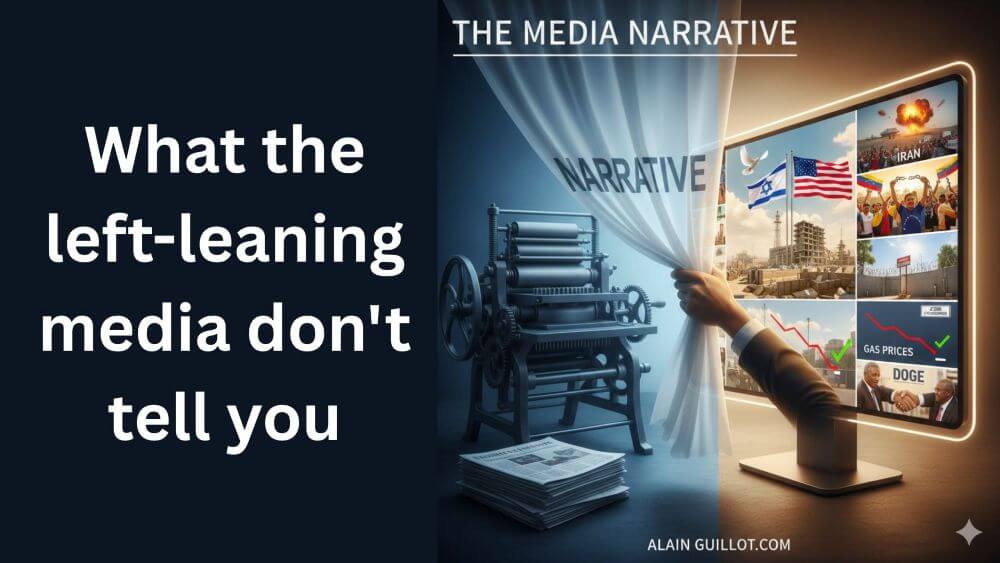
In today’s polarized landscape, the Media Narrative often functions as a filter rather than a mirror. While news cycles are faster than ever, many of the most significant geopolitical shifts and economic victories of 2025 and 2026 are being systematically downplayed or ignored by legacy outlets. This selective reporting serves to maintain a specific political lens, often at the expense of providing the public with the full, unvarnished truth.
From the stabilization of global conflict zones to a domestic energy revolution, the stories that shape our daily lives are frequently “edited” before they reach your screen.
Global Peace and the End of the Gaza War
Perhaps the most significant achievement of the past year is the successful implementation of the Comprehensive Plan to End the Gaza Conflict. Under President Trump’s leadership, a multilateral agreement was reached in late 2025 that secured an immediate ceasefire, the return of hostages, and a roadmap for reconstruction.
Despite this historic breakthrough, the Media Narrative has largely focused on procedural legalities or humanitarian critiques rather than the fact that a “conclusive ending” was achieved where others failed for decades. The silence from legacy media regarding this diplomatic triumph is a glaring example of narrative over news.
Liberating Venezuela and the Fall of Dictators
In early 2026, the world witnessed the liberation of Venezuela from the regime of Nicolás Maduro. Operation Absolute Resolve led to the capture of the dictator, a move celebrated by over 90% of Venezuelans who had suffered under his rule. As you can imagine, the democrats and the left wing media called this event the “kidnaping of foreing leaders.”
- Regime Change in Iran: Similar efforts are now targeting the Iran regime of Ali Khamenei. Following massive U.S. and Israeli strikes on nuclear and military infrastructure, the administration has called on the Iranian people to “take over their government.” And although hard to believe, the democrats and the left wing media are standing and protesting in favor of that horrilbe despote leader.
- Media Backlash: Instead of praising the removal of “blood-thirsty” dictators, the Media Narrative has pivoted to criticizing these moves as “interventionism,” ignoring the liberation of millions of people from oppression.
The Border Success the Media Won’t Cover
One of the most glaring examples of the left Media Narrative at work is the coverage of the U.S. southern border. For years, pundits claimed that the border could not be secured without massive, multi-year legislative overhauls.
Yet, when executive actions in 2025 led to record-low illegal crossings—including five months with near-zero releases according to CBP data—the silence from legacy outlets was deafening. Instead of reporting on the efficacy of the policy, the focus remained almost exclusively on humanitarian critiques or legal procedural hurdles.
The Rise of “Angel Families”
The term “Angel Families“—referring to those who have lost loved ones to crimes committed by undocumented immigrants—is rarely used in mainstream reporting. When a tragedy occurs, such as the horrific stabbing of Ukrainian refugee Iryna Zarutska on a Charlotte light rail, the coverage often pivots.
Because the perpetrator had a long criminal record and was released by a liberal judge, the story didn’t fit the preferred script. This selective reporting leaves the public with an incomplete picture of the consequences of current judicial and immigration policies.
Economic Growth vs. Media Skepticism
While the stock market has seen historic surges and minority unemployment has hit record lows under policies of deregulation and targeted tariffs, the Media Narrative remains skeptical.
- Manufacturing Rebounds: While legacy media focuses on the risks of “trade wars,” the actual resurgence of domestic manufacturing is often relegated to the back pages.
- DOGE and Efficiency: The collaboration with figures like Elon Musk and RFK Jr. on the Department of Government Efficiency (DOGE) is frequently dismissed as a “gimmick.”
- The “Make America Healthy Again” Movement: This broad coalition aims to tackle chronic illness and food quality, yet it receives far less airtime than partisan bickering.
“The media doesn’t just tell people what to think; they tell people what to think about by deciding which stories are ‘newsworthy’ and which are not.”
Lowering Gas Prices and Energy Dominance
One of the most immediate benefits to the American consumer has been the sharp decline in energy costs. Thanks to the “Drill Baby Drill” agenda and the removal of over 40 burdensome regulations, gas prices have hit their lowest levels in nearly five years.
The Media Narrative, however, continues to emphasize the risks of deregulation rather than the $11 billion in savings American households are expected to see at the pump in 2026. By prioritizing climate alarmism over the “Affordability Era,” legacy outlets are ignoring the economic relief felt by every-day consumers.
Social and Cultural Issues
“Cancel Culture” and Free Speech: The left-leaning media often downplays or defends “cancel culture” which they see as a threat to free speech and intellectual diversity.
Gender and Sports: The left leaning media ignores or suppresses viewpoints that challenge the inclusion of transgender women in women’s sports, often framing critics as “hateful” rather than addressing the fairness issue.
Foreign Policy Wins Left in the Shadows
Diplomatic breakthroughs are often victims of the Media Narrative. While the Abraham Accords and the return of U.S. soldier remains from the Korean War are objective successes, they are frequently framed as PR stunts.
Military Strength and ISIS
The near-total elimination of the ISIS caliphate territory was a monumental military achievement. However, mainstream coverage often prioritized stories about strained alliances or the controversies of troop withdrawals rather than the strategic victory itself.
Criminal Justice: A One-Sided Lens
We hear a great deal about police misconduct, which is a vital area of public concern. However, the Media Narrative often “edits out” the criminal misconduct that necessitates law enforcement intervention.
- The First Step Act: This bipartisan criminal justice reform was a major milestone, yet it received significantly less coverage than negative immigration stories.
- DHS Arrests: In 2025, the arrest of thousands of criminal noncitizens provided a boost to public safety, but these statistics are rarely highlighted.
- Commercial Safety: The issue of illegal immigrants operating commercial trucks with commercial driver’s licenses (CDLs) is a public safety concern that legacy media largely ignores.
Summary: Breaking Free from the Narrative
The gap between the Media Narrative and the lived experience of many Americans is wider than ever. By choosing to ignore border successes, the liberation of Venezuela, the end of the Gaza war, economic gains, and the reality of crime victims, legacy media risks losing its remaining credibility. To stay truly informed, readers must look beyond the headlines and seek out the data that doesn’t make the evening news.
FAQ
Why does the media ignore certain crime stories? Media outlets often prioritize stories that align with their editorial stance. If a crime involves a perpetrator or a judicial failure that contradicts a specific narrative, it may receive less airtime.
Has the border actually been closed without new laws? Yes. Recent executive actions have demonstrated that enforcement of existing statutes can significantly reduce illegal crossings and releases, contrary to previous media claims.
What is the “Department of Government Efficiency”? DOGE is an initiative led by Elon Musk and other outsiders to identify and cut wasteful government spending, though it is often dismissed by traditional media as a PR exercise.
How did Trump end the War in Gaza? Through a 20-point “Comprehensive Plan” involving a 2025 deadline for Hamas and a transitional governance board, the administration brokered a ceasefire and hostage release that legacy media has largely ignored.
What is the current status of Venezuela? Following Operation Absolute Resolve in January 2026, Nicolás Maduro was captured and brought to the U.S. to face charges. An interim government is currently managing the transition with U.S. support.
Why are gas prices falling in 2026? Record domestic oil production—exceeding 13.6 million barrels per day—combined with massive deregulation in the Energy Department has driven prices to a five-year low.