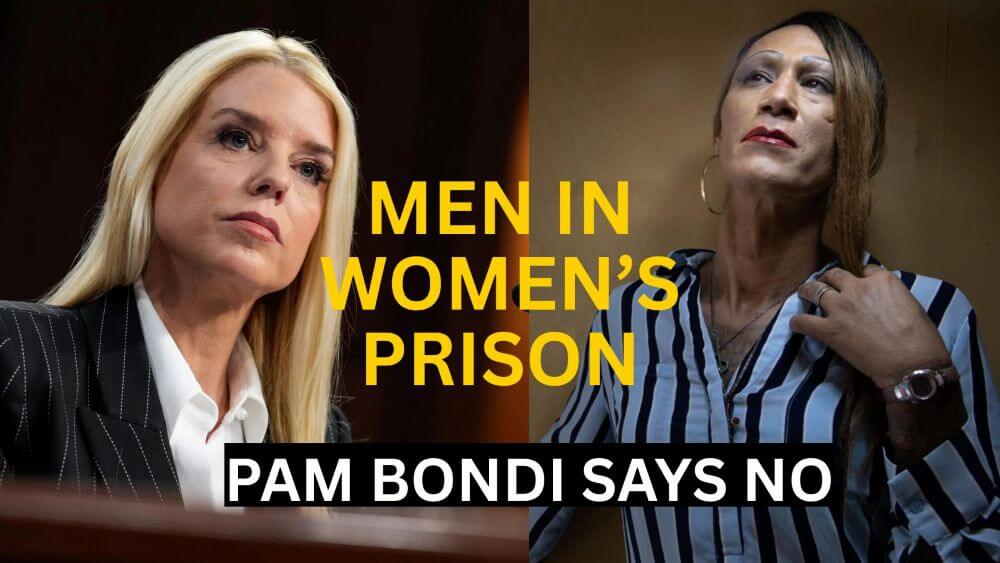
The ongoing debate about gender identity and correctional facility policy reached a new level when Attorney General Pam Bondi condemned Maine’s Department of Corrections for housing a biological male inmate in a women’s prison.
In a recent statement, Bondi described the inmate as a 6’1″, 245-pound biological male, convicted of a brutal double murder, including the stabbing deaths of his own parents and the family dog. Despite identifying as a woman, he was placed in a female facility. Bondi called this “unacceptable” and vowed to pull non-essential funding from states that allow such policies to continue.
“We will protect women in prison. We will protect women in sports. We will protect women throughout this country. No more of that,” Bondi said, echoing a stance that aligns with the Trump administration’s view on gender and policy.
Former President Donald Trump issued an executive order during his term stating that there are only two recognized genders: male and female. That executive directive influenced multiple departments, including the military and education, and set a precedent for how federal funding could be conditioned on maintaining gender-based distinctions.
Supporters argue that allowing men in women’s prisons puts incarcerated women at risk and disregards biological realities. Critics, however, say these policies ignore the complexities of transgender rights and could endanger trans individuals who might be placed in unsafe environments based on anatomy alone.
As the political and legal battle intensifies, the question remains: Should self-identified gender override biological sex in matters of incarceration?
One thing is certain—leaders like Pam Bondi and Donald Trump are drawing clear lines. And the rest of the nation is being forced to pick a side.
Previous opinion posts