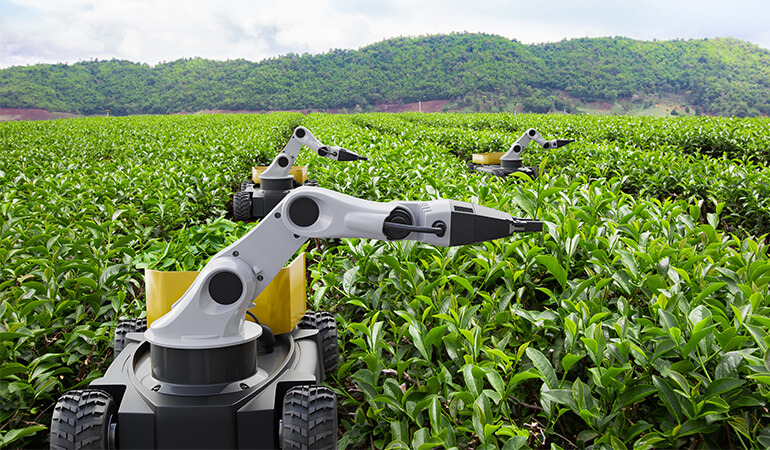
Farm machinery is not just a piece of equipment that should be included in a farm budget. It could be one of the most important decisions and investments in the operation of a farm. Machinery costs like depreciation, interest, insurance, and repairs represent a significant share of total production costs on row-crop farms – large enough that every purchase decision deserves careful financial consideration. This percentage should make us view every purchase decision differently.
The difference between farms that make a profit and those that don’t is often based on how they manage equipment. Not the latest machinery, not the most expensive one of the good brand. The right machinery, with the right selection criteria.
Start With A Needs Audit, Not A Catalog
Before you open any spec sheets, define what your operation actually requires. Your topography, your crop rotation, your soil type – these determine the horsepower you must reach, not the most you might conceive of later.
Over-specifying is a cost. A tractor running at 40% capacity uses more fuel per hectare than one running at maximum efficiency. This gap multiplies over the hectares you cover in a season. The same principle goes for harvest machines – the excess capacity in a machine you’re only running flat-out for 10% of the working year is wasted.
Another way of looking at this is to separate what you genuinely need to get the job done from what you’d like to have in an ideal world. What would allow you to complete every field operation comfortably? What stock is in the toolbox for “just in case” scenarios?
Match Your Power Unit To Your Implement Strategy
Tractors can’t do the work on their own. It’s about what they can operate – which puts hydraulic flow and hitch standards ahead of motor specs. Every piece of high-performance, modern ag gear is steered, lifted, or engaged by a central power unit. And these gadgets choke performance if they are struggling against underpowered hydraulics or an undersized hitch.
An all-round hitch standard and plenty of hydraulic capacity deliver bulk flexibility. If you’re looking at a range of agricultural equipment for sale, spanning categories, ages, and configurations, you want to be confident that you won’t find yourself locked in with an inheritance of ballast. What system ties into everything else that you run? And will your new tractor bolt up to the gear you already own?
Factor Downtime Risk Into Every Evaluation
Unavailability of a machine during planting or harvest is not only an inconvenience, it is a total loss with a related cost. Downtime risk must be determined before purchase, not after.
Research parts availability in your region, discuss dealer service response time and anticipated repair scenarios. Some brands with strong global reputations have sparse parts availability in select regions. That matters when you’re waiting on a hydraulic component in the middle of a critical window.
Preventative maintenance schedules also deserve scrutiny. Engines built to meet modern emission standards require specific service intervals and fluid types. Skipping or delaying those services voids warranties and accelerates wear. Build the real maintenance cost into your evaluation from the start.
Precision Technology Pays, But Only When Matched To Scale
Precision agriculture technologies like automated steering, telematics, and variable-rate application systems have the potential to reduce seed and fertilizer waste by 10% to 15% on certain operations. For big acres with high input costs, that’s a significant cost savings.
But it’s not as simple as plugging in a “savings” number. The question of whether or not these technologies make sense for your operation hinges on specifics like the amount of inputs you use, how often you make a pass over the field, and whether you would actually cut labor costs by implementing precision ag technology based on your current employee situation.
To get a sense of the potential return on investment, start by considering how much you spend on seed annually. Then, calculate how much a 12% reduction would save you against the cost to install and subscribe to the equipment necessary to implement variable-rate technology. The amount saved is different for every operation.
New vs. Used: The Honest Trade-Off
Lower upfront capital expenditure on used equipment is real. So is the absence of warranty coverage and the likelihood of higher fuel consumption on older engines. Neither side of this trade-off should be dismissed.
Used equipment can be a strong choice when the model has a documented service history, parts are widely available, and your maintenance capacity can handle the additional monitoring burden. The risk is concentrated in operations where downtime cost is high and in-house mechanical capability is limited.
Newer machinery, particularly with current emission-compliant engines, often delivers measurable fuel efficiency gains that narrow the lifetime cost difference. Resale value also holds better on recent models, which matters if your asset rotation cycle is short.
The framing shouldn’t be new versus used as a matter of preference. It should be a total cost of ownership calculation against your specific holding period.
The Equipment Decision Is A Financial Decision
Every machine on the farm is making you money or costing you money. A machine may be a liability somewhere in your yard, but that’s an expensive piece of iron. The operations that grow their margin treat the purchase of machinery as a strategic asset decision and apply the same rigor as they would to acquiring land. The ones who defend their margin simply compare the trade magazine reviews, don’t take shipping and part lead times into consideration, and then spend years rationalizing how the seed and fertility program is the real culprit in their performance.
Soil compaction, operator ergonomics, parts lead times – none of these are minor details. They’re variables in a system where everything connects. Choose accordingly.
Leave a Reply