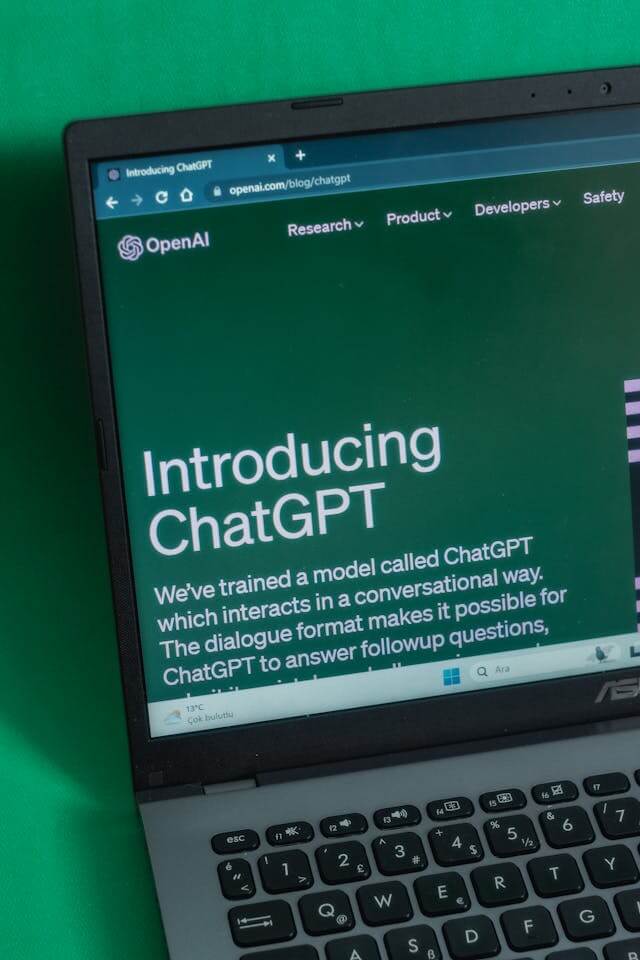
AI has crept into the background of a lot of tools businesses already use. It’s not some separate thing sitting on the side. It’s part of email systems, online bookings, customer support, inventory tracking, content planning, and all the everyday things people rely on to keep a business running. This didn’t happen with some big announcement, it just sort of got built in. What used to take a few hours now takes a few clicks. AI is filling in spreadsheets, scanning legal documents, checking through CVs, watching for fraud, sorting stock levels, answering customer questions, suggesting ads and so much more . The small tasks that used to be done by hand are often done by a machine now, and in a lot of cases, nobody’s really stopped to notice when that actually happened.
A tool that’s starting to feel normal
The strange part is how quickly AI has started to feel normal. One year people were asking what it was. The next year, it was built into their inbox or their website editor or the software they use for invoices. It started helping with spelling and grammar, then moved on to full emails and phone call summaries and scripts for videos.That’s how it usually goes. At first it feels new. Then it’s just there. The same way most people don’t think about how search engines work or what’s happening behind the scenes in online banking. AI has started blending in like that. You click something, it happens faster, and you move on.
The practical side of things
There are still questions about ethics, bias and long term effects. But for most business owners right now, the questions are more practical. Does it help with this task? Does it save time? Does it cost less than the thing it’s replacing? And maybe most of all, is it actually better? Some tools are genuinely helpful- AI can process thousands of bits of data much faster than a person. It can look for patterns, highlight mistakes, write a paragraph, generate images, tidy up financial records. If the tool is built well, it can help save someone a few hours a week. In some industries that could mean cutting admin time in half. There are also many benefits of using AI in the healthcare industry and making forward strides with medicines and pharmaceuticals. For example, Signios Bio is advancing precision medicine with multiomics and AI-powered bioinformatics expertise. It’s helping to drive discovery in genetic disease research, advancing personalized treatment strategies, and allowing researchers to understand the genetic basis of rare disorders, to name a few.
But there are other times when it feels like using AI just because it’s there. A chatbot that answers nothing properly. A voice that reads like a robot. A document full of errors because nobody double checked what got auto-filled. So it comes back to the same thing. If it helps, use it. If it gets in the way or creates more work later, leave it out.
What this means for small and medium businesses
AI tends to favour big companies first, because they have the budget and the data to train the systems properly. But the tools are slowly making their way to smaller businesses too. Especially the ones focused on streamlining boring or repetitive work.
For small business owners, time is usually the most valuable thing. AI that can take care of admin, scheduling, follow up emails, quotes, invoices, or stock alerts can give people hours back. It doesn’t mean firing someone or replacing jobs, it just means a bit of breathing room. That doesn’t mean it works perfectly, it still needs someone to set it up right. It still needs checking. But once it’s in place, it can make a difference to the day to day. Especially in businesses where time is stretched thin and hiring more people isn’t an option.
Some of the risks worth knowing
Not everything is as smooth as the marketing promises. Companies are still working to develop ai tools to make them the best they can be. Right now they can still make mistakes, misunderstand tone or give false information. They might pull data from the wrong place or create weird results because the input wasn’t clear. When people start depending on something that hasn’t been properly tested, things can go wrong quickly. There’s also a risk of overdependence. When AI becomes the only one doing the writing or deciding how to respond to a customer, it becomes easy to stop paying attention. That’s how poor service creeps in. A machine that doesn’t understand tone or context ends up making decisions that a person would never make. That’s a real risk if no one’s watching. Data is another concern. The more AI tools a business uses, the more information is being shared around. Sometimes without anyone realising what’s being collected or where it’s being stored. That can create real problems for businesses dealing with client data, medical details, legal issues or finances.
Where it’s going next
It’s hard to say exactly what comes next with business and ai because it moves so fast. Some businesses are experimenting with full AI phone support, others are using it to check contracts or scan job applications before they even hit a human’s screen. Designers are using it for mockups. Marketers are letting it run split tests. Recruiters are using it to write job ads and tweak offers, developers are using it to fix code. These are things that seemed impossible two years ago! But there’s also a limit to how far people are willing to go. Customers still want to talk to people, especially when something goes wrong. Business owners still need to understand what their tools are doing, even if they’re being handled by AI. And most people still want a real person to make the final call. What that means is AI will probably keep growing in the background. It’ll get better at tasks people already wanted help with. Writing drafts. Sending follow ups. Checking forms. Making predictions. But it won’t replace good judgment, experience, or actual customer relationships. It’ll just sit underneath them and try to make them run a bit smoother.
How to make use of it now
If there’s a place where AI fits easily into business today, it’s in the dull and repetitive stuff. Anything that involves copying, sorting, flagging, summarising, or responding with set answers. Those are the jobs it handles best. They still need a person to check them over. But they’re no longer eating up an entire afternoon. The best results come from treating AI like a junior assistant. Not as the person in charge. Use it to get started, to speed things up, to lighten the load but don’t let it replace the work of actually understanding what’s going on in the business.