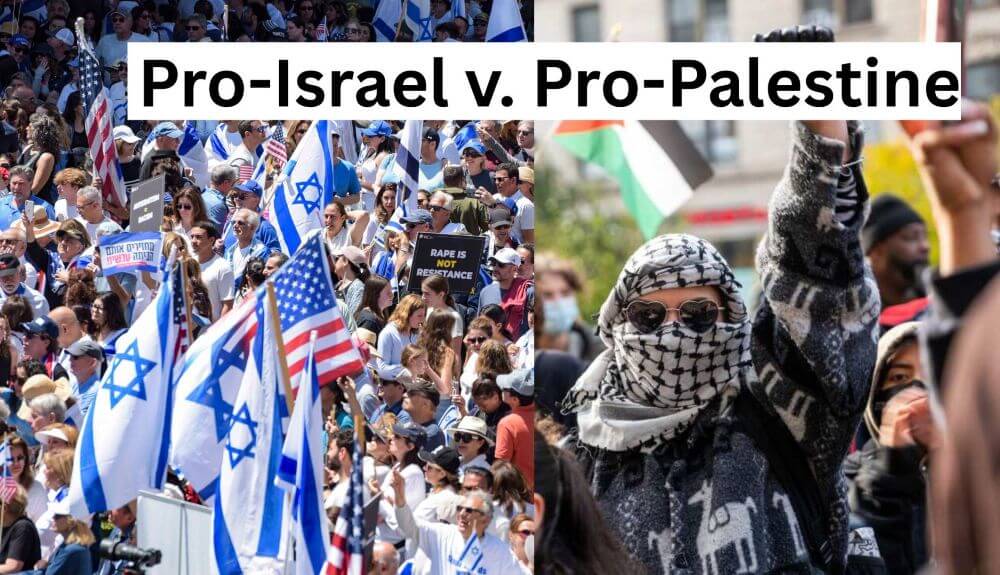
The way Jewish students and pro-Palestinian express their beliefs are completely different.
In the spring of 2024, Columbia University’s campus became a symbolic battleground for clashing ideologies. Jewish students were heard chanting “GOD BLESS AMERICA!”, while pro-Palestinian voices occasionally drowned them out with cries of “DEATH TO AMERICA!”—a vivid reflection of polarized views on U.S. foreign policy and the Israel–Gaza conflict.
Yet the contrast captures real tensions on campus. Pro-Palestinian encampments—particularly the “Gaza Solidarity Encampment”—drew sharp rebuke from Jewish students who described an increasingly hostile and unsafe environment.
A Campus Under Siege—Figuratively and Literally
In late April 2024, encampments sprouted across Columbia’s lawns, tied to national demands for divestment and condemnation of Israel’s actions in Gaza. In response, the university moved classes online, citing concerns over disruption and safety. The NYPD cleared the encampment, resulting in more than 100 student arrests.
Orthodox Rabbi Elie Buechler advised Jewish students to return home, warning that neither Columbia Public Safety nor the NYPD could ensure their protection.
Disciplinary Actions and Federal Pressure
Fast forward to July 2025: Columbia imposed sweeping disciplinary sanctions—including suspensions, expulsions, probation, and even degree revocations—on dozens of students involved in a pro-Palestinian takeover of the main library earlier that year.
At the same time, the U.S. federal government, particularly under President Trump’s second term, cut significant research funding to Columbia and targeted international students involved in activism for deportation. If a university can’t protect its Jewish student then the Federal Government has the right not to provide funding to the university.
Final Reflections
Columbia’s campus is not just an academic institution—it has become a mirror of America’s most fraught political divisions. The polarized rhetoric, protests, arrests, safety warnings, and federal interventions amplify a national conversation about free speech, identity, and the boundaries of protest.
Previous opinion posts