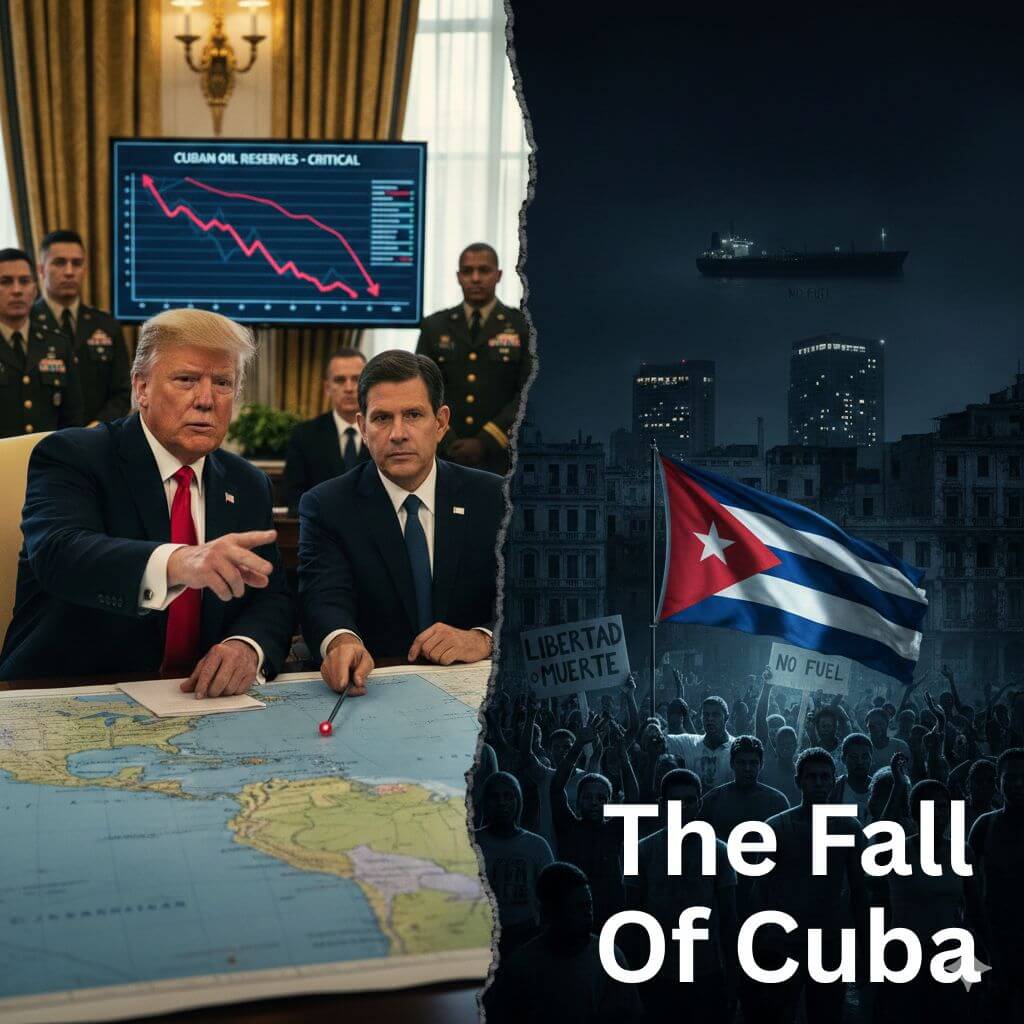
The fall of the communist Cuban regime is no longer a distant dream for those seeking liberty in the Western Hemisphere. As of February 2026, the island is facing an existential crisis unlike anything seen in its 67-year history of revolutionary struggle. Decades of state-sponsored starvation and the brutal suppression of dissent have finally pushed the Cuban people to a definitive breaking point. Today, under the relentless strategic pressure of the U.S. government, the “zero option” is a reality, and the liberation of Cuba appears imminent.
The Trump-Rubio Doctrine: A New Era of Freedom
The current geopolitical shift didn’t happen by accident. It is the result of a calculated “Maximum Pressure” campaign led by President Donald Trump and Secretary of State Marco Rubio. By treating the Cuban government as the security threat it truly is, the administration has effectively dismantled the life-support systems of the dictatorship.
1. Cutting the Venezuelan Lifeline
The first domino fell in early January 2026 with the historic capture of Nicolás Maduro. For years, the Cuban regime survived by bartering intelligence and security personnel for subsidized Venezuelan oil. With Maduro in U.S. custody and the Venezuelan oil industry under new management, Havana’s “fuel ATM” has been permanently closed.
2. The January 29 Executive Order
President Trump’s recent executive order has been the final blow. By imposing strict 10% tariffs on any nation supplying oil to the island, the U.S. has forced traditional allies like Mexico to choose between supporting a failing ideology or maintaining access to the American market. The result? A total halt in fuel shipments that has left the island in near-total darkness.
Why the Communist Cuban Regime is Running Out of Time
The communist Cuban regime is currently navigating a “perfect storm” of its own making. The official notice halting Jet A-1 fuel through March 11 has crippled the tourism sector, the government’s last source of foreign currency. Without dollars, the state cannot import food, leading to widespread reports of hunger that mirror the darkest days of the 1990s.
- 20-Hour Blackouts: Hospitals are struggling to keep life-saving equipment running on failing generators.
- Infrastructure Collapse: Public transportation has ground to a halt, leaving the workforce stranded and the economy paralyzed.
- Military Unrest: Reports suggest that even members of the Revolutionary Armed Forces (FAR) are beginning to question their loyalty as their own families go without basic necessities.
A Historic Legacy for Trump and Rubio
If these circumstances lead to the final liberation of Cuba, history will reflect on 2026 as a year of unprecedented diplomatic success. By ending the war in Gaza through a firm peace framework and capturing the Maduro criminal enterprise, the Trump administration has cleared the path for a free Western Hemisphere.
Secretary Marco Rubio, a staunch defender of human rights, has proven that clarity and strength are the only languages dictators understand. Under his guidance, the U.S. has moved beyond mere rhetoric, creating the tangible conditions for the Cuban people to finally reclaim their sovereignty.
Summary
The combination of the Venezuelan collapse and the U.S. fuel blockade has left the communist Cuban regime with no move left to make. As the “zero option” takes hold, the opportunity for the Cuban people to rebel and for the military to choose the side of the citizens has never been greater.
Frequently Asked Questions (FAQ)
Is the Cuban government going to fall in 2026? While the future is uncertain, the current fuel blockade and the capture of Maduro have created the most significant threat to the regime’s survival since 1959.
How is the U.S. stopping oil from reaching Cuba? Under the January 29 Executive Order, any country providing oil to Cuba faces high tariffs on their exports to the U.S., effectively isolating the regime from its suppliers.
What happens to Cuba if the regime falls? A transition to a democratic government would likely see a massive influx of U.S. investment, a restoration of the electrical grid, and the end of state-mandated food rationing.
Previous Politics posts
Leave a Reply