Introduction
Join Glory’s casino as we explore how modern DevOps teams face unpredictable traffic patterns, complex microservice dependencies, and the constant risk of release failures. To stay ahead, organizations are turning to AI-driven strategies that mimic the probabilistic thinking of casinos. Just as a casino calculates odds to manage payouts and maintain its edge, AI can analyze historical deployment data, system health metrics, and real-time indicators to assign “win probabilities” to different release tactics. This approach helps teams choose the optimal deployment strategy—whether blue–green, canary, or rolling—based on calculated risk and reward, effectively turning each release into a statistically informed wager rather than a blind gamble.
The Concept of Applying Casino Odds in DevOps
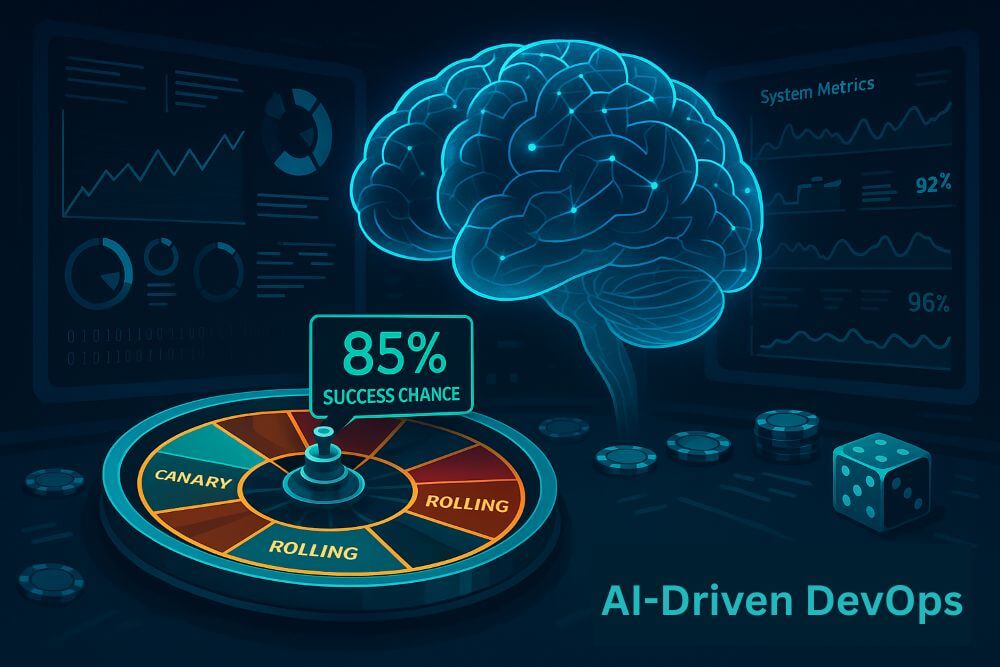
At its core, casino-grade deployment uses AI models to predict the likelihood of success for various strategies, factoring in historical rollback rates, service-level indicators, and environmental variables. By treating each deployment as a bet, DevOps engineers leverage odds—expressed as probabilities or confidence scores—to guide decisions. For example, if the model estimates an 85% chance of smooth rollouts with a canary deployment under current conditions, teams can favor that tactic over riskier approaches. Conversely, low-odds scenarios trigger safer methods or automated pause-and-analyze routines. This probabilistic mindset aligns technical operations with a risk-reward framework akin to high-stakes gaming, yet rooted in data.
Benefits of AI-Driven Odds-Based Deployment Strategies
Integrating casino odds into DevOps brings several strategic advantages:
● Informed Decision Making
Rather than relying on gut feelings or rigid runbooks, teams use model-generated odds to choose the deployment pattern with the greatest chance of success.
● Reduced Failure Blast Radius
Low-probability predictions automatically trigger conservative tactics—smaller canary cohorts, extended ramp-up times, or manual approvals—minimizing user impact.
● Faster Recovery
AI can detect diverging success probabilities mid-deployment and initiate automated rollbacks or roll-forwards, shaving minutes off incident resolution.
● Continuous Learning
Deployment outcomes feed back into the AI model, refining future odds and improving accuracy, much like a casino fine-tunes its payout tables based on player behavior.
● Stakeholder Confidence
Presenting quantified risk assessments builds trust with product owners and executives, who appreciate transparency and measurable metrics.
Design Principles for Casino-Inspired Deployment
To successfully apply casino odds, adhere to these principles:
● Data Quality and Quantity
Reliable odds depend on comprehensive historical data: success rates, metrics trends, and incident reports. Incomplete data yields misleading probabilities.
● Model Explainability
Stakeholders must understand how the AI arrives at its odds. Transparent algorithms and clear feature importance metrics ensure buy-in and facilitate troubleshooting.
● Adaptive Thresholds
Define dynamic confidence thresholds for each environment. Production may require 95% success odds before an automated rollout, while staging might allow 70%.
● Graceful Degradation
Even high-confidence deployments should incorporate fallback plans: traffic shaping, circuit breakers, and feature toggles to manage unforeseen issues.
● Human-in-the-Loop Controls
Automate routine releases but preserve manual overrides for edge cases. Engineers can override odds-based suggestions when external factors demand human judgment.
AI Models and Odds Calculation
Several AI techniques can produce deployment odds:
● Supervised Learning
Classification models (random forests, gradient boosting) trained on labeled past deployments predict success probabilities. Features include code churn, test coverage, and infrastructure health.
● Time Series Analysis
Recurrent neural networks (LSTM) analyze metric trends—CPU spikes, error rates—to forecast environmental stability during rollout windows.
● Reinforcement Learning
Agents explore deployment strategies in simulated environments, receiving rewards for successful rollouts and penalties for failures, gradually optimizing policy decisions.
● Bayesian Inference
Probabilistic models update odds in real time as new data arrives, allowing confidence scores to adjust dynamically during multi-stage deployments.
Deployment Pipeline Architecture
An AI-driven, odds-based pipeline layers these components:
● Data Ingestion
Collect logs, metrics, and release metadata into a feature store.
● Model Serving
A real-time inference service evaluates deployment conditions and returns success probabilities for each strategy.
● Decision Engine
Applies configurable policies to choose deployment tactics based on odds and thresholds.
● Execution Orchestrator
Implements the selected strategy (canary, rolling, blue–green), monitors health checks, and triggers automated rollback if confidence drops below safety margins.
● Feedback Loop
Records outcome and metrics to retrain models, refining future predictions and adapting to evolving system behavior.
Risk Management and Graceful Rollbacks
Even with high odds, risk remains. Effective strategies include:
● Incremental Traffic Shifts
Gradually increase user traffic to new instances only while odds remain above the threshold, akin to betting more chips as the odds improve.
● Automated Rollbacks
If real-time metrics deviate—error rates spike or latencies climb—the orchestrator reverses changes without human intervention, minimizing blast radius.
● Feature Flag Integration
Tie feature toggles to deployment stages, enabling rapid disabling of problematic code paths while preserving infrastructure changes.
● Observability-Driven Alerts
Sophisticated alerts track drift between expected and actual outcomes, surfacing discrepancies that could indicate faulty models or emerging issues.
Observability and Feedback Loops: Ensure Seamless Connectivity Solutions in Gaming
Casino-grade uptime relies on clear sightlines into system performance:
● Unified Dashboards
Display predicted odds, selected strategies, and live deployment health metrics in a single pane, giving teams instantaneous situational awareness.
● Post-Mortem Analytics
Compare predicted probabilities to actual outcomes, identifying model biases or data gaps. Use these insights to retrain and recalibrate odds.
● Anomaly Detection
AI can flag unusual metric patterns that weren’t captured in the model’s training set, triggering conservative deployment actions even if odds appear favorable.
Comparative Feature Matrix
| Feature | Traditional CI/CD Pipeline | AI-Driven Odds-Based Deployment |
| Deployment Strategy Selection | Manual; based on static rules | Automated; driven by dynamic odds |
| Risk Assessment | Heuristic or gut feeling | Quantitative probability scores |
| Rollback Triggers | Predefined thresholds | Real-time confidence drop detection |
| Feedback Incorporation | Ad hoc retrospectives | Continuous model retraining |
| Scalability | Limited by manual oversight | Scales via automated decision engines |
| Stakeholder Transparency | Informal updates | Clear, data-driven risk visualizations |
Sample Use Cases
A few scenarios illustrate odds-driven deployments in action:
High-Traffic Flash Sales
An e-commerce platform uses real-time models to predict deployment success odds during peak sale events. When odds fall below 90%, the pipeline switches from rolling updates to more cautious blue–green tactics with manual approval gates.
Global Microservice Rollout
A SaaS provider releases a new microservice across multiple regions. AI models weigh regional latency patterns and past failure rates to assign deployment probabilities per region, staggering rollouts to minimize cross-region impact.
Zero-Downtime Database Migrations
Complex schema changes trigger conservative strategies unless the model predicts over 95% success. In lower-confidence windows, migrations execute in read-only mode behind feature flags, ensuring data consistency under uncertainty.
Future Trends and Innovations: Enhancing Guest Experience and Operational Efficiency
Looking ahead, DevOps will further embrace casino-inspired AI:
● Self-Optimizing Pipelines
Reinforcement learning agents that continuously experiment with deployment strategies in production-safe sandboxes, learning optimal policies without manual tuning.
● Cross-Organization Knowledge Sharing
Federated learning approaches allow models to learn from aggregated industry data while preserving privacy, improving odds predictions across the board.
● Explainable AI Enhancements
Advanced interpretability tools help engineers understand model recommendations, blending probabilistic insights with domain expertise.
● Policy-Driven Governance
Incorporation of regulatory and compliance constraints into the decision engine, ensuring that odds-based choices adhere to legal and ethical standards.
Conclusion
By applying casino-grade odds to deployment strategies, AI-driven DevOps transforms release management from a risky gamble into a calculated game. In the high-stakes casino industry, where gaming systems, slot machines, and digital platforms must run smoothly with uninterrupted connectivity, predictive models forecast success probabilities, pipelines adapt in real time, and automated rollbacks reduce downtime.
Leveraging cutting-edge orchestration, IoT (Internet of Things) monitoring, and real-time analytics, organizations gain deeper insights from customer data while enhancing operational agility. This fusion of AI, probabilistic analysis, and scalable automation helps ensure casino operations remain seamless and resilient.
As DevOps evolves toward self-optimizing pipelines and cross-industry intelligence sharing, applying internet of things innovations and casino-inspired logic ensures each deployment is a strategic, data-driven bet that elevates the gaming experience—and keeps the house ahead.