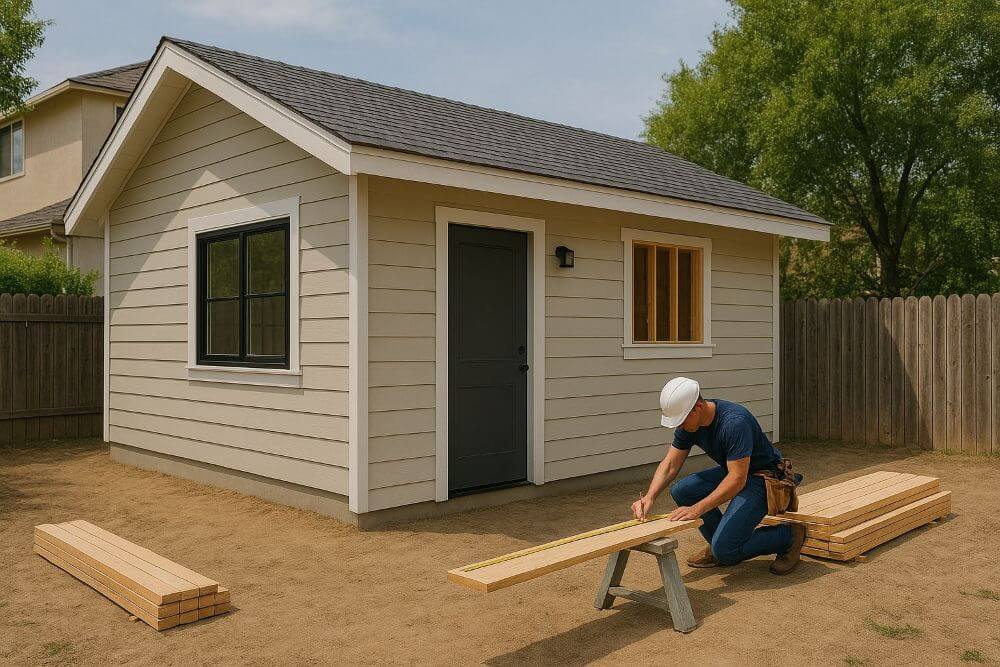
ADU Builders Bay Area is helping Bay Area property owners understand the tax and reporting considerations that come with renting an accessory dwelling unit. ADU rental income, expense deductibility, depreciation, property tax assessment effects, and capital gains treatment at sale all become part of the homeowner’s tax picture once an ADU enters rental service. While professional tax advice from a qualified accountant or tax attorney is essential for specific situations, understanding the general framework helps homeowners plan effectively during construction and operation.
The company does not provide tax advice. The information here summarizes the general framework that California homeowners encounter when their ADU enters rental service. Specific decisions should be coordinated with a qualified tax professional who can address the homeowner’s particular situation.
Rental Income Reporting
Rental income from an ADU is generally reportable as residential rental income on the homeowner’s federal tax return. The Internal Revenue Service treats residential rental income on Schedule E in most situations. Income includes rent payments, deposits applied to rent or damages, and other amounts received from tenants. Security deposits held in trust are not income until applied.
State tax treatment in California generally follows federal classification for rental income. The California Franchise Tax Board taxes rental income at applicable state rates. Property owners report rental income on their state returns consistent with federal reporting.
Expense Deductibility
Many expenses associated with rental operation are deductible against rental income. Mortgage interest allocated to the rental portion, property tax allocated to the rental portion, insurance, utilities paid by the owner, repairs and maintenance, property management fees, advertising, legal and professional fees, and other operating expenses generally qualify. Allocation between the rental ADU and the homeowner’s primary residence is required when expenses cover both.
Repairs that maintain the rental property in its existing condition are typically deductible in the year incurred. Improvements that extend the life of the property or add new functionality are typically capitalized and depreciated rather than deducted immediately. The distinction between repairs and improvements affects timing of tax benefits.
Depreciation of the ADU Structure
The ADU structure itself is depreciable as residential rental property. Federal tax rules allow depreciation of the building portion over twenty seven and a half years using straight line depreciation. The land portion is not depreciable. Allocation between land and building is required, typically using assessed value ratios or appraisal data.
Depreciation reduces taxable rental income each year, which improves cash flow during the holding period. However, depreciation also reduces the property’s tax basis, which affects capital gains calculation at sale. Cumulative depreciation is recaptured at sale, typically taxed at twenty five percent under current federal rules. The company highlights this consideration for homeowners planning long term ADU rental operations. As Bay Area homeowners pursue ADU rental strategies, ADU Builders Bay Area supports homeowners in understanding how construction decisions interact with future tax and operating outcomes, while qualified tax professionals address specific tax planning.
Property Tax Assessment Considerations
California property tax operates under Proposition 13 rules that limit assessment increases on existing property. New construction such as an ADU typically triggers reassessment of the new construction at its current market value. The existing primary residence assessment generally remains at its Proposition 13 protected value, and the ADU is added at its current market value.
This means that adding an ADU increases the property’s overall assessed value and annual property tax bill. The increase reflects the ADU’s contribution rather than reassessment of the entire property. Recent California legislation has introduced specific protections for certain ADU configurations, but the general framework involves reassessment of the new construction.
Annual property tax for the ADU is typically deductible against rental income when the ADU is in rental service. This deduction partially offsets the additional property tax cost during operation.
Capital Gains Treatment at Sale
When the property is eventually sold, capital gains treatment depends on how the ADU was used. Properties used as principal residences qualify for the principal residence exclusion under federal tax rules, currently up to two hundred fifty thousand dollars for single filers and five hundred thousand dollars for married joint filers, subject to ownership and use requirements.
When part of the property is used for rental purposes, the exclusion applies only to the principal residence portion. Capital gains attributable to the rental portion are taxable at long term capital gains rates. Depreciation recapture applies to the rental portion separately. These calculations can become complex and benefit substantially from professional tax advice during planning and at sale.
Passive Activity Rules
Federal tax rules treat rental real estate as passive activity in most situations. Passive activity losses can offset passive activity income but generally cannot offset other types of income such as wages or business income. Specific exceptions apply for real estate professionals and for moderate income property owners with active participation in rental management.
Homeowners renting an ADU on their property often have active participation in management, which can support utilization of rental losses against other income up to specific limits. Income phaseouts apply. The interaction between passive activity rules and an owner’s overall tax situation deserves professional review.
One Thousand Dollar Threshold and Schedule E
Small rental operations, including single ADU rentals, are typically reported on Schedule E of the federal tax return. Forms 1099 may apply for service payments made to certain contractors during rental operation. The company supports homeowners by providing documentation that supports clean tax reporting throughout the operating period.
Record keeping for rental operations includes lease documents, rent payment records, expense receipts, contractor invoices, and other documentation that supports both income and deduction reporting. Maintaining clean records throughout the year simplifies tax preparation and supports audit defense if needed.
Short Term Rental Tax Treatment
Short term rental use is taxed differently than long term residential rental in some respects. The frequency of stays, the level of services provided, and the average occupancy period affect classification. Short term rentals may be treated as transient lodging in some situations, which affects deductibility and reporting.
Many California jurisdictions also impose transient occupancy taxes on short term rentals. These taxes are collected from guests and remitted by the operator. The company designs ADUs that can support either long term or short term rental approaches, leaving the tax planning to the homeowner and their tax professional.
Construction Cost Documentation
Documentation of construction costs supports depreciation calculations, basis tracking, and eventual capital gains calculation at sale. The company provides complete construction documentation including contracts, invoices, change orders, and final cost summaries. This documentation supports the homeowner’s tax planning across the holding period.
Long Term Planning Coordination
ADU rental tax planning interacts with broader financial planning including retirement accounts, other real estate investments, and estate planning. The company encourages homeowners to coordinate with qualified tax and financial professionals during initial planning so the ADU project fits the homeowner’s overall situation effectively.
About ADU Builders Bay Area
ADU Builders Bay Area is a Bay Area residential construction company specializing in accessory dwelling units, junior ADUs, garage conversions, detached ADUs, and related residential construction services. Based in San Jose and serving homeowners across the Bay Area, the company focuses on durable construction, complete documentation, and long term value support.
ADU Builders Bay Area
111 N Market St suite 378
San Jose, CA 95113, United States