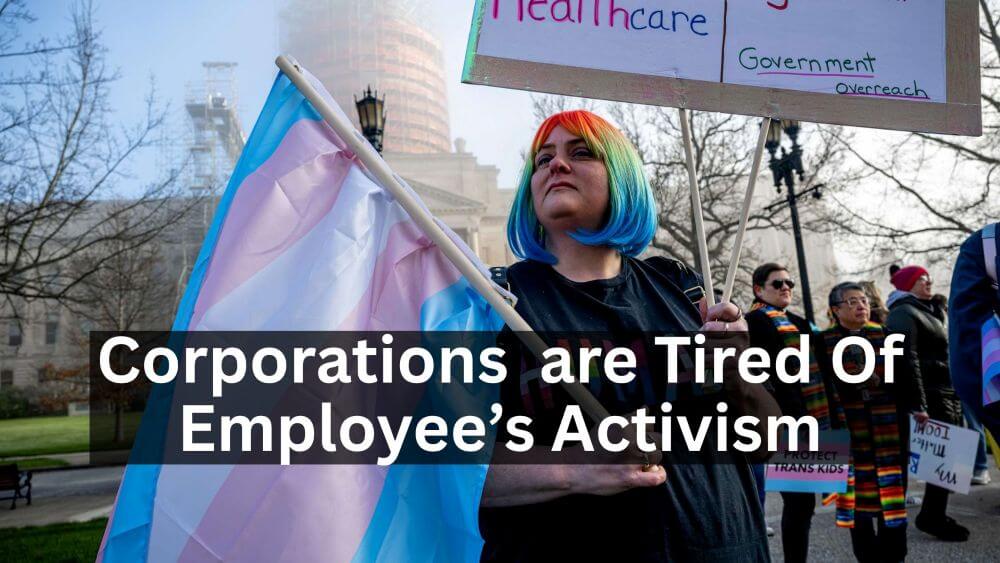
On August 19, 2025, a protest encampment sprang up at Microsoft’s Redmond campus. Demonstrators set up signs reading “Join the Worker Intifada” and “Irresponsible AI for Genocide,” calling out Microsoft’s alleged ties to Israeli military surveillance in Gaza. The incident is only the latest flashpoint in a growing struggle over political expression in the workplace.
Microsoft responded swiftly: two employees were fired on Thursday for participating in on-site protests, following the earlier dismissal of two others who had occupied an executive’s office earlier in the week. The message from Microsoft’s leadership is clear—political activism at work will not be tolerated.
And Microsoft isn’t alone.
- Google fired dozens of employees last year and even called in police to remove workers protesting its contracts with the Israeli government.
- Tesla terminated an employee after he created an anti-Elon Musk website and decorated his Cybertruck with protest slogans.
- J.P. Morgan clamped down on internal debate when employees resisted the company’s strict return-to-office mandates.
Across industries, a harder line is emerging: “Leave your politics at the door, or leave your job.”
Why Are Companies Cracking Down?
Two major forces are driving this shift:
- The political climate.
Companies risk public backlash and even government scrutiny if they appear to support “woke” causes or take a side in highly polarized debates. Silence—or suppression—feels safer. - The job market.
In today’s tighter economy, employees have less leverage. Unlike during the Great Resignation, workers can’t simply threaten to walk away en masse. Companies know this, and they are less inclined to appease political or personal demands.
The result is a more adversarial workplace dynamic. Instead of cultivating cultures of debate and dissent, companies increasingly prefer to trim headcount rather than negotiate with employees.
My Take: Work Is for Work
Here’s my view: employees should not bring their whole self to work. They are paid to do a task. If they dislike that task—or the values of the company they work for—they can simply quit.
If I ran a business, I would make it clear from day one: the workplace is for business, not for political expression or activism. Freedom of speech is a constitutional right, but it does not guarantee you the right to stage protests inside your employer’s offices.
Work is not the arena for testing the boundaries of political discourse. It is a place where people come together to achieve business goals. The more companies allow activism to dominate the workplace, the more they risk fracturing morale and undermining productivity.
Conclusion
The Microsoft protest may be headline news today, but it’s part of a broader pattern. Corporate America is drawing a sharp line between professional duties and personal politics. Employees who ignore that reality risk not only their jobs but also their credibility.
At the end of the day, work is work. Politics belongs at the ballot box, in the streets, or on personal platforms—not inside company walls.
Previous opinion posts