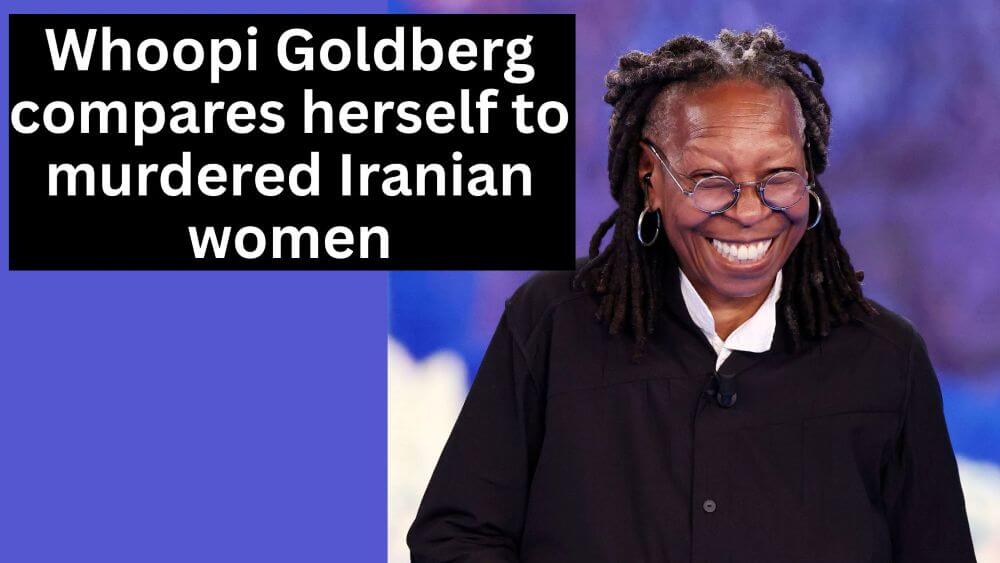
On a recent episode of The View, Whoopi Goldberg made a deeply flawed comparison: she equated the experience of being Black in the United States to being a woman in Iran. This statement, while likely well-intentioned, is both historically tone-deaf and factually misleading.
Let’s be clear: there is simply no comparison between the freedoms available to Black Americans—especially wealthy celebrities like Goldberg—and the harsh, deadly repression faced by women in Iran.
The Reality of Whoopi’s Life
Whoopi Goldberg is a Black, openly queer woman in the United States. She enjoys a net worth estimated at $60 million and earns about $8 million annually just for her seat on The View. She’s celebrated in pop culture, praised for her opinions (however controversial), and lives in a country where freedom of speech allows her to say almost anything she wants—on national television—without fear of government reprisal.
Contrast that with life in Iran, where simply speaking your mind, appearing in public without a hijab, or being openly gay can result in arrest, torture, or death.
What Happens to Women in Iran?
Consider the case of Mahsa Amini, a 22-year-old woman who died in the custody of Iran’s morality police in 2022 for allegedly not wearing her hijab properly. Her death sparked global protests and put the spotlight on a regime that violently enforces strict religious laws, particularly on women.
In Iran, women are second-class citizens under the law. They need permission to travel, cannot dress freely, and are severely punished for challenging the government. Lesbian relationships are illegal, and those found guilty can face public execution.
If Whoopi Goldberg were to live in Iran—speaking her mind the way she does on American TV, living openly as a lesbian—she would likely be jailed, tortured, or executed.
Voices from the Front Lines
Activists like Elica Le Bon, who risk their safety to expose the cruelty of the Iranian regime, have made it their mission to advocate for Iranian women who are silenced. Listening to these voices makes Goldberg’s statement all the more troubling.
Similarly, Van Jones, a political analyst who often speaks on global human rights, has described the Iranian regime as one of the most brutal against women in the modern world.
A Dangerous Narrative
To draw an equivalence between the challenges faced by Black Americans—many of whom are successful, powerful, and free—and the institutionalized brutality in Iran diminishes real suffering. It’s not just an exaggeration; it’s a disservice to the people who are truly oppressed.
This isn’t to say that the U.S. is perfect. Like all nations, it grapples with its past and present injustices. But conflating America’s ongoing social debates with Iran’s system of theocratic violence minimizes the courageous resistance of Iranian women and undermines our ability to speak truthfully about injustice.
Final Thoughts
As a public figure, Whoopi Goldberg has the platform and influence to elevate important issues. But when she uses that platform to make false moral equivalences, she trivializes real oppression and muddies the conversation about global human rights.
Let’s not confuse inconvenience with tyranny. The women of Iran are fighting for their very survival. We owe them more than careless comparisons.
Previous opinion posts