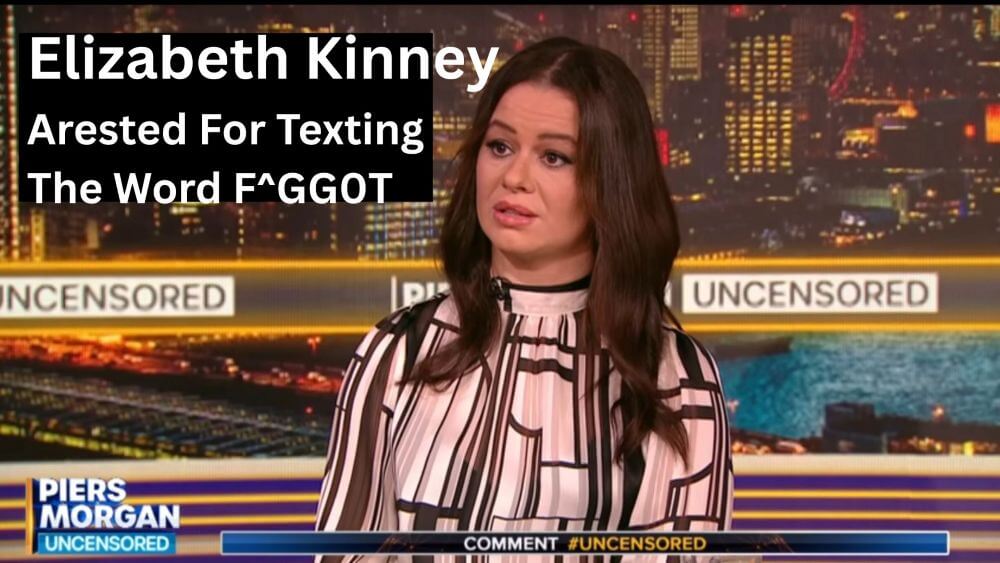
In 2025, Elizabeth Kinney pleaded guilty under Britain’s Communications Act after sending a private text message about a man she said had assaulted her. For that text, she received a 12-month community order, 72 hours of unpaid work, 10 rehabilitation activity days, and a fine.
The man she accused of assaulting her?
He walks away without charges.
Let that sink in.
According to press reports, Kinney’s crime was using a homophobic slur—specifically the word “faggot”—in a message describing her alleged attacker. That single word was enough to trigger arrest, prosecution, and punishment. The alleged violence that prompted the message was not.
This is not justice. It is inversion.
A Legal System Obsessed With Language, Not Harm
No one is arguing that slurs are polite, kind, or socially constructive. They aren’t. But criminal law is supposed to prioritize harm, not etiquette.
Physical assault strips someone of bodily autonomy.
A private text message strips no one of anything.
Yet in this case, the state devoted its coercive power—police, courts, prosecution—to punishing speech while declining to act on alleged violence. That choice reveals priorities, and those priorities are disturbing.
The message sent by the justice system is unmistakable:
Words are more dangerous than fists.
The Chilling Effect on Victims
Cases like this don’t just punish one woman; they send a warning to every victim watching from the sidelines.
If you are assaulted and speak angrily, emotionally, or crudely about your attacker—especially in private—you may find yourself in the dock instead of them.
That is how silence is enforced.
Victims are not robots. They do not narrate trauma in neutral, sanitized language. They speak in rage, fear, pain, and sometimes profanity. Criminalizing that reality doesn’t protect society; it protects offenders from scrutiny.
“Hate Speech” Without a Target
Another uncomfortable question: who was protected here?
The man referred to in the text was her alleged attacker, not a vulnerable minority being harassed in public. The message was private, contextual, and reactive. Treating it as a hate-crime offense stretches the concept of protection until it becomes parody.
When hate-speech law is applied without regard to context, power dynamics, or intent, it stops being a shield and becomes a weapon.
Justice Requires Proportion
A legal system that punishes speech while excusing violence is not morally neutral—it is making a statement about what it values.
In this case, it valued:
- Policing language
- Enforcing ideological purity
- Demonstrating symbolic intolerance for offensive words
Over:
- Investigating alleged assault
- Protecting victims
- Delivering proportional justice
That should alarm anyone who cares about civil liberties, due process, or basic fairness.
Final Thought
Elizabeth Kinney now carries a criminal penalty for a word.
Her alleged attacker carries nothing.
If that doesn’t trouble you, ask yourself why.
Because a society that prosecutes victims for how they speak, while ignoring what was done to them, is not becoming more just—it is becoming more authoritarian, one word at a time.
Other Law Posts