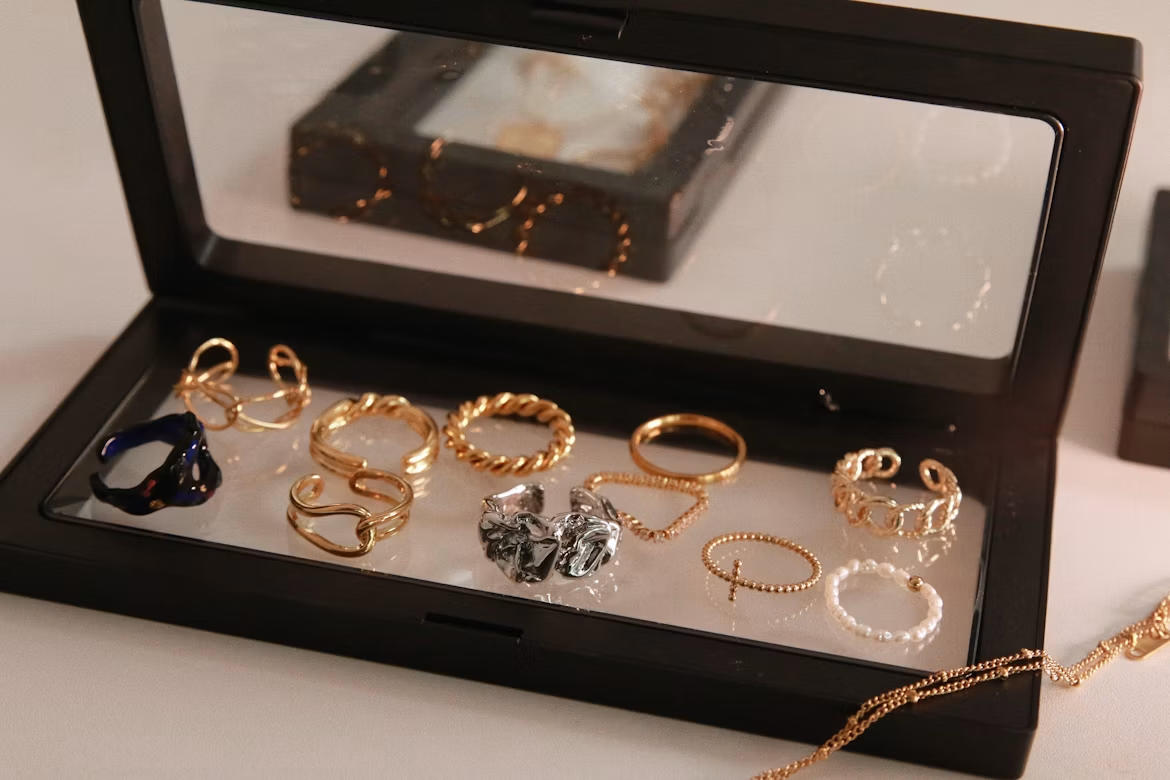
That box of old jewelry sitting in your drawer could be a source of extra cash. Many of us have inherited rings that aren’t our style, a single earring whose partner is long lost, or a broken chain that’s not worth fixing. Instead of letting these items collect dust, selling them can be a smart move.
But before you rush to the nearest shop, it’s helpful to understand how it all works so you get a fair and honest price for your gold.
Understand What You Have
The value of your gold jewelry really comes down to two things: its weight and how pure it is. Gold purity is measured in karats (k). While pure gold is 24k, it’s usually too soft for most jewelry. That’s why it’s mixed with other metals to make it tougher. You’ll often see pieces marked as 18k (meaning 75% gold), 14k (58.3% gold), or 10k (41.7% gold).
Take a peek for tiny stamps, often called hallmarks, usually on the inside of a ring or near a necklace clasp. These gold purity markings tell you the karat. A higher karat number means there’s more gold in the piece, and that means it’s worth more. Don’t sweat it if you can’t find a stamp or can’t read it; a professional buyer will have the right tools to test the purity for you.
Know How Gold Prices Work
The price of gold changes every day, just like stocks or currency. This is called the spot price, and it’s the going rate for one troy ounce of 24k gold on the open market. You can easily look up the current spot price online. However, it’s good to know that you won’t get the full spot price for your items.
A buyer’s offer will be a percentage of that spot value. This is because they have business costs to cover, like testing, melting, and refining the gold before they can sell it again. A good buyer will be upfront about how they figure out their offer based on the day’s fluctuating market price, plus the weight and purity of your items.
Find a Reputable Buyer
Picking the right place to sell your gold is probably the most important step. You want to work with someone who’s trustworthy, clear about their process, and professional. Try to find a local business with an actual storefront, as that often adds a layer of accountability. Check out online reviews to see what other customers have said about their experiences.
A good gold buyer will use modern, non-destructive testing methods, like an X-ray fluorescence (XRF) scanner, to accurately check your gold’s purity without damaging it. They should be happy to weigh your items right in front of you and explain the whole process, from testing to getting paid, so you feel comfortable and in the loop. Steer clear of any buyer who tries to rush you into a quick decision or isn’t clear about their prices.
Prepare Your Jewellery for Sale
Getting your items ready for an appraisal is super simple. You don’t need to polish or deep clean your jewelry, since its condition usually doesn’t affect the scrap value. If you have a bunch of pieces, it can be helpful to sort them by karat if you know it. For example, put all your 14k items in one bag and your 10k items in another. This can make the appraisal process quicker. If your jewelry has gemstones, ask the buyer if they’re interested in buying those too.
Some buyers only want the gold and will ask you to have the stones removed, while others might offer a separate price for them. Knowing this ahead of time can help manage your expectations.
Selling old gold jewelry is a fantastic way to declutter and make some money from things you no longer use. With a little research and by finding a trustworthy buyer, you can easily turn those forgotten trinkets into real cash.