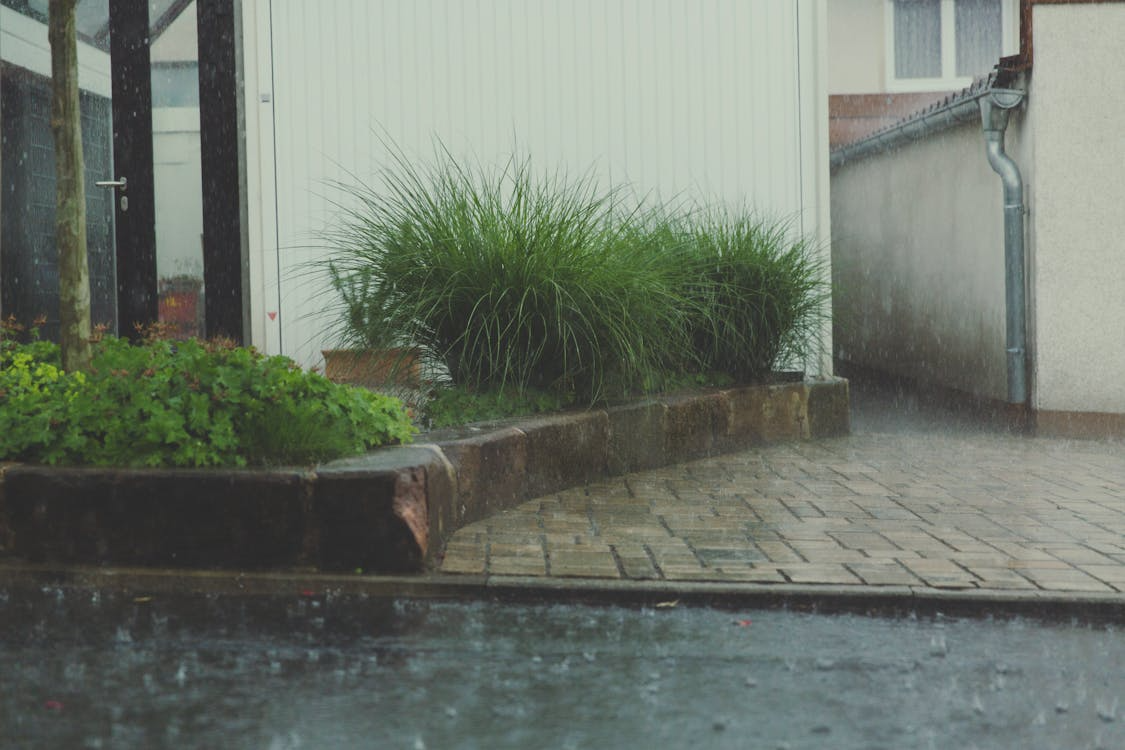
Sometimes, it’s great to have a whole bunch of rain, especially if you have a lawn or a garden, well, if you have outdoor plants in general. Plus, there’s that cozy factor that rain has. It’s the perfect weather to just stay at home, curl up with a book, and relax on the couch, you get the idea. While rainy weather is great, there’s some not-so-nice effects that it has too. Well, if it rains for too long, this can get to the point where there might be flooding in your yard.
Even if you have great drainage, it can get to the point where it all still puddles and pools. Well, better drainage is just one of those things that’s harder to renovate for a home. Sure, it’s possible, but you can’t really foolproof Mother Nature if it just wants to rain for multiple days and for multiple hours on one end. So, once the weather is back to normal and hopefully the flooding has stopped (if there was any in the first place), what should you immediately do?
What should be checked during that first week after all the bad weather and heavy rain have finally stopped?
Just Walk the Outside First
Well, that part should be easy and straightforward enough for you to do, right? But yeah, the outside of the house will usually explain what’s happening inside. And it’s pretty easy to do too. So, you just need to start with gutters and downspouts. If gutters are overflowing or sagging, water is likely pouring straight down near the foundation instead of being guided away. Which, yes, that’s clearly a giant problem.
Next, look at the ground around the house. Just keep an eye out for puddles that keep forming in the same spots, soil that’s washed out, or mulch that’s floating away; those are signs water is hanging around longer than it should. If the yard slopes toward the house, rain will naturally move in that direction, because gravity always wins, but again, sometimes even gravity can’t do too much if it’s been raining too much (because the water will just eventually rise).
What’s the Lowest Level of Your House?
And why is this a relevant question here? Well, after heavy rain, the lowest level is the first place to check, because that’s where water will show up earliest. It’s terrifying if you think about it, because yes, that’s an expensive fix if it’s already in the house. So, be sure to look for damp spots on walls, wet floors, puddling near corners, and that musty smell that shows up before visible water does. Hopefully, there’s nothing wrong, but you need to check to make sure.
Just be sure to pay attention to anything that looks new, like darkened concrete, peeling paint, or white chalky residue on walls. That residue can be a sign that moisture is moving through the foundation material. And if there are basement wall cracks, check if they look wider than before, or if they feel damp around the edges, because water loves using cracks as a shortcut.
Because it might be time for a professional to come in, because the more rain only means more damage. If there’s a sump pump, test it. Don’t assume it’s fine just because it exists, seriosuly, a lot of homeowners make that mistake.
It’s Time to Check for Indoor Humidity Problems
Even if there’s no standing water, heavy rain can spike indoor humidity, especially in basements, crawl spaces, and older homes that aren’t sealed tightly. Hence, why just above it was mentioned that you need to check the lowest level of your home? So, if the house feels sticky, smells musty, or has condensation on windows, humidity might be climbing higher than it should. So, a hygrometer is a cheap little tool that can confirm what’s going on, so if you don’t have one yet, now’s the time to finally get one.
Leave a Reply