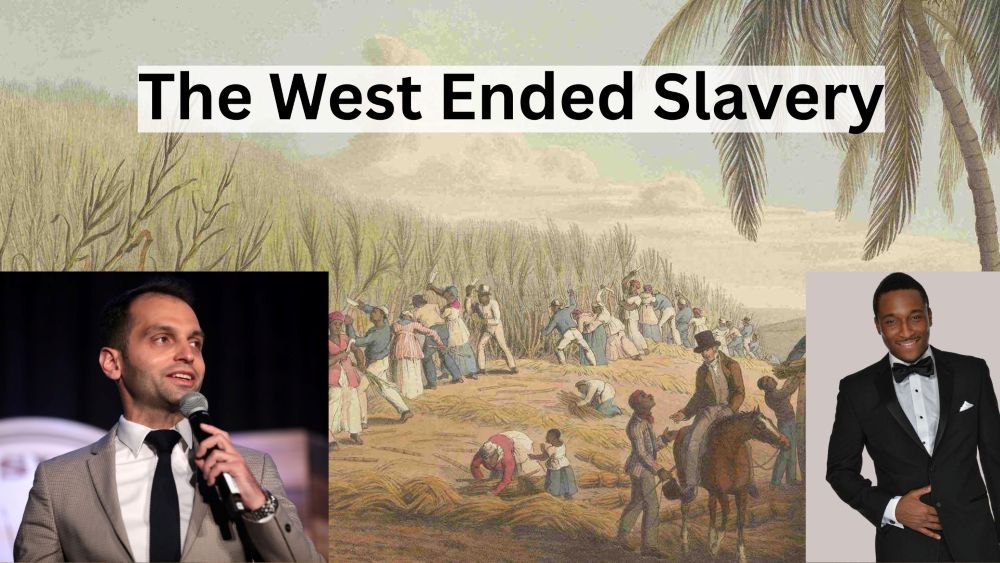
In a time where cultural narratives are increasingly shaped by guilt and grievance, it’s essential to revisit history with nuance, facts, and clarity. During an appearance at the Doha Debates Town Hall held on July 6, 2024, at the Bradford Literature Festival in England, British commentator and comedian Konstantin Kisin offered a controversial—but historically grounded—perspective that left many in the audience visibly uncomfortable.
The discussion, titled “Narrative Power: Is the West Promoting Global Justice?”, invited speakers to explore how narratives are used—or misused—in shaping global opinions about justice, history, and colonialism. Kisin stood out not only for his bold delivery but also for his insistence on confronting a dominant ideology he calls “anti-Western.”
“The reason there is no slavery in parts of the world today… is largely because the British Empire ended it,” Kisin declared.
For many, this claim clashes head-on with the woke narrative prevalent in schools, universities, and media spaces—a narrative that often frames Western civilization, particularly the British and American empires, as uniquely responsible for the horrors of slavery. Kisin doesn’t deny those horrors; he simply challenges the idea that the West was exceptional in its brutality.
Slavery: A Global, Ancient Institution
Historically, slavery has existed across every inhabited continent. Native American tribes held slaves. African kingdoms enslaved rival tribes and sold them to Arab and European traders. The Ottoman Empire institutionalized slavery for centuries. Chinese dynasties used forced labor on a massive scale. To pretend that slavery was a uniquely Western invention is to erase the suffering of millions across the ancient and non-Western world.
What is unique, as Kisin argued, is that the West—specifically Britain—chose to end it.
Britain’s Role in Abolishing Slavery
The Slave Trade Act of 1807 and the Slavery Abolition Act of 1833 marked the beginning of the end of slavery in the British Empire. But legislation was only the first step. The British government also funded the West Africa Squadron, a Royal Navy fleet tasked with suppressing the Atlantic slave trade. This effort wasn’t just symbolic—it was expensive, dangerous, and prolonged. British ships captured hundreds of slave vessels and freed tens of thousands of enslaved Africans.
Kisin highlighted an often-overlooked truth: the British fought not only to end slavery within their own borders but also abroad, including in the Middle East, where the trans-Saharan slave trade persisted for centuries. According to Kisin, this trade was in some ways “much worse” than the transatlantic version, in terms of scale, brutality, and death toll.
Challenging the “Woke” Narrative
Kisin’s argument is not without controversy. To some, his statements appear to flirt with historical revisionism or even negationism—minimizing the suffering caused by Western slavery. But the distinction is important: revisionism re-examines historical facts to offer new interpretations, while negationism denies established history altogether. Kisin does not deny Western involvement in slavery; he simply refuses to ignore the West’s efforts to end it.
This position resonates with a growing anti-woke movement, which challenges identity-based guilt narratives that burden young Westerners with collective shame. It also pushes back against a victimhood framework that gives some communities perpetual grievance rather than empowerment.
“If we’re going to talk honestly about history,” said Kisin, “we have to acknowledge all of it—not just the parts that fit a particular modern narrative.”
Why It Matters
Historical truth shouldn’t be weaponized—neither to glorify nor to condemn blindly. Understanding that slavery was a global institution, and that Western nations were among the first to abolish it through law, warfare, and diplomacy, doesn’t erase the pain of the past. But it does help us build a more honest, less divisive conversation about justice today.
The West is not perfect. No civilization is. But when we distort history to make one side eternally guilty and another eternally blameless, we lose our grip on truth—and we weaken the foundation for true reconciliation and progress.
Let’s stop teaching young people to carry shame for a past they didn’t create. Let’s stop giving modern-day victims someone to blame instead of someone to inspire them. And let’s start telling the whole story—even when it makes us uncomfortable.
Previous opinion posts