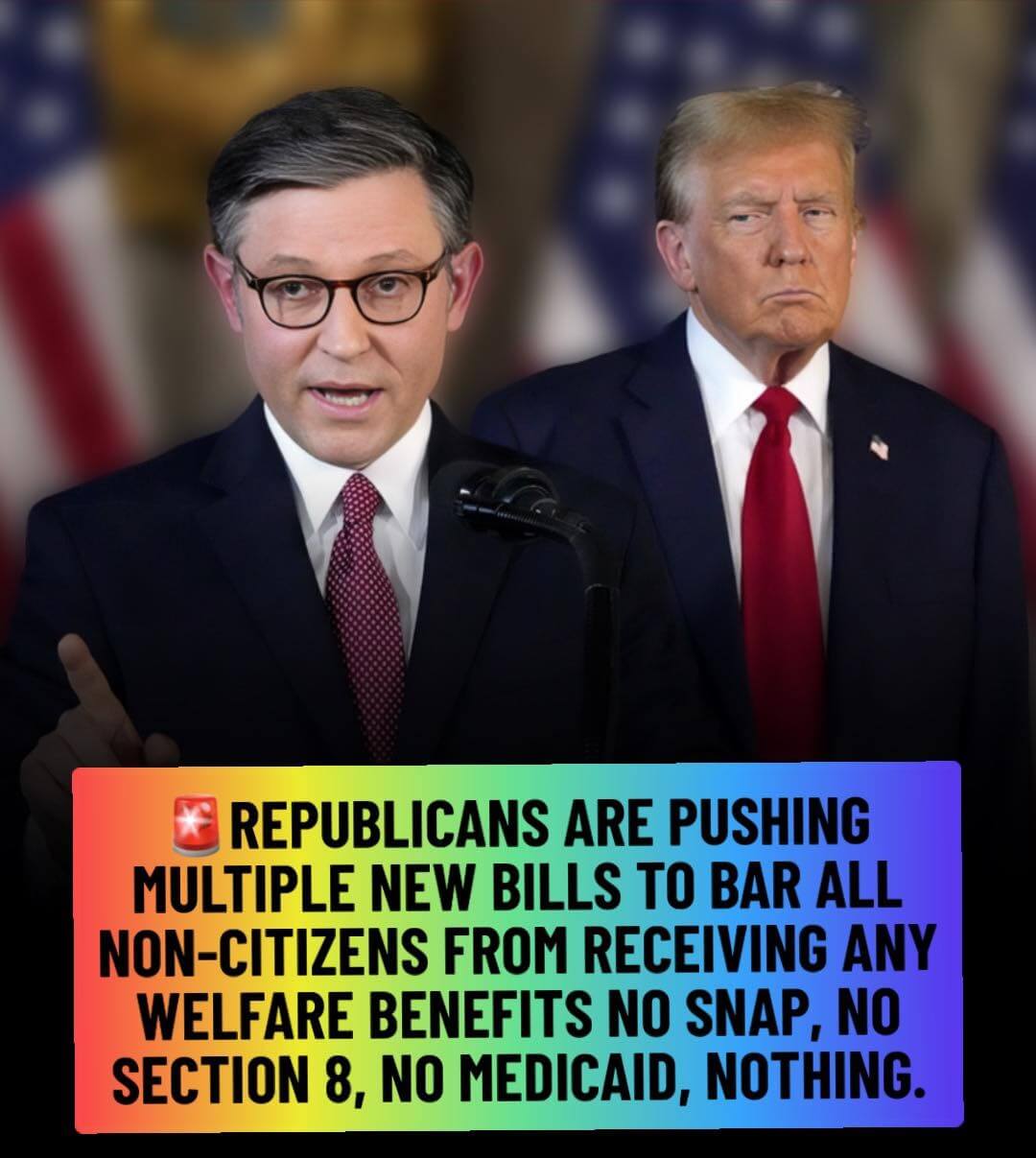
New GOP Bills Aim to Block Immigrant Access to Taxpayer-Funded Benefits
Republicans in Congress are moving aggressively to prevent non-citizens—including undocumented immigrants—from accessing any form of government welfare. Over the past few weeks, several GOP-backed proposals have surfaced that would tighten restrictions on Medicaid, SNAP, housing programs, and other federal aid.
What’s on the Table
Here’s a quick look at the key proposals:
- No Medicaid for Illegal Immigrants Act (H.R. 584): Would prohibit states from offering Medicaid to non-citizens.
- America First Act (H.R. 10469): Blocks illegal immigrants paroled into the U.S. from receiving billions in federal welfare benefits.
- Florida Rep. Cory Mills’ Proposal: A sweeping plan that would deny non-citizens access to all welfare assistance—no SNAP, no Section 8 housing, no Medicaid, no cash programs.
- House GOP Reconciliation Bill: A broader initiative to end SNAP, Medicaid, and other aid for many immigrants while penalizing states that provide benefits to undocumented residents.
GOP’s Argument: Protecting Taxpayer Dollars
Republican lawmakers frame these measures as common-sense reforms to prioritize U.S. citizens and safeguard taxpayer dollars. “Our first obligation is to Americans,” said one GOP spokesperson. “This ensures limited resources go to those who are legally part of our system.”
Democrats Call It Cruel and Unnecessary
Democrats and immigrant advocacy groups condemn the measures as draconian and morally questionable. They argue that such bans could leave millions of people—including children—without access to basic healthcare, nutrition, or housing. “This is about politics, not policy,” said one Democratic representative. “We should be focused on solutions, not punishing vulnerable communities.”
The Debate Ahead
This clash is part of a broader national conversation about immigration, public assistance, and the role of government in supporting residents versus citizens. The bills have energized both parties’ bases, and their fate in Congress remains uncertain—but the discussion is heating up fast.
🇺🇸 The key question for Americans: Should welfare be reserved strictly for citizens, or should certain protections extend to non-citizens living in the U.S.?
Previous Politics posts