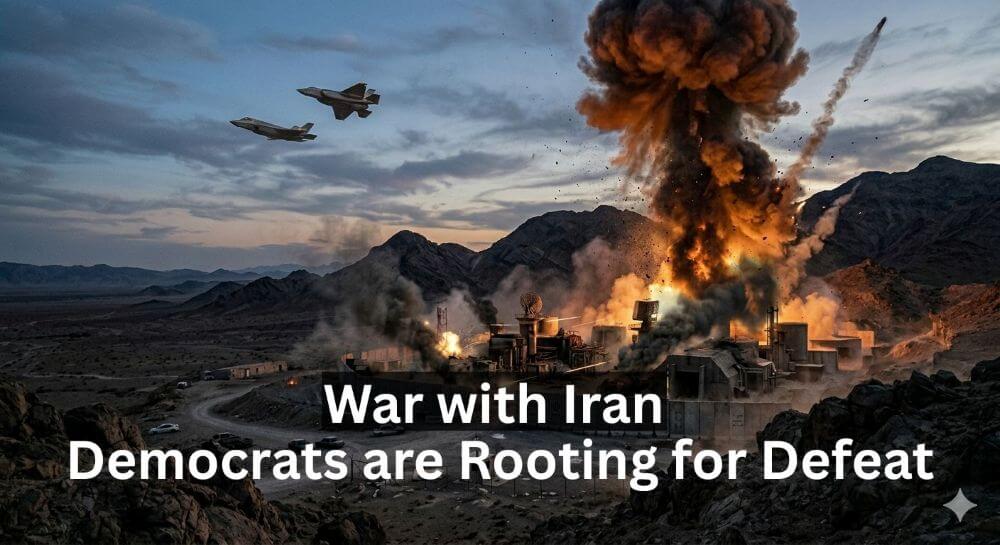
The current War with Iran has laid bare a disturbing trend in American politics: the prioritization of partisan spite over national security. As the Trump administration takes decisive action to neutralize global threats, a vocal segment of the Democratic party seems to be rooting for disaster. Instead of celebrating the degradation of a rogue regime’s power, they appear to be waiting—perhaps even hoping—for the next headline about a burning tanker or a military setback.
The Strategic Successes of the War with Iran
The military results of this conflict speak for themselves. In a series of precise strikes, the United States has systematically dismantled the infrastructure of terror that the Iranian regime spent decades building.
We have witnessed:
- The total elimination of key Iranian nuclear enrichment sites.
- The sinking of significant portions of the Iranian Navy.
- The flattening of missile depots used to threaten our allies.
Are these not objectively good developments for American and regional security? By weakening a theocracy that has spent years chanting “Death to America,” we are making the world a safer place. Furthermore, these actions give the Iranian people a fighting chance at a better life, free from the shadow of a despotic leadership.
Putting Partisanship Before Patriotism
It is a sad state of affairs when political leaders relish bad news. During the War with Iran, the Democratic response has been characterized by a lack of vision and an abundance of cynicism. They would never admit it publicly, but their rhetoric suggests they view military friction as a tool to derail the Trump agenda.
When President Trump took office, the narrative from the left was that we had only two choices: negotiate with a regime that lies or face an economic catastrophe in the Gulf. They claimed that any military pressure would lead to a global energy collapse.
The False Dilemma of Diplomacy
The Democrats argued that we had to accept the “Biden-era” status quo:
- Negotiation: Trusting Iran to stop building nuclear weapons while they continued to fund global terrorism.
- Submission: Fearing Iranian retaliation so much that we allowed them to dictate terms in the Middle East.
President Trump rejected this cowardice. He chose a third path: Action. Even with the inherent risks of conflict, it is better to disarm a depot leader now than to wait for them to acquire nuclear capability. Short-term economic disruption is a small price to pay for preventing a nuclear-armed theocracy.
The Reality of Iranian Military Might
The fear-mongering regarding Iran’s ability to “close the Gulf” has proven to be largely unfounded. During this War with Iran, we have seen that a theocracy with a GDP roughly the size of Oregon’s cannot stand against the United States.
A nation with no meaningful navy or air force cannot halt global commerce for long. The “imminent collapse” promised by critics has not materialized. Instead, we see a weakened enemy and a strengthened American position.
Why We Must Close Ranks
In times of conflict, a nation should stand united. The War with Iran is not just about oil or borders; it is about the fundamental right of the civilized world to live without the threat of nuclear blackmail.
- National Interest: Our security is non-partisan.
- Decisive Leadership: Neutralizing threats before they mature saves lives.
- Global Stability: A weak Iran is a safer Middle East.
Instead of offering a positive vision for growth, Democrats seem to hope that external chaos will undermine the current administration. This “strategy of failure” is a betrayal of the national interest.
Summary of the Conflict
The War with Iran has shown that decisive military action can achieve what years of weak diplomacy could not. By targeting nuclear facilities and missile depots, the U.S. has curbed proliferation risks and protected its allies. It is time for all Americans to support the effort to end the threat of a nuclear Iran once and for all.
Frequently Asked Questions (FAQ)
What is the current status of the War with Iran? The U.S. has successfully targeted major nuclear sites and naval assets, significantly degrading Iran’s ability to project power or threaten maritime trade.
Why is the War with Iran necessary for security? Iran’s pursuit of nuclear weapons and its support for regional proxy wars created an unacceptable risk to global stability. Preemptive action prevents a far more costly nuclear conflict in the future.
How has the Iranian economy been affected? Even before the conflict, Iran’s GDP was comparable to a single U.S. state (Oregon). The war has further isolated the regime, weakening its grip on power.
Leave a Reply