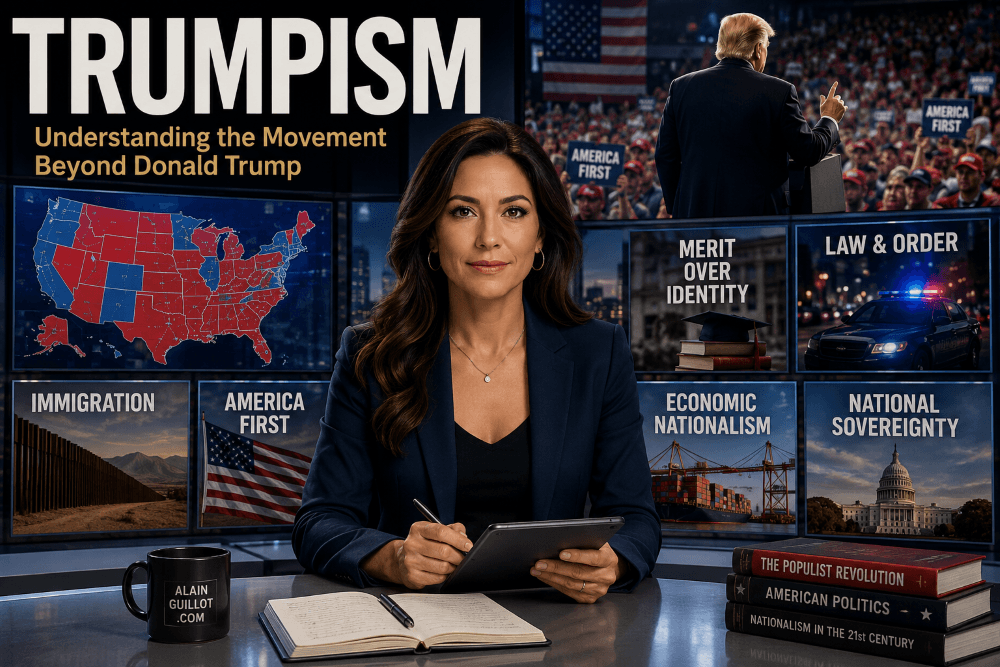
For many people, Trumpism is simply another name for Donald Trump. But that definition is incomplete. Trumpism has evolved into a broader political movement with its own priorities, rhetoric, and policy preferences. Whether one supports or opposes it, Trumpism has significantly reshaped American politics and influenced conservative movements around the world.
At its core, Trumpism combines economic nationalism, border security, skepticism toward political and media elites, cultural conservatism, and a belief that government should prioritize the interests of ordinary citizens over bureaucratic institutions. While Donald Trump remains its most recognizable leader, many of its ideas now extend beyond one individual.
What Is Trumpism?
Trumpism is a political movement that emerged during Donald Trump’s 2016 presidential campaign and continued to develop during his presidency and beyond. Although it shares some principles with traditional American conservatism, it differs in several important ways.
Rather than emphasizing free markets above all else, Trumpism often places greater importance on national interests, domestic manufacturing, secure borders, and the protection of American workers.
Supporters argue that Trumpism represents a return to common sense and national sovereignty. Critics contend that it relies too heavily on populist rhetoric and challenges long-established political norms. Regardless of perspective, few observers dispute that it has transformed the Republican Party.
The Core Principles of Trumpism

America First
Perhaps the defining feature of Trumpism is the “America First” philosophy.
This approach emphasizes:
- Protecting American jobs
- Reducing dependence on foreign manufacturing
- Renegotiating international trade agreements
- Encouraging domestic investment
- Prioritizing U.S. national interests in foreign policy
- Stop wasting money on International aid
Supporters believe globalization benefited multinational corporations more than American workers.
Secure Borders and Immigration Enforcement
Immigration remains one of Trump’s signature issues.
Trumpism generally advocates:
- Strong border security
- Expanded deportation of illegal aliens in the country unlawfully
- Stricter asylum standards
- Merit-based legal immigration
- Eliminate illegal immigration
Supporters argue that every sovereign nation has both the right and the responsibility to control its borders.
Merit Over Identity
Another defining characteristic of Trumpism is the belief that individual merit should take precedence over identity-based preferences.
Many supporters argue that hiring, university admissions, promotions, and government contracts should be based primarily on qualifications, performance, and achievement rather than race, ethnicity, or gender.
From this perspective, Diversity, Equity, and Inclusion (DEI) initiatives risk replacing equality of opportunity with preferential treatment based on demographic characteristics. Advocates of Trumpism often argue that equal treatment under the law should mean evaluating individuals as individuals rather than as members of identity groups.
Critics of this position respond that DEI programs seek to address historical and structural barriers that may otherwise persist. This remains one of the movement’s most debated issues.
Women’s Sports and Biological Sex
Trumpism generally supports restricting women’s competitive sports to biological females.
Supporters argue that physiological differences resulting from male puberty can create competitive advantages in many athletic events and that maintaining female-only categories protects fairness in women’s sports.
Critics argue that such policies may exclude transgender athletes and advocate for approaches that balance fairness with inclusion. The issue continues to be debated by sports organizations, legislatures, and courts.
Law and Order
Trumpism places strong emphasis on public safety.
Common policy positions include:
- Increased support for police departments
- Tougher criminal sentencing for violent offenders
- Greater resources for law enforcement
- Reduced tolerance for riots, looting, and organized crime
- Strong prosecution of repeat offenders
Supporters argue that economic prosperity and individual freedom depend upon safe communities and effective enforcement of the law.
Fighting Drug Cartels
Trumpism also advocates an aggressive response to international drug trafficking organizations.
Supporters have backed measures such as:
- Expanded Coast Guard and Navy operations to intercept narcotics at sea
- Increased intelligence cooperation with partner nations
- Greater pressure on transnational criminal organizations
- Stronger border enforcement to reduce fentanyl trafficking
Some proposals have included broader military involvement in disrupting cartel operations outside U.S. borders. Supporters argue that drug cartels represent a national security threat requiring exceptional measures, while critics caution about legal, diplomatic, and constitutional limits on military action.
Trumpism vs. Traditional Conservatism
Although Trumpism overlaps with traditional conservatism, there are notable differences.
| Traditional Conservatism | Trumpism |
|---|---|
| Free trade | Fair trade favoring American workers |
| Lower taxes | Lower taxes plus economic nationalism |
| Limited government | Limited government with selective intervention |
| Strong military | Strong military with reduced foreign intervention |
| Conservative social values | Conservative social values plus cultural populism |
| Business-focused | Working-class and middle-class focus |
These differences have contributed to a realignment within the Republican Party over the past decade.
Why Has Trumpism Become So Influential?
Several factors help explain the movement’s popularity.
Many supporters cite:
- Frustration with political elites
- Economic insecurity caused by globalization
- Rising illegal immigration
- Distrust of traditional media
- Concerns about crime and public safety
- Opposition to identity politics
- A desire for stronger national sovereignty
Trumpism appeals to voters who believe government institutions have become disconnected from ordinary citizens.
Is Trumpism Bigger Than Donald Trump?
Perhaps the most important question is whether Trumpism will survive after Donald Trump leaves politics.
Many political analysts believe the answer is yes.
The movement has influenced Republican candidates across the United States, reshaped debates over immigration, trade, education, and public safety, and inspired similar nationalist and populist movements abroad.
Whether future Republican leaders fully embrace Trumpism or adapt its principles, its impact on American political discourse is likely to endure.
Conclusion
Trumpism is more than support for one political leader. It is a political movement that combines populism, nationalism, border security, economic protectionism, merit-based opportunity, skepticism toward identity-based public policy, and a strong emphasis on law and order.
Like most major political movements, it generates both passionate support and significant criticism. Understanding Trumpism requires looking beyond campaign slogans to examine the ideas, priorities, and debates that define it.
Regardless of one’s political views, Trumpism has become one of the most consequential political movements of the twenty-first century and will likely continue shaping American politics for years to come.
Frequently Asked Questions
What is Trumpism?
Trumpism is a political movement associated with Donald Trump that emphasizes America First policies, secure borders, economic nationalism, law and order, and skepticism toward political elites.
Is Trumpism the same as conservatism?
No. Trumpism shares many conservative principles but places greater emphasis on nationalism, immigration enforcement, economic protectionism, and populism than traditional American conservatism.
Why do supporters oppose DEI initiatives?
Many supporters argue that employment and educational opportunities should be based primarily on individual merit rather than demographic characteristics. DEI initiatives are racist and sexist; they value people by the color of their skin, their sexual orientation, and their gender, as opposed to merit.
Will Trumpism continue after Donald Trump?
Many political analysts believe that the movement’s influence will continue because many of its policy priorities have become central to the modern Republican Party
Previous politics posts