For years, Americans have watched helplessly as fentanyl and cocaine deaths surged across the country. Endless press conferences were held. Committees were formed. Speeches were made. But the drugs kept coming — and Americans kept dying.
Now, for the first time in decades, a U.S. president is attacking the crisis at its source.
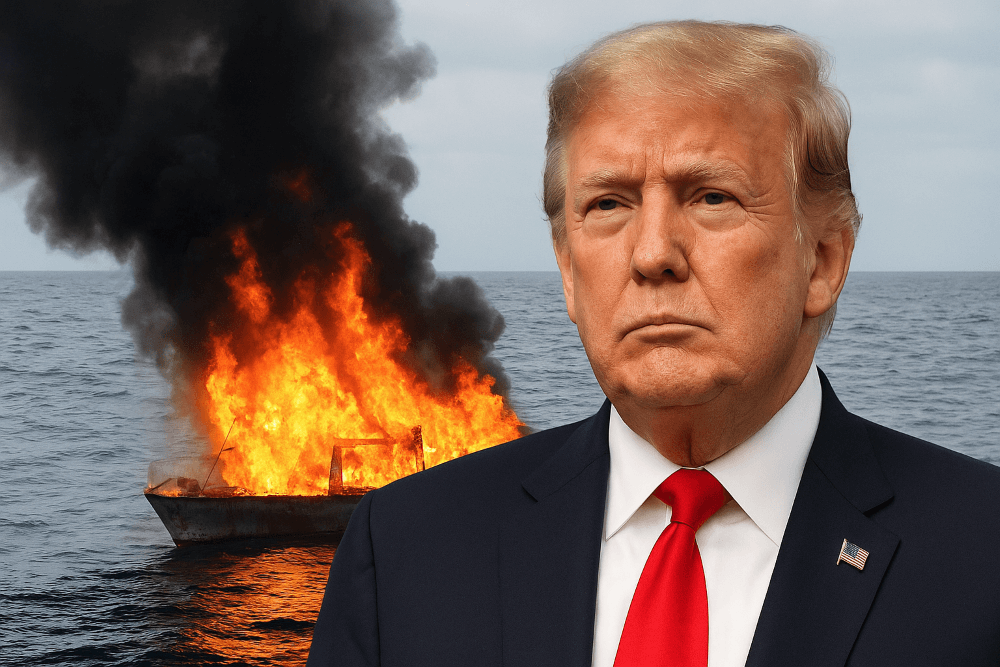
This week, the Trump administration authorized military strikes in the Caribbean against vessels allegedly linked to the ELN (Ejército de Liberación Nacional) — a Marxist guerrilla group involved in drug trafficking, kidnappings, and political violence across Colombia and Venezuela.
Destroying the Supply Chain — Literally
According to U.S. officials, one target was a drug-carrying submarine packed with fentanyl and other narcotics, allegedly bound for U.S. shores. Another strike was aimed at a narcotics boat operated by suspected ELN members. Reports say several individuals on board were killed during the operation.
Former Secretary Pete Hegseth defended the actions bluntly:
“We will treat these cartels like the terrorists they are… They are the Al Qaeda of the Western Hemisphere.”
For years, cartels have operated with near-total confidence. They build submarines, airstrips, and entire logistics routes stretching from jungle labs to U.S. streets — with devastating consequences. Fentanyl alone kills over 70,000 Americans every year. It’s the number one cause of death for U.S. adults aged 18 to 45.
If a single vessel really was carrying enough drugs to kill 25,000 Americans, as Trump said — then taking it out may have prevented a mass-casualty event without a single overdose report making the news.
Critics Will Call It Reckless. But Is It Finally Working?
Some will argue this is too aggressive. Others will insist drug use is a “domestic policy issue,” not a military one.
But here’s a hard truth:
- Counseling doesn’t stop cartels.
- Overdose awareness campaigns don’t sink drug submarines.
- Arresting low-level dealers doesn’t dismantle foreign narco-terror networks.
For decades, America has treated drug deaths as a public health crisis, while cartels treated it as a war.
Trump — for better or worse — is choosing to fight it like one.
A Turning Point?
Maybe history will look back at this moment as reckless escalation. Or maybe it will mark the first time the U.S. government took decisive action that actually saved American lives before they were lost.
I believe this: Stopping drugs at the border is too late. Stopping them in transit is better. Destroying them before they ever leave cartel hands? That’s where real change begins.
Whatever one thinks of Donald Trump, his administration is sending a message no cartel has heard in decades:
If you traffic poison toward America, you won’t just be prosecuted. You will be stopped — by force if necessary.
And that alone may already be saving lives.
Other Law Posts