If a foreign country killed 100,000 Americans in a single year, the whole nation would be up in arms. Congress would immediately declare war, the military would mobilize, and the president would promise justice for every lost life.
Well, here’s the reality: 100,000 Americans are dying every year from drug overdoses. The majority are killed by fentanyl, heroin, cocaine, and methamphetamine smuggled into the country by international cartels and criminal organizations. The death toll is staggering—higher than U.S. combat deaths in Vietnam, Iraq, and Afghanistan combined. And yet, for decades, our leaders have treated this catastrophe like background noise.
Since President Richard Nixon first declared the “War on Drugs” in 1971, every president has promised to tackle the crisis. From Nixon to Biden, each administration has claimed to fight the cartels. But let’s be honest: none of them have delivered results. Every day, hundreds of Americans die, and the flow of drugs keeps increasing.
Trump’s Shift: From Metaphor to Military Force
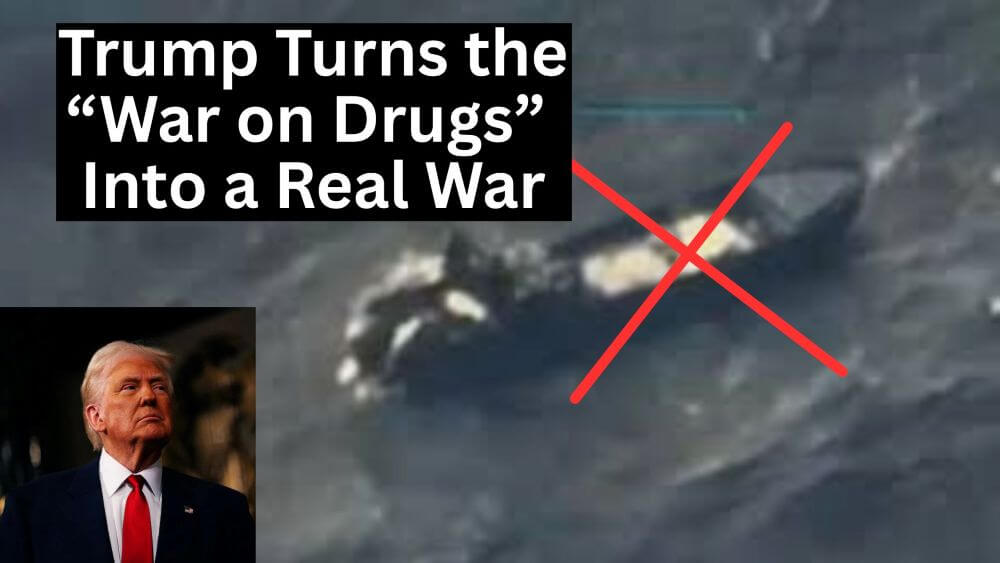
Donald Trump, never one to shy away from bold moves, has decided to take the “War on Drugs” literally. Under his orders, the U.S. military has begun direct strikes against drug traffickers at sea.
On September 15, Trump announced that U.S. forces destroyed a Venezuelan boat carrying narcotics in international waters, killing three men he described as “narco terrorists.” This was the second confirmed strike in as many weeks. Earlier, on September 2, another operation sank a boat carrying drugs, leaving 11 traffickers dead.
Trump’s message was blunt:
“If you are transporting drugs that can kill Americans, we are hunting you!”
He described the seized cargo as “big bags of cocaine and fentanyl all over the ocean” and made it clear that the U.S. will not hesitate to escalate.
A New Phase of the Drug War
This isn’t just rhetoric—it’s a strategic shift. In recent weeks:
- Eight U.S. Navy vessels have been deployed in the Caribbean.
- The Coast Guard seized 13,000 pounds of cocaine in the Pacific.
- U.S. military personnel boarded Venezuelan vessels suspected of drug trafficking.
Trump also hinted that similar military tactics could be applied on land:
“There are no drugs coming by sea, but they do come by land. We’re telling the cartels right now we are going to be stopping them too.”
In other words, the “war on drugs” is no longer a metaphor for law enforcement, interdiction, and education campaigns—it is now an actual war, with bombs, missiles, and military firepower.
The Stakes
Supporters argue that this hardline approach is long overdue. After all, if foreign enemies are killing Americans by the tens of thousands every year, why shouldn’t the military treat them as enemy combatants?
Democrats, however, warn that this escalation could spark international backlash, risk civilian casualties, and blur the line between law enforcement and warfare. They ask: Is bombing drug boats a solution, or just another dramatic headline? Somehow, democrats always want to take the side of the criminals.
My Take
For decades, the U.S. has waged a figurative war that has produced little but slogans and failed policies. Meanwhile, drug cartels have flooded American streets with poison. Trump’s approach may be controversial, but it undeniably reframes the issue. Instead of shrugging while 100,000 Americans die each year, he is treating cartels as what they really are: organized, heavily armed groups that operate more like terrorist organizations than smugglers.
Whether you support him or not, one thing is clear: the drug crisis is killing more Americans every year than most wars in U.S. history. And for the first time, a president has decided to fight back with actual military force.
Previous Politics posts