One of the clearest differences between Republicans and Democrats has always been how they treat your money—the money taxpayers work for, earn, and expect to be used responsibly.
This year we saw one of the strongest examples yet of that contrast.
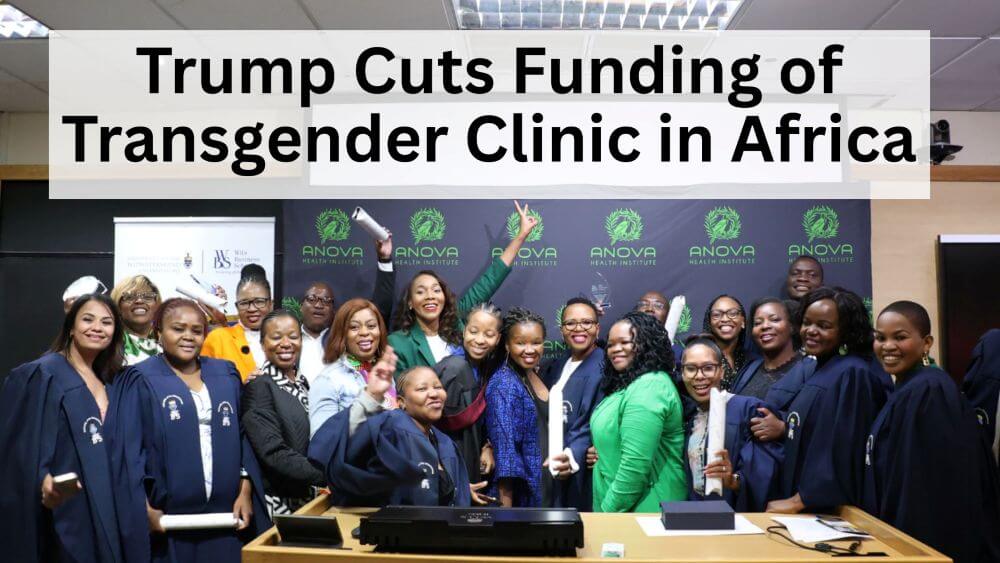
CNN recently featured a segment on a transgender health clinic in Johannesburg, South Africa, operated by the Anova Health Institute. The clinic provided HIV care and hormone-related services to more than 1,000 people. For years, it was funded by USAID—meaning funded by American taxpayers, despite being located thousands of miles away and serving zero Americans.
When President Trump took office, his administration initiated deep cuts to USAID programs—about 83%, according to reporting on Secretary Rubio’s announcement earlier this year. As a result, funding to this clinic ended, and CNN presented it as a controversial decision.
But here’s the real question:
Why was U.S. taxpayer money funding this in the first place?
For many Americans—across the political spectrum—the idea of their federal tax dollars paying for specialized clinics overseas simply doesn’t make sense. The United States has its own healthcare issues, its own budget challenges, and its own underserved communities.
Foreign aid can be valuable when it promotes security, prevents humanitarian catastrophes, or strengthens key alliances. But funding highly specific health-care programs unrelated to American interests? Most taxpayers would say: that’s not what we’re paying for.
This is exactly the kind of spending that grew under Democratic administrations. These programs often get bundled into large foreign-aid packages with little public awareness. By the time anyone notices, the money is already out the door.
The Trump administration’s cuts are a reminder that “America First” is not just a slogan—it’s a budgeting philosophy. It means being selective, not careless. It means asking:
Does this program benefit Americans? Does it advance U.S. interests? Is it worth borrowing money to fund?
In the case of a South African clinic paid for by U.S. dollars, the answer was clearly no.
Predictably, online reactions split along partisan lines. Many conservatives applauded the move, seeing it as a correction of years of unfocused, ideologically driven spending. They view it not as a statement about the people being served but as a statement about fiscal responsibility: U.S. tax dollars should serve U.S. taxpayers first.
Democrats, meanwhile, framed the cuts as cruel or regressive—but avoided answering the basic fiscal question.
At the end of the day, Americans deserve transparency. They deserve to know where their money goes. And they deserve leaders willing to say:
If it doesn’t benefit the American people, it doesn’t get funded.
President Trump’s decision—whether you love him or hate him—forced that conversation back into the spotlight. And many Americans agree: It’s long overdue.